

How updating slats helped sheep farm cut lameness and labour
A purpose-built slatted lambing shed that was put up in the 1960s on a Monmouthshire farm has reduced labour and straw while keeping flock lameness below 1%.
Over this time, the shed has been extended and the slats have been updated and improved.
See also: What’s in your Livestock Shed? visits £115k lambing shed
Nigel and Beverley Turner farm alongside their son, Matthew, at The Graig, near Cross Ash, lambing 1,400 Inverdale Texel ewes and ewe lambs alongside a 100-cow suckler herd.
They inherited the shed after buying the farm, but believe slats are more hygienic than straw.
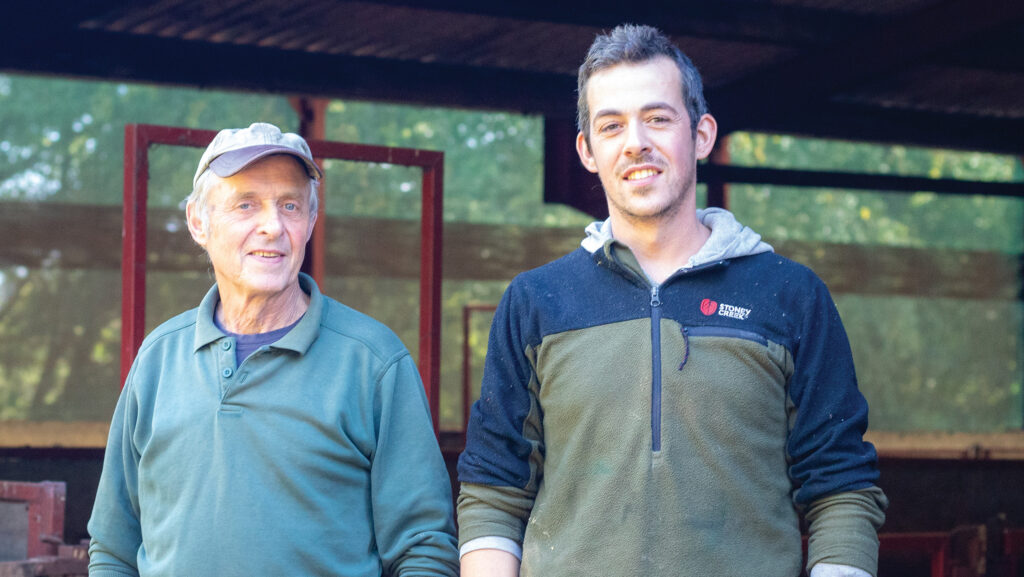
Nigel and Matthew Turner © Rhian Price Media
Farm facts: The Graig, near Cross Ash, Monmouthshire
- Farms 250ha, owned
- Grows grass and 25ha turnips and fodder beet, plus 20ha wholecrop
- Lambs 1,400 Inverdale Texel ewes and ewe lambs, plus small pedigree Beltex and Texel flocks
- 175% average flock scanning percentage
- Lambs sold as stores or finished (target 40kg liveweight) and sold to Raglan and Ross Markets
- 100 Aberdeen Angus-cross suckler cows, calving outdoors in a split block
- Store cattle sold at Ross Market
Tell us about the building
The original slatted shed was built in 1963, before we moved to the farm in 1971. It measured 7.3×45.7m, but it has been adapted over time.
During the 2001 foot-and-mouth outbreak, the farm was taken out as part of a contiguous cull, so we saw an opportunity to extend the shed width to 21.3m by adding an additional span along its length.
Sheep were fed through walk-through feeders, but we wanted to reduce labour, so we removed them. The shed now houses 12 slatted pens, each measuring 13.7×2.4m, and can house 400 ewes in total. Two central concrete feed passages allow sheep on both sides to be fed (the middle pens are back to back).
The pits underneath the slats are about 1.2m deep and only need cleaning every five years.
We’ve created good natural ventilation by installing Galebreakers along the northern side of the shed. We don’t get any ammonia smell inside the shed because the earth floor under the slats allows liquid to soak away.
Water comes from a spring, and we installed a header tank in the shed to feed individual water troughs in each pen. The beauty of the header tank is that we add purification tablets to the water to keep the troughs clean and reduce bacteria build-up.
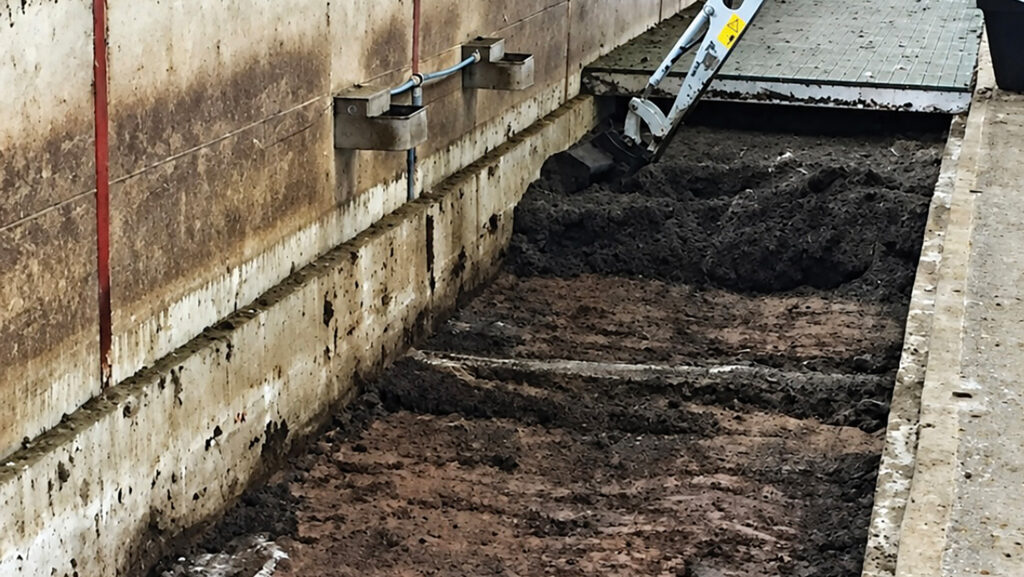
Cleaning the shed takes just three days © Matthew Turner
What is the shed used for?
Although it was built for lambing, we also use it for shearing, and we can house finishing lambs if grass supply is short.
We lamb 300 full-mouth ewes and pedigree Beltex and Texels first. These are synchronised to lamb over two cycles in mid-February and will be brought inside at the start of January.
The main flock starts lambing at the end of March. Twin-carrying ewes graze root crops, while single-bearing ewes are fed hay outdoors. Ewes are brought inside as they start to lamb. About 80% lamb in three weeks, with some ewe lambs taking a little longer.
As ewes lamb, they are taken through to an adjoining shed with individual pens bedded on straw, before being grouped with other ewes and lambs. Typically, only 12 bales of straw are used for the entire lambing period.
We finish everything off forage, including roots, and send the smallest 450 lambs away to winter on grass keep, but the shed gives us the option to house and feed them if needed.
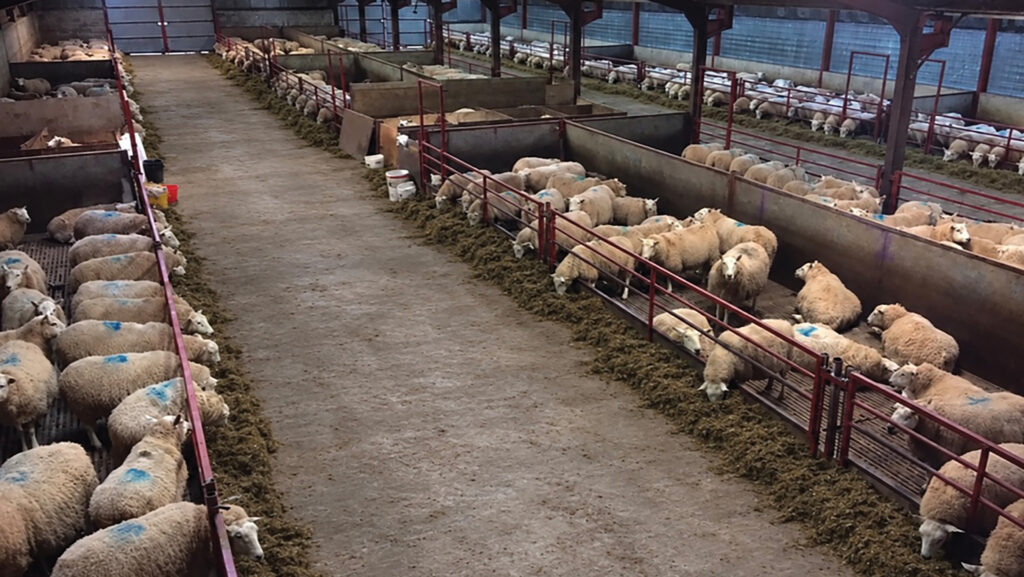
Ewes are fed chopped silage © Matthew Turner
How much did the upgrade cost and how long did it take?
We completed the work in 2001. It took about two months and was fitted around other jobs. It cost £20,000 to extend the shed and lay additional concrete. The original slats were timber and were replaced with mesh slats, but they clogged easily and needed cleaning.
So, when we extended the shed, we spent an additional £20,000 installing plastic slats from MIK International. These sit on a small lip of concrete around the outer edges of the building and central feed passages.
These slats are much lighter and easier to remove ahead of cleaning. It took two weeks to take the timber slats apart and clean the shed. This was largely because they sat on top of 23cm concrete blocks that also had to be removed.
Now we can clean in three days using a small excavator. We remove four or five slats, clean underneath them, then keep sliding the others along.
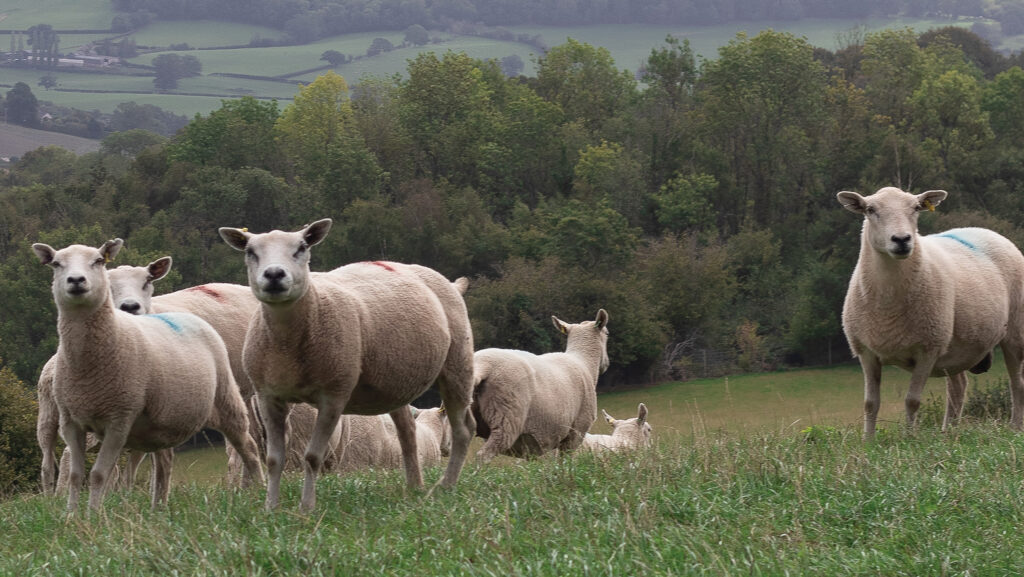
The family run a flock of Inverdale Texels alongside small pedigree flocks © Rhian Price Media
Biggest benefit?
Previously, housed ewes were fed small hay bales and bags of concentrate, but we needed to simplify the system and make it more labour efficient. Ewes are now fed clamped silage using a feeder wagon while indoors, to avoid clogging the slats with silage bales.
Alongside this, they receive a small amount of barley, oats and soya before lambing. We typically grow 20ha of combinable crops and use our own feed and straw, but this year we grew wholecrop instead to ensure we had enough forage for the sheep and cattle.
Feeding now takes 15 minutes every three days, whereas feeding hay took at least an hour daily.
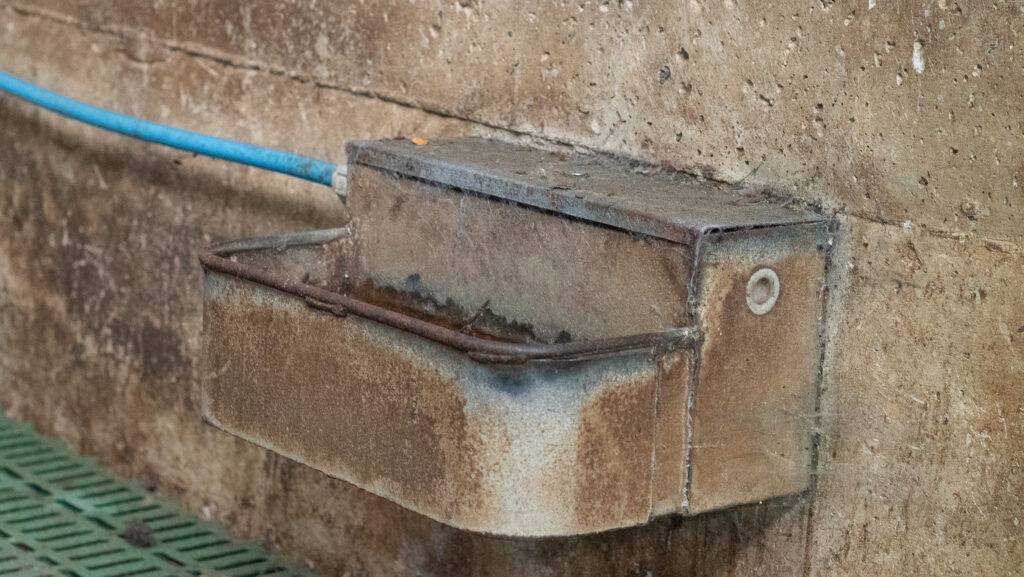
Each pen has individual water troughs © Rhian Price Media
Favourite aspects?
Foot hygiene on the slats is exceptional because bugs do not proliferate as they can in straw. We use a knapsack to spray disinfectant on the slats once the early-lambing flock has lambed. This cleans the slats and reduces bacteria before the later-lambing flock enters the shed.
As a result, flock lameness remains below 1% annually. If ewes come indoors without foot-rot, they go out without it. Usually, farmers spend all winter giving sheep bad feet inside the shed and then spend all summer trying to get rid of it. Then they bring the sheep inside, and the cycle starts again.
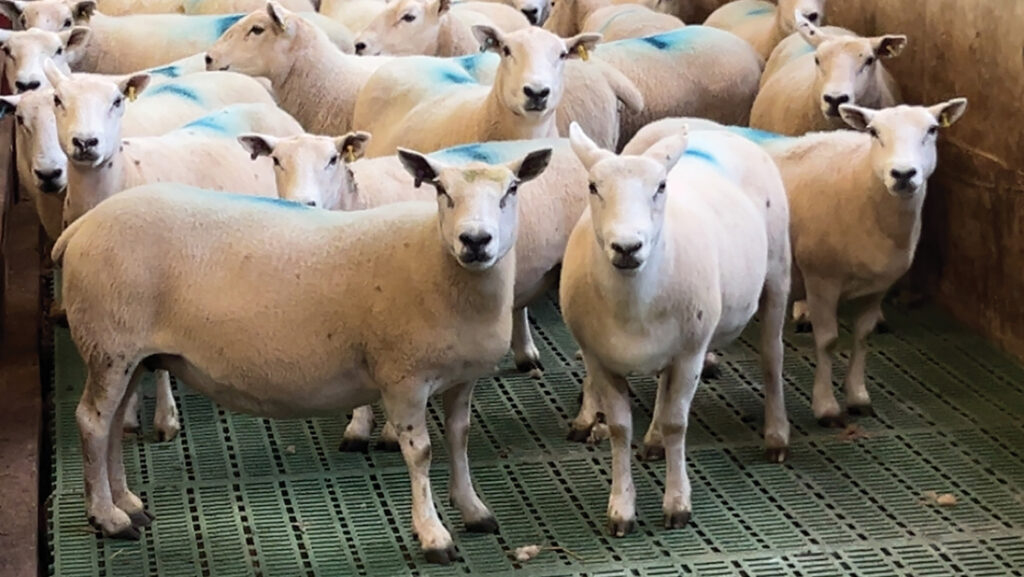
The plastic slats are lightweight © Matthew Turner
Is there anything you would do differently if you built it again?
There is nothing we would change. We have improved things over the years, including installing LED strip lights and lambing cameras.
Lambing in a short time means we rely on good weather to turn out ewes and lambs. The aim is to get twins out within 24 hours of birth and singles after 12 hours.
But farming up to 400m above sea level means this isn’t always possible, so we have built a five-bay machinery shed opposite the lambing shed that can be used as overspill.