

How focus on profit a litre drives dairy’s performance
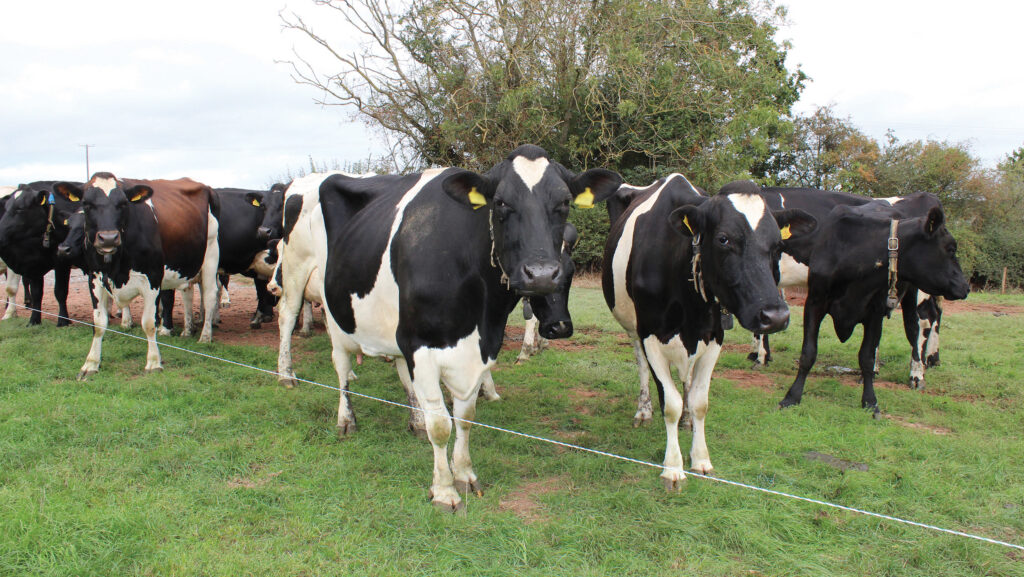 © Ann Hardy
 Dairy farmer Jack Munday has scrutinised every cost to push for greater profit a litre using a system that fits the available resources. This has meant taking every opportunity to graze grass, calving outside in a tight autumn block and breeding a resilient cow.
Jack joined the family farm in mid-Devon in 2012, having studied agricultural business management at the University of Reading.
“I wanted to farm to make money,” he says, explaining why he turned down a career in finance to join his father, David, at Town Barton Farm near Crediton.
Reflecting on his studies, he says: “Whenever I asked farmers their cost of production, I always found they had to work it out, and – if they even knew it – it was invariably more than the price of milk.”
See also: How UK milk producers score on efficiency but lose on profit
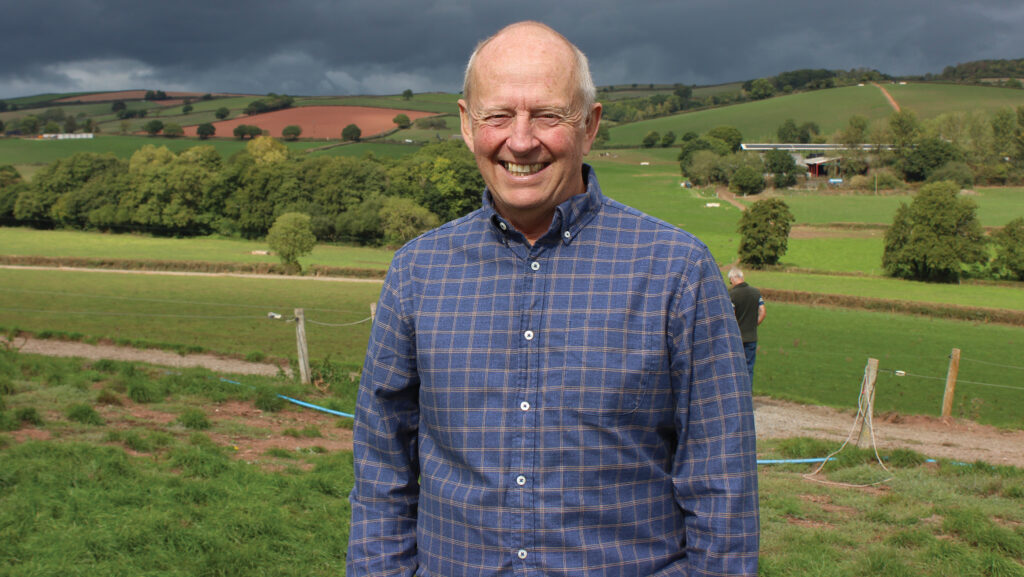
David Munday © Ann Hardy
Farm facts: Town Barton Farm, Sandford, near Crediton, Devon
- 182ha grassland with 30ha maize
- 220 Irish Friesian cross Scandinavian Red milkers
- Average milk yield: 7,020 litres at 4.95% fat and 3.84% protein
- 2,184 litres (31%) from grazed grass
- 3,636 litres (52%) from total forage
- 1.66t concentrates a cow a year
- Average cow weight: 540kg; average milk solids: 638kg (118%)
- Autumn calving targeting an eight-week block
- Milk sold to Arla, plus vending machine
Milk from grass
This has made father and son determined to focus on costs that will lift the farm’s profit a litre – a figure calculated by deducting fixed as well as variable costs from total income. While they are loath to reveal an exact figure, they say their breakeven milk price is 28p/litre.
The goal of prioritising grazing is pragmatic rather than ideological and the family doesn’t claim to run a low-input, NZ-type system. Average yield is 7,020 litres. “Every morning I wake up and think, ‘Can the cows go out today?’, regardless of the time of year,” says Jack. “Last year, we were grazing on Christmas day.”
Milk from grazed grass totals 2,184 litres (31%), with 3,636 litres (52%) from total forage. Well-drained, sandy clay loam soils and 900mm annual rainfall help extend grazing, usually to about 280 days/year.
Effects of drought
However, by late September this year, only 50mm of rain had fallen since the end of May. This hit overall grass yields, which totalled 8.5t dry matter (DM)/ha, compared with 11-12t for an average year and up to 16t in optimal conditions.
Grazed grass intakes declined to 5.5kg DM a head a day, way down on the target 16kg DM a head a day. Silage has been offered immediately after every milking through much of the summer.
Cow numbers have increased by 50 since Jack joined the team, but further expansion is limited by the farm’s layout, which includes some grazing inaccessible to milkers.
“Having 230-240 head is optimal – any more and we would have to build more infrastructure and feed more conserved forage,” he says. “It’s all about optimising the grazing platform.”
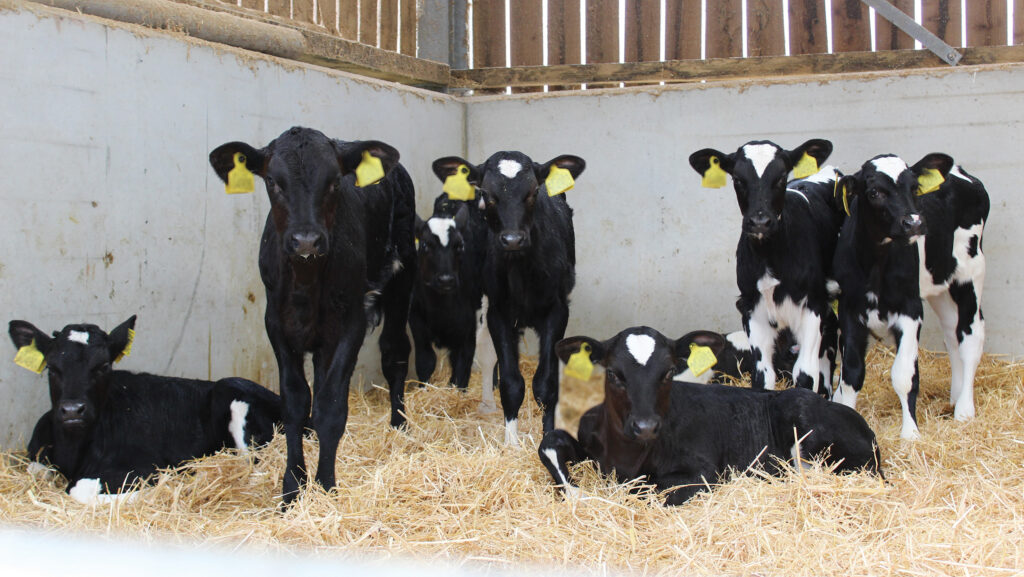
© Ann Hardy
Breeding strategy
Calving started on 18 August and will run until late October. This is longer than the eight-week block previously achieved and a reflection of a current TB breakdown, which saw numbers drop by 45 head in 12 months.
However, the robust cross-bred cows have remained fertile and productive despite the drought and heat, with some 86% calved in the first five weeks. This is well up on the target of 87% calved in six weeks.
All maiden heifers and the best third of cows are served to sexed dairy semen, with no more than one service an animal for a strict three weeks. All services thereafter are to an easy-calving Angus bull, with all inseminations carried out by the farm team.
By selecting dairy sires that transmit milk solids, daughter fertility, health and limited stature, the team has been able to exceed its goal of producing more than 100% of bodyweight in milk solids. With an average 540kg cow giving 638kg solids, they are well up on this target, at 118%.
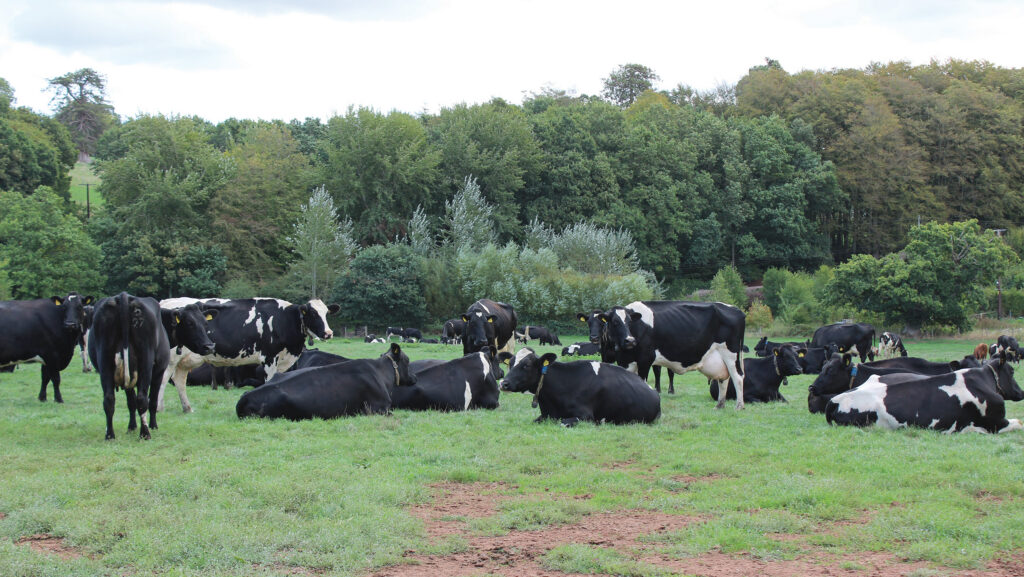
© Ann Hardy
Use of labour
With the expectation that the calving block will return to eight weeks, David says a tight calving pattern is one of the essentials for the business. With two full-time and two part-time employees, he prefers some slack in the system, identifying labour as one cost he does not strive to cut. Costed at 10p/litre, it’s the farm’s largest single cost and includes the family labour.
Herd manager Sam Thomas points out that effective communication, clarity and involvement are top priorities. “I rarely come into work and am surprised by something,” he says, adding that he has a planned day off every week, is home by 5-6pm and attends financial and other discussion groups with the Mundays.
Analytical approach
Previously, under David’s management, the herd produced 9,000 litres with 4,500 litres from forage. “It looked good on the costings, but the profit per litre was poor,” he admits. “I have always been striving to achieve what Jack has, but he’s achieved it in a short time using his analytical mind and techniques from New Zealand.”
Admitting they check the bank balance every morning, they both agree: “We make seriously more money now.”
Calf management at Town Barton Farm
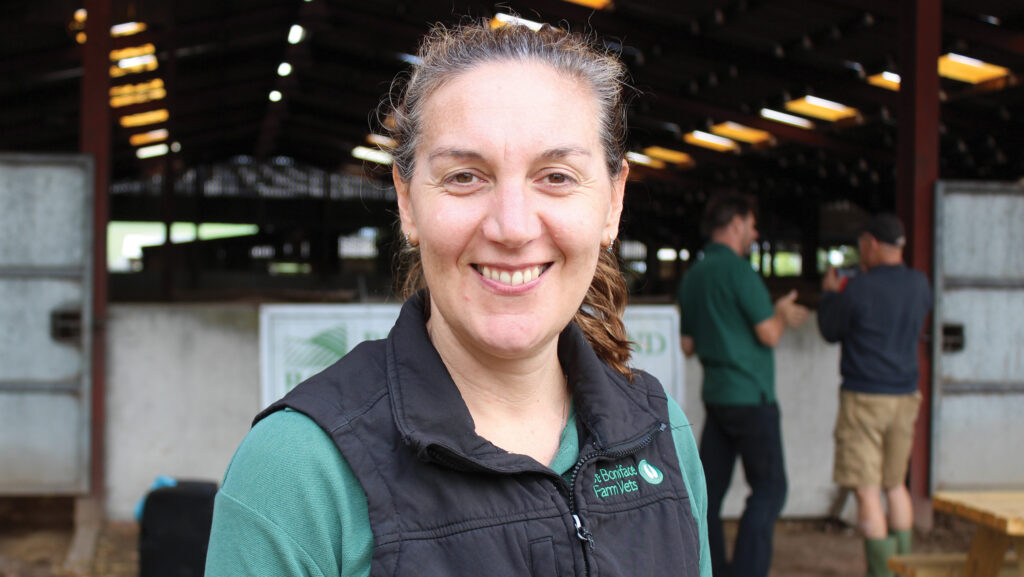
Jack Munday’s wife, Danielle, has taken a leading role in designing a new calf unit and formulating rearing protocols, using her experience as a farm vet to fine-tune the detail.
Features include a low, dual-pitch roof with raised ridge, solid walls between the youngest calf pens (expanded and separated with gates after six weeks) and a 5% slope down to the front of the pen, keeping bedding dry.
Closed to the prevailing wind but open on the opposite side, a ventilation pipe ensures regular air exchange, reflected in very little pneumonia (without vaccination) and no mortality so far this year. In 2025, youngstock mortality totalled 1.3%.
Danielle Munday © Ann Hardy
Rearing strategy
Dairy heifer calves are born earliest, in the most favourable weather, and all calves receive colostrum from their dams while outdoors, having been switched from tubing.
This has improved total blood proteins, which are regularly tested and considered to be a good proxy for immunoglobulin levels, which would be more expensive to test.
Milk intake is rapidly increased from six to eight litres a day by 12 days and reduced to once a day from six weeks, with calves fully weaned by nine weeks.
Growth rates from birth to nine weeks average 0.77kg/day; from nine weeks to six months, 0.93kg/day; and from six to 12 months, 0.74kg/day. The target for weaning is two-and-half times birthweight. Danielle says this growth is essential as udder and other organ development in the first few weeks of life has no compensatory growth.
She will not skimp on milk powder, choosing a top-spec product for its close resemblance in fatty acid profile to cow’s milk and excellent digestibility, plus trial results supporting its promotion of rumen development.
Heifers calve at 24 months and give 89% of mature cow yields. This compares with a typical industry figure of 80%.
The Mundays hosted a British Grassland Society/LIC Cogent open day in late September.