

Advice on long-term dairy crossbreeding strategies
 © MAG/Shirley Macmillan
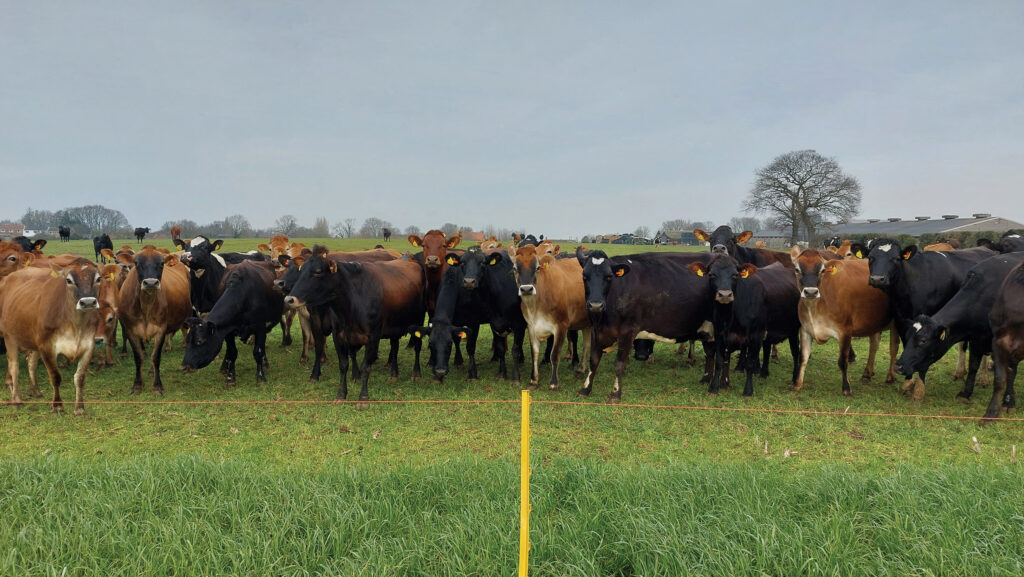
 Early adopters of crossbreeding as a tool to produce the right kind of cow for their block-calving, grazing-based systems, found that longer term breeding strategies could become haphazard.
Selecting the next generation of sires to use over the first cross often used criteria such as cow size, rather than science.
Size was one key characteristic transmitted to the hybrid offspring that created unintended consequences for management.
See also: Dairy tests genomics to unlock genetic gain in crossbred herds
Crossbred herds had to accommodate extremes of cow heights – from tall Holstein types to the small Jersey ones – not an average of the two parents.
The challenges arising from this included fitting them all into the same cubicles and parlour, as well as setting target growth rates in youngstock.
“You don’t get a uniform mix of the parents, and the crossbred is often less easy to house, manage and feed,” says AHDB head of genetics Marco Winters.
Two- or three-way cross?
While bull selection based on size is too random, he says, using different coloured ear tags to represent an animal’s genetics can work in a breeding strategy to manage the next cross.
But a common mistake is to think that a three-way cross will be better than two, or can be used to even out a big range in size.
“A third cross makes breeding more challenging. More genes results in more variation, and it’s harder to manage as you have to select suitable bulls in each breed. It’s not simple and actually more difficult than pure breeding,” says Marco.
He thinks two-way crossing makes record keeping and mating planning simpler, as well as purchasing semen straws and flask management easier.
The ideal crossbred herd would milk only first-cross (F1) hybrid animals to benefit from 100% hybrid vigour (heterosis) and a more uniform animal resulting from two distinct breeds.
This could be through buying in replacements from a nucleus herd, or running a nucleus herd on farm to breed replacements.
The former approach comes with biosecurity risks, says Marco, while the latter complicates group management.
In practice, it is simpler to create a crossbred herd on farm. But every time a breed is used to cross back to produce the next generation, heterosis is lost.
The result is that, over time, a herd will contain several different crossbred generations with hybrid vigour settling at 67%. “Heterosis is a bonus, not the reason to crossbreed,” he adds.
There are now composite breeds on the market (such as KiwiCross or ProCross) that can stop fluctuations, especially in cow size.
However, most bulls used in crossbreeding are purebred, and Marco stresses that farm owners must first be happy with the pure breed, or they will be disappointed with the resultant cross.
“The aim is to be better than the best parent. You may compromise on milk production, but will want to see better fertility, health traits and milk solids,” he explains.
Which breed for crossing?
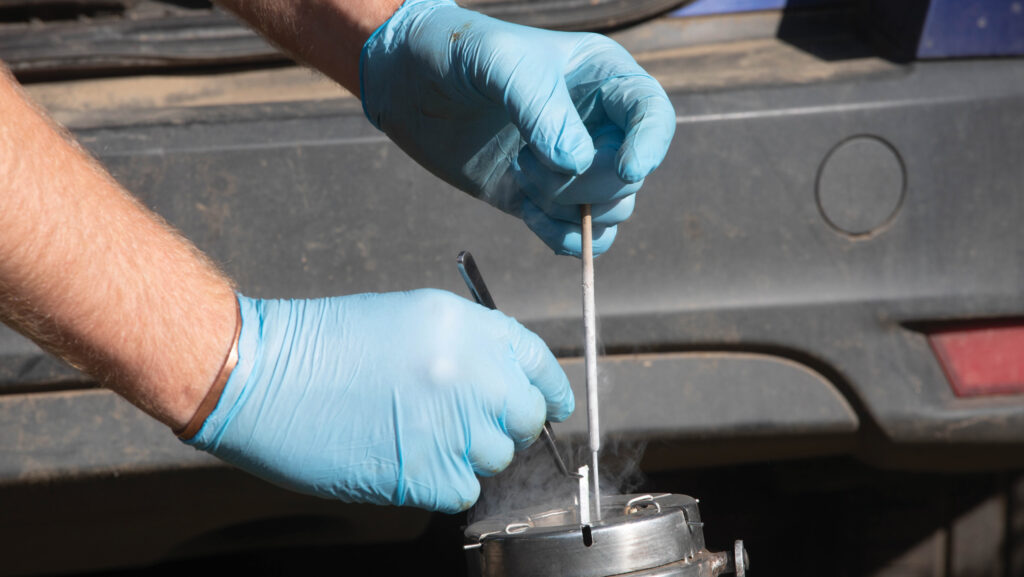
Using just two breeds in a crossbreeding programme simplifies tank management © Tim Scrivener
In the 1990s, herds with Holstein-based genetics used a Friesian to get their first cross, though at the time it was not considered to be a hybrid.
This developed in the 2000s to include a range of breeds with desirable traits, from fertility and robustness to high milk solids and grazing ability.
The next generation of replacements included Ayrshire, Scandinavian red breeds and Jersey bloodlines, leading in recent years to Swedish reds and dual-purpose breeds such as Montebeliarde and Fleckvieh.
In terms of semen sales, Friesian is still the most dominant breed (after Holstein) followed by Ayrshire- types (which rise and fall in popularity), then Jersey.
Marco sees no significant shift between breeds used to crossbreed and says there is also a “static picture for growth of non-Holstein breeds”.
(Not all purebred semen sales are used for crossbreeding but to maintain pure herds, he points out.)
A 20-year growing trend for crossbreeding has now levelled off, peaking at 7% from 2021 to 2024 for all dairy females in milk-recorded herds logged as crossbred.
In 1995, the figure was just over 1%.
“If we look at our data, there seems to be a strong majority that operates a two-way crossbreeding system, with more than 85% of animals two-way crosses,” he says, adding that the percentage of three-way crosses rose from about 4% in 2009 to 12.5% in 2023.
However, numbers could be skewed slightly as, historically, a high proportion of block-calving farms did not milk record, leading to less complete ancestry for crossbred livestock.
It is therefore possible that the rate of crossbreeding is higher in block-calving herds.
Purebred progress
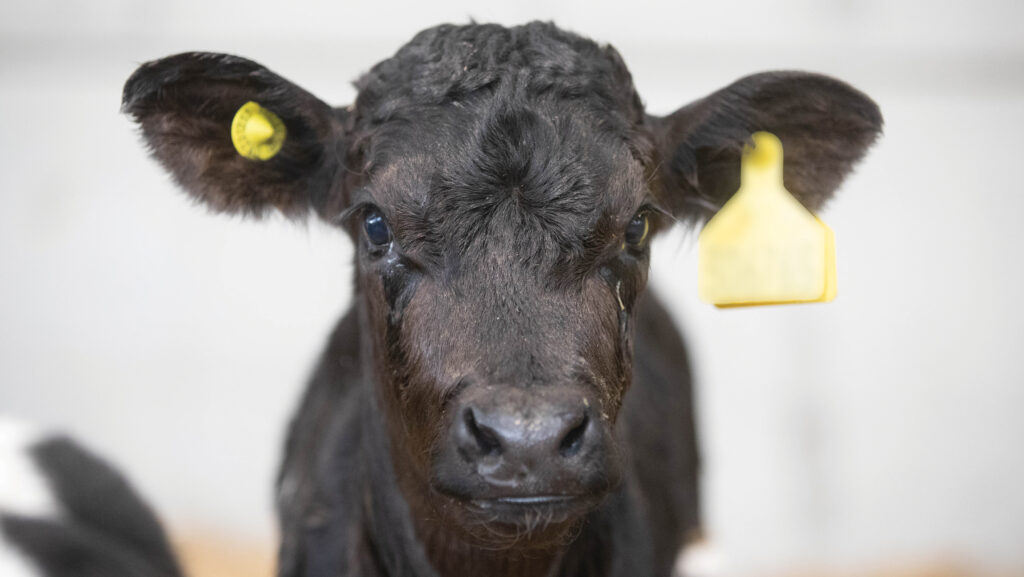
Herd replacements can be bred without crossbreeding to produce fertile, milky cows © Tim Scrivener
Marco thinks the slowdown in growth of crossbreeding is probably due to the better health of purebred cows, resulting in less need to choose another breed.
Genetic progress over the past 20 years means that breeding the right cow for the system can now be done within breed, he says.
Profit breeding indexes have been developed to target spring-calving (SCI) or autumn calving (ACI) herds; there are sub-indexes such as EnviroCow or HealthyCow, which combine traits.
There is a range of predicted transmitting abilities for health and welfare (such as fertility, lifespan and lameness) as well as management (gestation length and feed efficiency).
Genetic tools are no longer just about milk yield or looks and should be used to develop a herd.
He also says that heterosis will not make up for poor management, and if a herd’s fertility is already good, crossbreeding will not improve it.
“If your fertility is low, you need to understand why: genetics or management?
Crossbreeding is sometimes seen as the solution to everything, but the reason why its use is slowing down now is because health indexes have addressed issues within breeds,” he says.
Traits, not breed
The first question to ask when breeding dairy replacements, regardless of breed or genetic make-up, is what traits are wanted – not what breed to use.
The next step is to decide which bulls can supply those traits, says Marco.
The goal is to include these decisions in a structured breeding plan that understands the herd’s current strengths and weaknesses.
This plan then looks at the genes needed to improve the herd’s poorest traits, be they butterfat content, fertility or cow size.
“It’s about choosing the right genes that make the herd profitable and sustainable; traits that complement the herd and improve on weaknesses.
AHDB’s herd genetic report is a great start,” he says.
“Consider genomic testing to find your best females to breed replacements from – irrespective of breed or crosses – and don’t forget about the genetic superiority of your youngstock [for breeding heifers].
“Use sexed semen on the best, and beef on the rest,” he suggests.
“All of the principles of breeding are important – if not more important – in a crossbred herd to ensure that new genes are complementary to what you need.
“Remember that you are buying genetics to improve a herd, so the focus should be on the good bull, not just the breed. There are good and bad in each breed – you don’t want to use a poor bull.”