

New breeding tools target flock efficiency and methane output
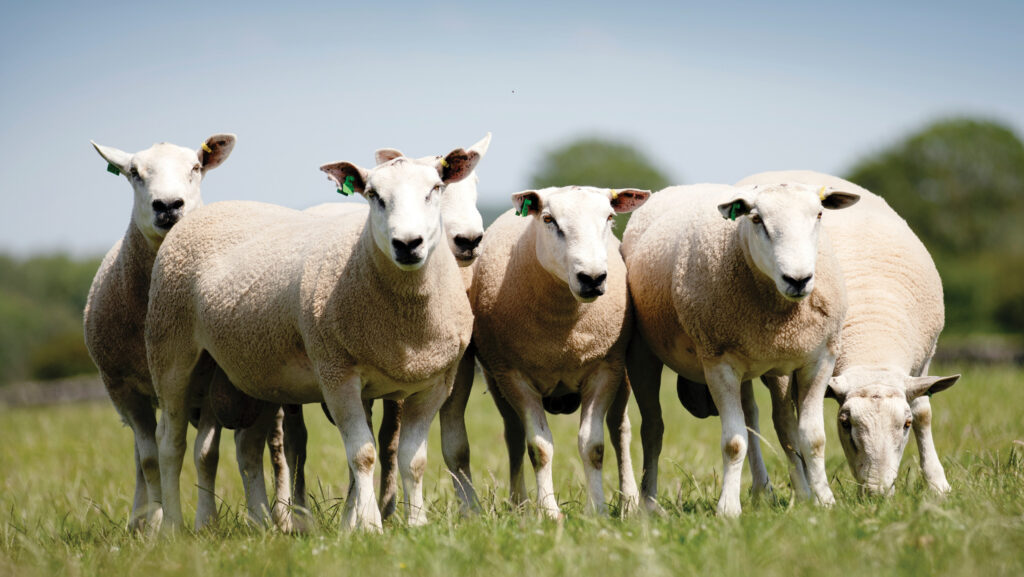 © Catherine MacGregor
 Selecting for low methane alongside desirable production traits could cut emissions by 10-20% over 10 years without compromising efficiency, a three-year research project has found.
Data from more than 13,000 lambs from 40 flocks of seven maternal breeds, gathered using portable accumulation chambers (PAC) to measure the greenhouse gas, confirmed that methane output is heritable.
This finding paved the way for developing a new estimated breeding value for low-methane output in sheep.
See also: How performance recording led to a 30p/kg lamb price premium
The £3m Breed for CH4nge project, funded by Defra’s Farming Innovation Programme, also involved taking DNA samples from thousands of performance-recorded sheep, including all those measured for methane, and their relatives.
The resulting data was used to develop a new environmental index, which ranks animals on their breeding potential for a naturally low-carbon footprint.
Called Breed for CH4nge, the index is designed to balance improvements in ewe efficiency and methane emissions in “a win-win for flock profitability and the environment”, says geneticist Dr Janet Roden, at lead project partner Innovis.
The Numbers
13,581 Animals tested for methane output, mainly ewe lambs
35,509 Number of genotypes collected from performance-recorded animals
835 Lambs CT-scanned and assessed for reticulo-rumen volume
1,146 Samples of rumen fluid analysed from grazing lambs
710 Lambs assessed for feed intake and efficiency
Tools ready for breeding season
The aim of the research was to find the best way to sustainably reduce methane output/kg carcass weight from ewe flocks through breeding.
“Supply chains, processors, even banks, want to know what we’re doing to reduce our carbon footprint,” says Janet.
“Enteric methane is responsible for 50-60% of the carbon footprint of sheep enterprises, so it made sense to focus on this.”
Both breeding tools will be available this season for maternal rams from Innovis, before being rolled out across the other performance-recording, maternal sheep breeder groups involved in the project.
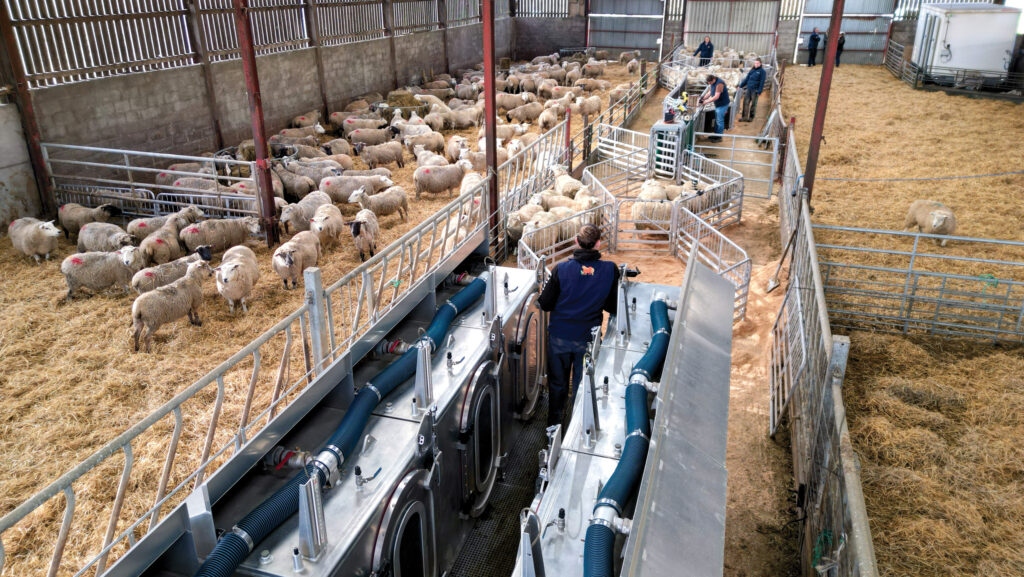
The Breed for CH4nge PAC trailer on the farm © Innovis
These include the Sheep Improvement Group (breeding the Exlana), Performance Recorded Lleyn Breeders, and the Centurion Group of Dorset Sheep Breeders.
In addition, the environmental index will be made available to all other maternal performance-recording sheep breeders via Signet Breeding Services, a project partner.
A star-based ranking has been developed to guide ram selection, with five stars awarded to the top 20% of animals.
“It was important with a trait like this that’s difficult to measure, to take DNA samples so we could develop a genomic breeding value,” says Signet’s breeding services manager Samuel Boon.
“It’s good timing too: 10 years ago, we wouldn’t have had that.”
Improvements in ewe efficiency made by using existing selection indexes (such as lambs born and lamb survival) have already cut methane output/kg carcass weight by 4-10% for breeds involved in the project.
The estimated impact of using Breed for CH4nge alongside these will be a further 10-20% reduction over 10 years of breeding selection, says postgraduate scholar Emma Dods, who developed the new index.
High and low methane emitters in every breed
There is a huge variation in methane output, according to the PAC measurements. The lowest 20% of emitters produced 15% less methane than the flock average; conversely, the highest 20% produced 15% more methane than the flock average.
“That’s a 30% difference between the highest and the lowest – more than you see for most traits. And there’s more variation within breeds, than between them; every breed has its low and high emitters,” says Janet.
Further investigation established that 16% of that variation was genetic.
This is lower than for muscle depth, for example, at 29% heritability. As there is more variation within flocks, greater change can be achieved.
“But we don’t recommend single trait selection on methane output – it has to be balanced with production,” says sheep geneticist, Dr Nicola Lambe, at Scotland’s Rural College (SRUC).
She stresses that methane breeding values should always be used alongside other production and health performance measures to guard against unintended reductions in efficiency and profitability.
However, results so far show “no real antagonisms”. This means breeding from animals that naturally produce less methane is unlikely to reduce rates of progress in other traits such as eight-week weights or worm resistance.
“It’s a work in progress, but that fits with what’s been seen in other countries,” Nicola adds.
Impact of other feed-related factors
Feed efficiency was also included in the project. Research involved monitoring 710 lambs fed a diet of grass nuts for six weeks.
Results showed the most efficient 25% of lambs ate at least 20% less feed a day (0.31kg less dry matter intake) while growing at the same rate as the least feed-efficient 25% of lambs.
Like methane output, there was more variation within breeds than between them. However, while daily feed intake and feed efficiency are highly heritable, no relationship was found with methane production.
Rumen volume was measured as well, using CT scans. Data sets from the project were combined with those from the Welsh Sheep Genetics Programme, Teagasc in Ireland, and SRUC, covering 18 sheep breeds.
Again, this revealed wide variation – rumen volume in Welsh Mountain sheep, for example, measured anything from 3 to 10 litres – and smaller rumens were found to be associated with lower emissions.
Next steps include analysing ewe weights and condition scores from more than 87,000 records to assess the relationship to rumen volume and improve the ability to select low-methane animals that thrive in forage-based systems.
Role of rumen microbiome in methane output
Some 66-73% of variation in daily methane output is caused by differences in the abundance of rumen microbes, according to first year data from a study of the rumen microbiome.
This confirms work carried out in New Zealand, says Dr Nicola Lambe, but further research is needed to establish the heritability of these differences.
Furthermore, it requires a cost-effective, on-farm test to be used in a breeding programme – a method using oral swabs is in development in New Zealand.
Long-term impacts of breeding on efficiency and carbon footprint
Farm-scale modelling was carried out by Harper Adams University in collaboration with Pilgrim’s Europe as part of the Breed for CH4nge project.
From an initial analysis of six years of data from 64 flocks in Pilgrim’s supply chain, 12 were selected to represent the UK sheep industry.
Scenarios were then developed to assess the impact of changes in flock genetics on farm carbon footprint and production system efficiency on these farms.
Key findings:
- Using maternal breeding indexes on farms increases system performance – benefits accelerate after about five to seven years as genetic gains flow through the ewe flock
- Emissions intensity (kg carbon dioxide equivalent/kg carcass) falls with genetic gain and adoption of measures such as mating ewe lambs
- Genetic progress alone can reduce emissions intensity by about 8% in 10 years and 17% in 20 years
- Management practices that increase lamb output, for example, heavier carcasses and higher prolificacy, raise total farm emissions despite improvements in efficiency
- Improving sheep efficiency correlates with both lower carbon footprints and increased profitability.
Source: Daniel Owen, Pilgrim’s Europe, and Karl Behrendt, Harper Adams University.