

Livestock Event 2016: Digital dermatitis control ‘starts with heifers’
 © FLPA/REX/Shutterstock
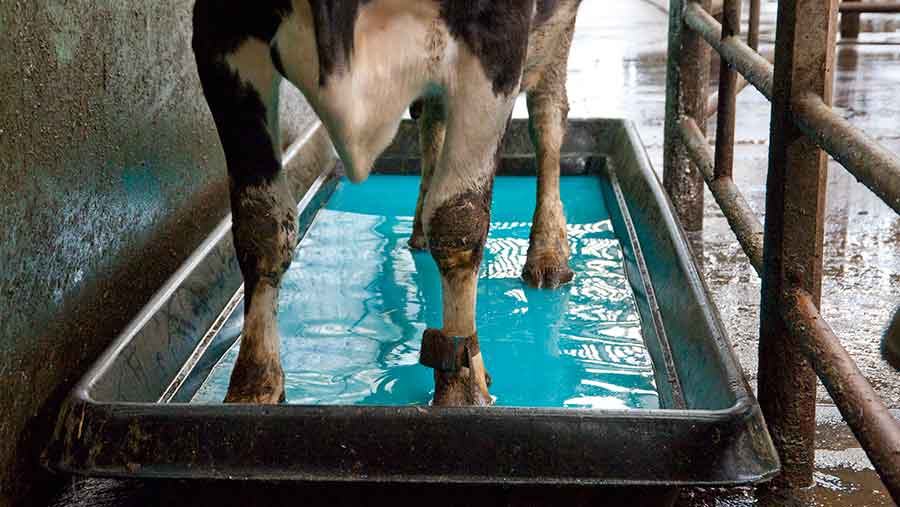
 Farmers should consider routinely footbathing heifers pre-calving to prevent digital dermatitis (DD) from escalating in the milking herd.
Vet Nick Bell from the Royal Veterinary College said heifers were one of the most vulnerable groups for picking up DD infections as bulling or in-calf heifers.
Generally, high levels of slurry in youngstock systems added to the infection pressure, while immuno-suppression around calving and the stress of being milked created “the perfect storm” for DD to escalate when heifers calved, he explained.
Digital dermatitis scoring
- M1 ulcerative lesions <2cm
- M2 larger ulcerated lesions >2cm
- M3 regressing lesions (recovering)
- M4 large, warty lesions (represent reservoir of infection)
See also: Foot-bath advice to reduce digital dermatitis in cows
Stress at calving
“You tend to see the worst lesions in heifers. They may have had small lesions before calving, but the stress of calving means they get worse and these lesions create huge infection pressure for the herd,” he said at an Animal Health Zone Seminar at the Livestock Event 2016.
DD is scored on a scale (see right). The ultimate aim is to prevent DD lesions, but particularly to prevent smaller lesions from developing into M4 warty lesions, which represents the main reservoir for infection.
Dr Bell said in an ideal world, heifers should be kept free of DD before they entered the herd. Once they were in the milking system – if good preventative measures were in place – they were then less likely to acquire new infections.
Good prevention revolved around routine foot-bathing, prompt treatment of the early signs of DD and minimising slurry contamination.
Dr Bell emphasised that no level of foot-bathing in the milking herd would help if DD infection pressure from heifers calving in was high or slurry management in the milking group was poor.
Monthly heifer pen walks
To prevent DD from taking hold in heifers, he suggested carrying out monthly pen walks of heifers from bulling age or even younger if individual farms felt DD was establishing earlier. Any signs should be then be treated promptly with a topical spray.
Dr Bell added: “The key is what you can do to implement foot-bathing regimes to prevent new lesions. Can you rig up foot-baths in front of the water troughs or on cross-overs or run heifers through the milker’s foot-bath?”