

Farmer Focus: Adapting grazing mindset helps biodiversity
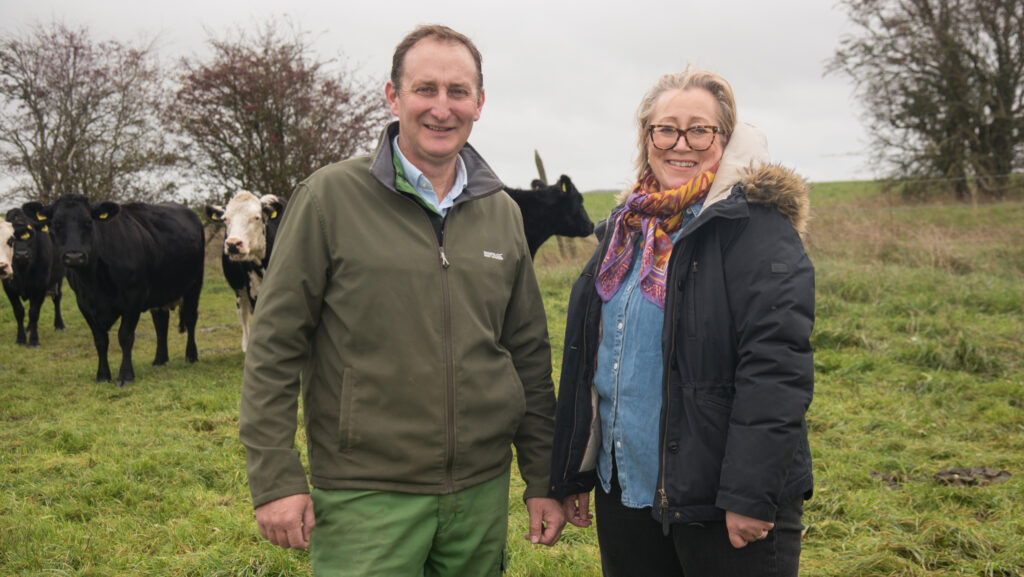 Dan and Catherine Mercer © Hugh Nutt
 We desperately need some rain here. Luckily, we had a shower the other day, but it wasn’t enough and we could definitely do with some more.
The grass isn’t really growing at the moment and despite all the heavy rain earlier in the year, conditions are still fairly dry on the chalk.
See also: Beef grazing project benefits soils and biodiversity
About the author

We joined the Adaptive Multi-Paddock (AMP) grazing project run by FAI Farms in early 2023. There was a drought the previous summer that had taken its toll on the cattle and our grazing system.
We found ourselves supplementary feeding all summer just to keep the cattle from being hungry, and with little or no grass in front of us, things were getting dire.
We then ran into some issues during calving in the following spring and knew we had to implement some serious changes into our business.
When we were invited along for the day to visit the AMP project near Oxford, we took the opportunity to go and have a look.
We walked away afterwards with serious doubts as to how we could even contemplate changing our grazing system, but thought we could have a go.
It definitely required a shift in mindset; it has been a learning curve for us – and still is.
The word “adaptive” has been key to adopting the changes into our grazing and making it work for us.
We were well-used to keeping cattle behind electric fences out on Salisbury Plain, though moving them every day was not practical.
The arable side of the business has to be considered, especially during the harvest period, yet this can be when you need to move cattle more regularly, when there is little grass and the conditions are dry.
However, with a bit of planning and organisation, cutting paddocks down into smaller areas, moving them when it suits workload and managing the water, we are easily able to move a group of cattle with one person, when required.
The change has been positive one, and we have seen a vast improvement in all aspects, from soil and cattle health to biodiversity.
The different species of grass returning to grazing – such as cocksfoot, timothy and meadow foxtail – where once there was only perennial ryegrass has been a very welcome sight.