

Farmer Focus: Lambs on pellets as ewes pick at dry grass
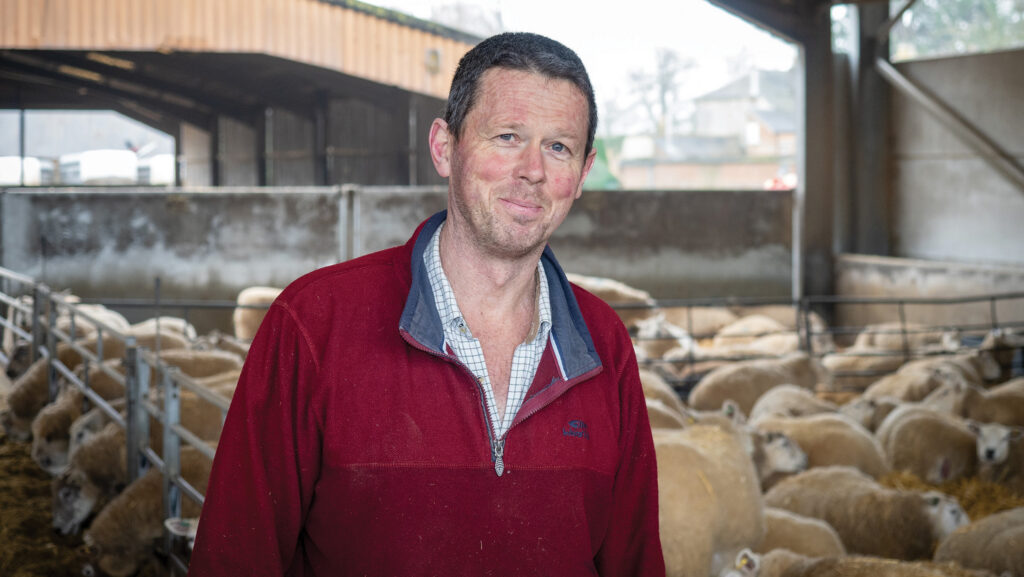 James Kimber © Kathy Horniblow
 Last month, I said we were making second-cut silage. That was optimistic: weeks of strong, hot winds have ripped all the moisture out of everything.
Stock have eaten all that standing grass, clover and herbs and the ewes are now picking bits of dry grass.
The small lambs have had a mineral bolus with cobalt as they were looking dull and not growing. Egg counts were low. These have eaten the clover leys, with very little left.
See also: How willow can help provide vitamin B12 to growing lambs
About the author
The heavier lambs, over 35kg, have been put on pellets at home to try to improve and market them.
Although the average price has dropped significantly, better lambs are still coming to a reasonable price. (Well, I hope so when these 450 are ready.)
Interesting discussions have been taking place over the lunch table about how we should adapt. According to the BBC, we are all going to die.
Alternatively, we can tweak things, develop and do what we do, producing great British food. There must be farmers looking at half-empty corn stores or silage pits, thinking: “What are we doing?”
The important thing is to get out, discuss, compare, mickey-take and plan on.
Thirty years ago, Belinda and I got married. Unbeknown to us, there was a bit of a bet on how long we would last. I thought six months was a bit rude, but I don’t think anyone guessed this long.
With numerous challenges thrown at us, I think we’ve done a pretty good job.
We were down at the New Forest show with our Simmental cow and calf recently. Given I have been showing for 54 years, a friend asked why I keep doing it. He was a bit surprised when I said it was cheaper than therapy.
We have a great laugh showing, and I was pleased the younger team went off to the Royal Welsh; picking them up on Thursday evening, it was obvious they had had a tremendous time.
We are trying to complete some fencing under a grant scheme. It is certainly challenging in rock-hard conditions. We have put an application in for five more fields of stock fencing on different land parcels that will complete the home farm.
As 75% of the funding was allocated in two days, it looks like every farmer has had the same thought. All that money will be spent in the rural economy, keeping numerous other jobs going.