

How willow can help provide vitamin B12 to growing lambs
 © MAG/Judith Tooth
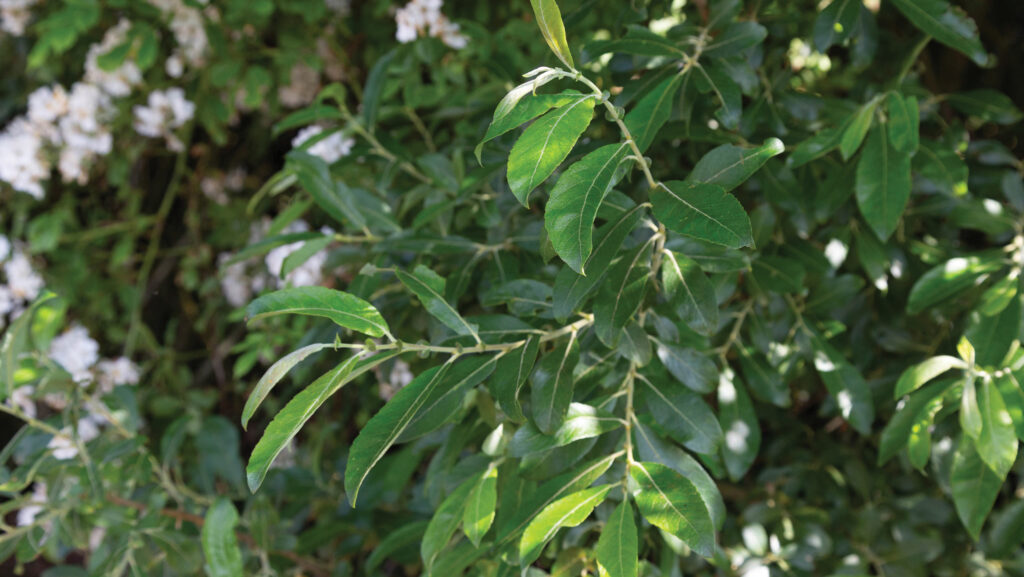
 The use of willow for browsing by lambs is being rolled out on a Northumberland farm to help address a cobalt deficiency.
The move follows on-farm field trials which, despite inconclusive results, persuaded Tom Fairfax, of Mindrum Farm, Cornhill-on-Tweed, to use the cobalt-rich plant to complement (if not replace) traditional supplementation.
See also: How cobalt deficiency tests led to higher lamb weights
Tom knew the farm (certified organic in 2022) was low in cobalt, but the effect on his lambs was becoming more obvious and affecting growth rates. “Lambs were ‘dull’,” he says.
“We were having to get a derogation to give a vitamin B12 injection [to address the deficiency]. I thought it shouldn’t be like this.”
Farm facts
Mindrum Farm, Cornhill-on-Tweed, Northumberland

Tom Fairfax © MAG/Judith Tooth
- 476ha – one-third each of permanent pasture, rotational grass leys and arable cropping, plus woodland
- 930 Suffolk cross Mule ewes put to Texel ram; now introducing Exlana genetics
- Lambs indoors for three weeks from 23 March
- Finished lambs sold mainly to Dunbia, grading R3L and U3L
- Finished cattle sold via Farmstock
- 90 Shorthorn and Aberdeen Angus suckler cows
- Annual rainfall of 750mm
- Light, sandy loam soils with some wet ground
Browsing behaviour
He spent a lot of time observing the lambs’ behaviour and saw them “actively selecting goat willow to eat” from existing hedges. He then did a simple experiment on two groups of 10 lambs.
Those with access to willow doubled their levels of vitamin B12 after three weeks, according to blood tests taken by his vet.
Encouraged by this “quick and dirty” trial, he embarked on a larger-scale field lab with Innovative Farmers.
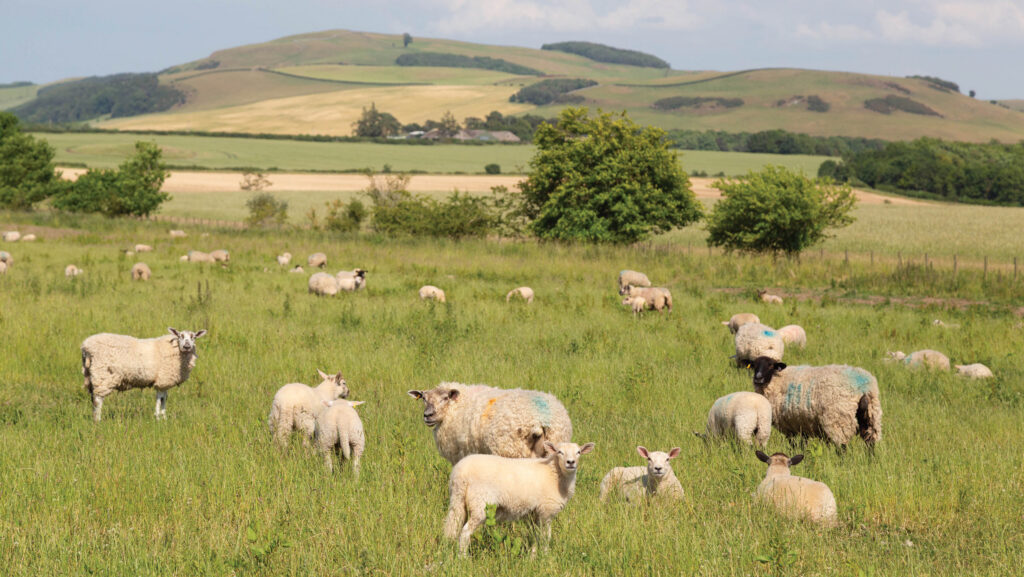
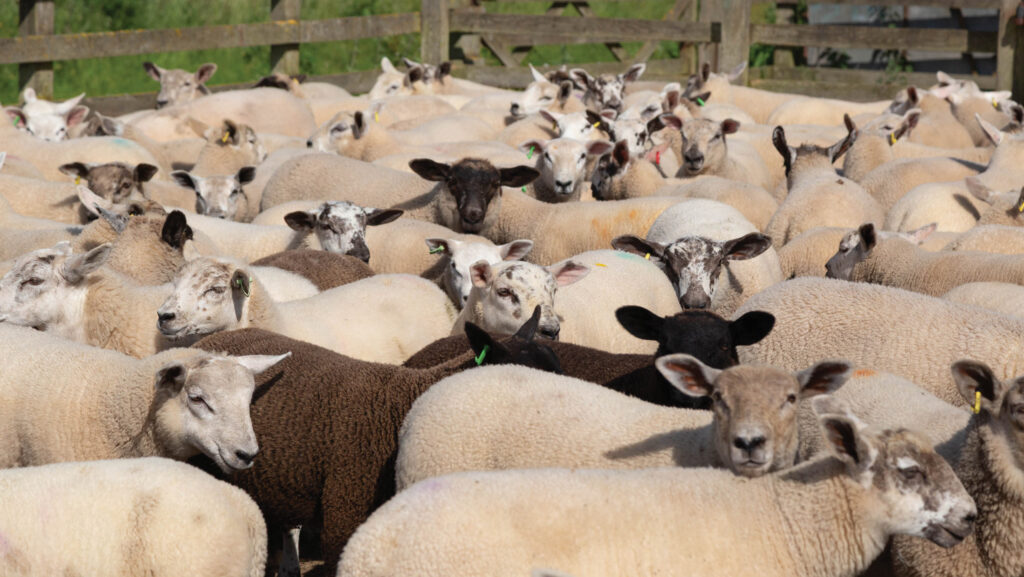
This involved 520 weaned lambs on a four-year-old red clover-rich ley, subdivided for rotational grazing.
Pre-grazing forage samples showed the cobalt content, at less than 0.08mg/kg dry matter (DM), was below that required by lambs (0.2mg/kg DM).
Goat willow (also known as pussy willow) growing in existing hedges on the farm was analysed at the start of the trial and found to contain 1.179mg cobalt/kg DM.
Lambs were weighed weekly. Half of them were fed a weekly supplement of cut goat willow branches in pens after weighing, before rejoining the other half to graze as before.
Those offered willow took to it “enthusiastically and deliberately, but briefly”, consuming an average of 40g on each occasion.
© MAG/Judith Tooth
Trial results
Blood samples were collected from 10 lambs from each group at the start, mid-point and end of the two-month trial. Initial samples showed all lambs were deficient in vitamin B12, while later ones indicated that levels were marginal or sufficient – regardless of their feeding group.
Yet, while lamb growth rates for the two months of the trial averaged 140g/day, there was no significant difference between the group fed willow and the control.
© MAG/Judith Tooth
Tom and his field lab team – Soil Association farming adviser Tabitha Acton and University of Nottingham researcher Nigel Kendall, along with shepherd Sam Taylor – put the unexpected results down to a range of factors.
- Cobalt requirements are strongly linked to growth rate: the faster the growth, the higher the requirement.
Daily liveweight gain, while in line with farm targets, was lower than industry benchmarks for an April-lambing flock.
So, while the clover-rich ley was supplying less cobalt than the amount generally required, it may have been sufficient for the lambs in the trial, and the cobalt from the willow was surplus to their needs. - Selenium deficiency can also compromise lamb growth rates, and selenium levels in the pasture were below recommended levels.
So too was iodine, which, while associated more with fertility and lamb survival, also plays a role in energy metabolism, protein production and appetite. - Previous trials (elsewhere) had fed willow daily, providing levels of cobalt far in excess of requirement.
This led the team to try weekly feeding of cut branches at Mindrum instead; this also meant both groups of lambs could graze the same pasture.
However, intakes of willow during these two-hour browsing periods were lower than anticipated, particularly as the trial went on.
© MAG/Judith Tooth
Why is cobalt important?
Cobalt is essential for producing vitamin B12, which supports lamb growth. Cobalt deficiency, or ill thrift, is common in weaned lambs, and even a subclinical deficiency can significantly reduce growth rates.
Grazing alone is often insufficient to provide a lamb’s cobalt requirement, especially in dry summer months.
Supplementation via bolus or drench (free-access products do not guarantee consistent intakes in all animals), while effective, add cost.
Willow leaves are rich in cobalt and palatable to lambs, so present a potential natural alternative.
Source: Innovative Farmers
New willow planting
Despite the inconclusive results, Tom was keen to continue using willow. He is convinced continuous access by browsing is more effective than periodic feeding – and avoids the cost of cutting and feeding.
“I’ve been planting it ever since,” he says. “I reckon there’s 60% evidence it will give me quite a lot of benefits.”
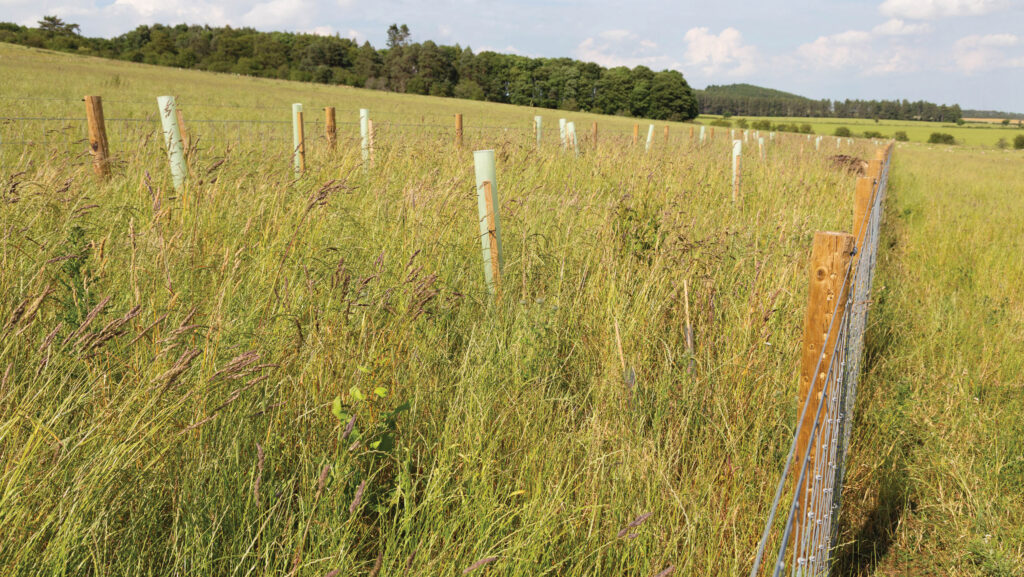
As well as a programme of planting in existing boundary hedges, 400 goat willow saplings were planted last winter in two broad rows across a sloping 12ha (30-acre) field.
These 6m-wide hedges, each 200m long and fenced on either side, divide the field into three equal grazing blocks. The blocks can be further subdivided for the farm’s adaptive grazing system.
The fast-growing willows, which make up 60% of the species mix, are grouped towards the edges, so as they grow through the fence, sheep can browse them. Broad-leaved species are planted at 5m centres.
The hedges are sited to provide shelter from the prevailing wind as well as stronger easterlies. Plants and fencing have been funded as part of the Great Northumberland Forest project.
“Some of the willows have been mulched with poplar woodchip from the farm, others with degraded hay or silage, and some without,” says Tom. “If we do have some losses, willow regenerates easily from cuttings; finding replacements won’t be a problem.”
The new habitats enhance the farm’s existing biodiversity and create wildlife corridors between habitats, which include shelterbelts and watercourses.
Willow has also been planted in a series of 17sq m “clumps”, along with aspen and rowan, protected by temporary fencing. The idea is that these will grow into thickets, providing browsing and shelter.
In addition, single goat willows, protected by cactus guards, have been planted for browsing within permanent pasture.
In a further planting configuration, funded by a commercial sponsor, willows have been planted 20m apart (30 stems/ha) in single rows in a 14ha (35-acre) field of rye, which sheep grazed in February.
Future cobalt supplementation
“We have planted willow in most of the sheep fields since the trial and hope to reap the benefits over the coming years,” says Tom, adding that some of the more established trees are just becoming viable for browsing.
“We try to cycle lambs through fields with willow, though it’s still not always possible at this stage. We are still supplementing where necessary, with a derogation, though strategy is driven by blood-testing lambs.”