

How grazing lucerne kept lambs growing as grass turned brown
 © Debbie James
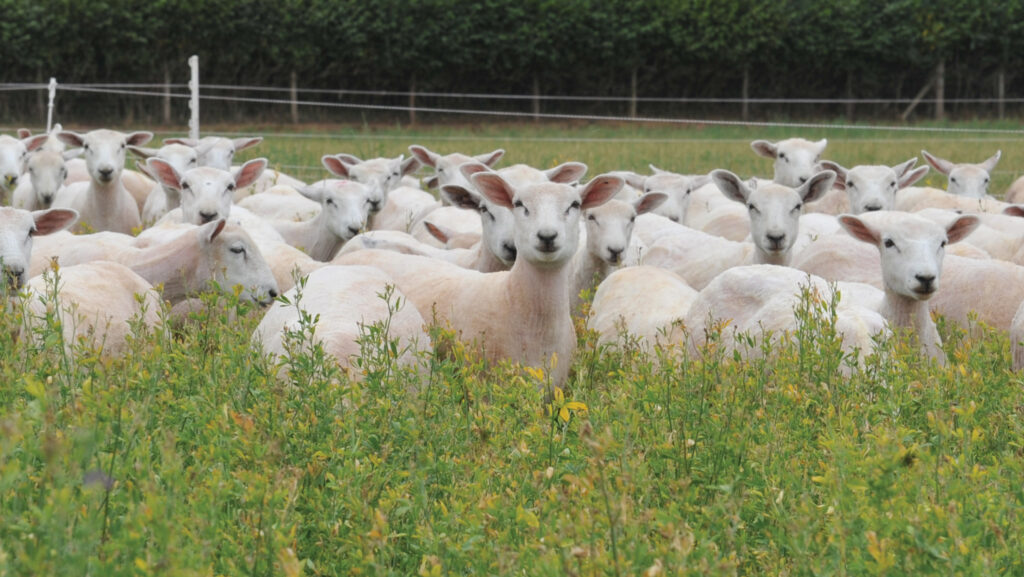
 Scaling up the acreage of drought-tolerant lucerne from 6.9ha (17 acres) to 12ha (30 acres) maintained grazing for lambs through the summer drought at Newton Farm, Brecon.
While grass growth was halted by the absence of rain and record temperatures, fields of the deep-rooted legume performed well.
See also: Farmer Focus: Lucerne crop is only green area on farm
By mid-August, there had been no rain to speak of at the farm since June, yet the lucerne had been grazed and was growing back.
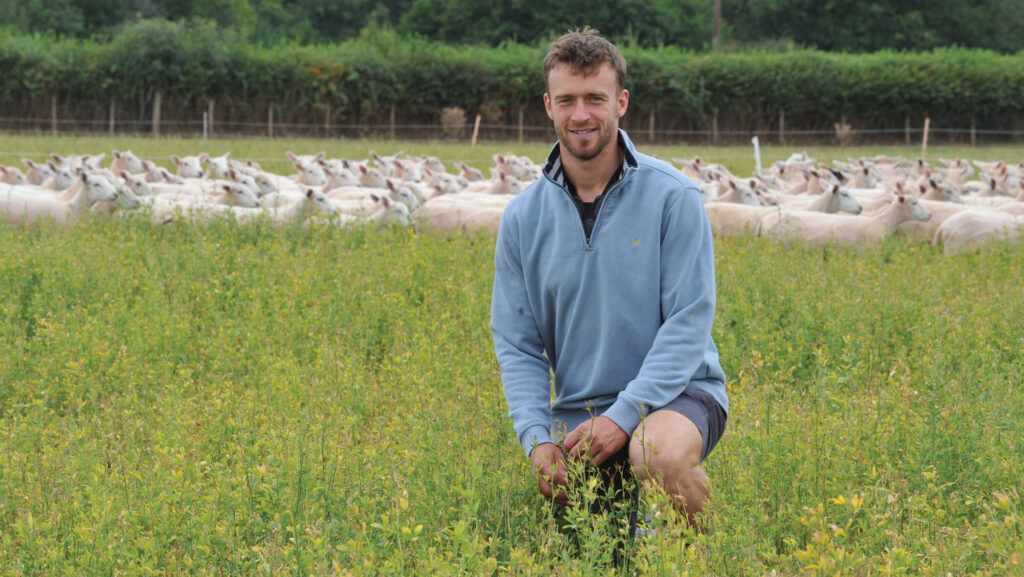
Meanwhile, the rest of the farm had “literally shut down”, says Tudor Roderick, who farms with his parents, Richard and Helen. In the period up to weaning, twins produced from the flock of Romney-cross ewes gained an average of 320g/day.
Tudor Roderick © Debbie James
Farm facts: Newton Farm, Brecon, Powys
- 344ha – half owned, half rented through farm business tenancies
- 1,100 Romney-cross ewes and 300 retained ewe lambs
- Finished lambs sold to Kepak and Pilgrim’s UK
- 120 Stabiliser cows and 20 in-calf heifers
The business first grew lucerne in 2024 with support from the Farming Connect Try Out Fund. This initiative funds individuals and groups of farmers and growers in Wales to experiment with ideas and bring them to life.
The crop performed so well that another field was drilled the following year.
Choice of variety and establishment
The very persistent and high-yielding cutting variety Artemis accounts for a small proportion of that acreage, but most of it is Luzelle.
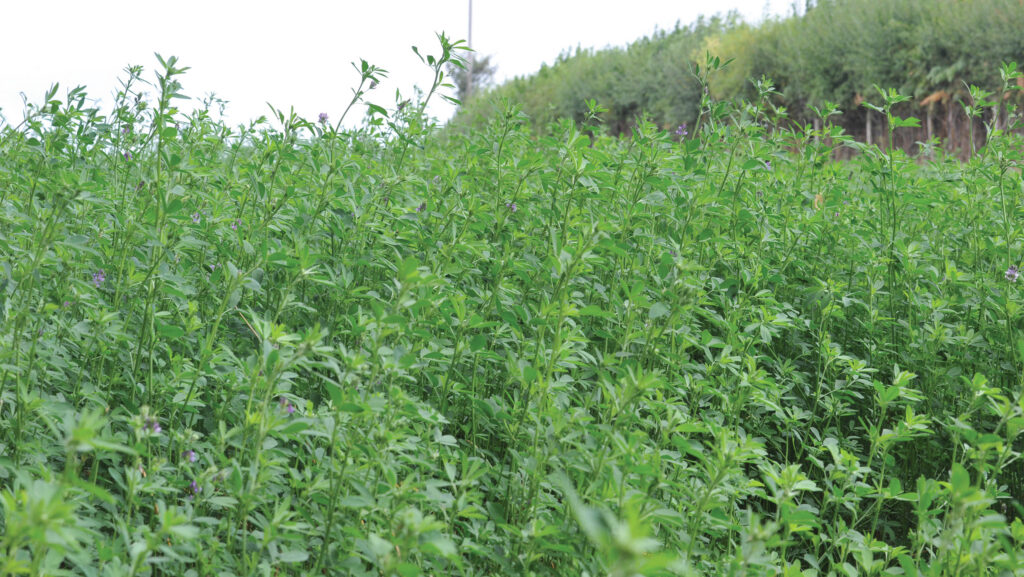
This variety has been bred specifically for grazing: it has a crown that sits flatter to the ground and produces greater numbers of shoots with less fibre and a higher protein content than cutting varieties.
The Rodericks are banking on the lucerne being a five-year crop. Tudor recommends establishing the crop by undersowing it in barley and growing it in combination with timothy and white clover.
That strikes a good nutritional balance to prevent issues with bloat and some clostridial diseases.
The fields that have performed best in 2026 are the leys in their third season – when fully mature, the plant can have a root depth of 3m, enabling it to mine for water deep into the soil.
“In the first two years, the plant was still putting down its roots, and it really did slow down growth during the dry period in 2025 because it was still diverting energy into forming the root structure. Now it is fully established, it has really motored on,” Tudor says.
First-year growth was “quite steady”, he adds. “We had a good crop of bales and grazed it once or twice after that.” This year, though, growth was so good that a paddock had to be taken out of the rotation early in the season because the sheep struggled to keep up with it.
© Debbie James
Grazing management
Stocking rate in the 1ha (2.5-acre) paddocks varies according to the point in the production cycle.
“We start mobbing up into 40 or 50 sets of twins. By the end of lambing it is double that number, and there were 300 ewes and 500-plus lambs in one bunch going around the rotation just before weaning,” says Tudor.
It is not just the amount of feed produced but also the quality – lucerne has an average crude protein content of 24% and metabolisable energy of 12MJ/kg dry matter.
“Lambs performed well on it,” he says. “They grazed with their mothers until weaning, and we then moved the tup lambs and the ewes onto other land, but kept the ewe lambs on the lucerne. They have done really well on it since weaning.”
Lambs achieved an average deadweight of 18.5kg.
Managing the crop is key. The Rodericks graze once with tupping ewes in November, then there is no further grazing until mid- to late March. If it was grazed again in the winter, when conditions are wet, Tudor reckons it would kill the plant.
One of his principal initial concerns was achieving the correct post-grazing residual height. He aimed for low residuals to enhance palatability, but saw this was slowing down regrowth.
“We tried to keep it short and sweet, but the more we have grazed it, the more we have realised that it doesn’t matter if the sheep are coming out of there and the field looks stalky. What is left might not be great quality, but it speeds up regrowth,” he says.
Increase in scald but no bloat
The only challenge Tudor has encountered is the toll grazing lucerne can take on foot health. “It is quite stalky and gets up between their cleats and lambs can get scald, but we foot-bathe them and they come right quite quickly,” he explains.
Contrary to expectation, what he hasn’t experienced is bloat. “Bloat was the big worry: everyone warned us that we would get problems, but it hasn’t been an issue at all.”
Potential to expand
The family are considering establishing lucerne on 15-20% of the farm to secure feed supply as weather patterns point to more frequent summer droughts.
“If the summer was wet, we would have the rest of the farm – which is mainly perennial ryegrass and clover – growing well. When it goes dry, if we get up to 15-20% of the farm in lucerne, at least we would have something we could rely on in a dry summer,” says Tudor.
“That is going to increase our resilience to get through these more difficult periods.”
The Rodericks also have cattle, but don’t graze them on the lucerne, largely because theirs is a bull beef system with indoor finishing on cereals to slaughter at 13-14 months.
If they were to switch to castrating bulls to finish steers instead, they would trial grazing the lucerne because the demand for high-quality forage by those animals would be high. However, a slow transition onto the crop would be needed, says Tudor.
“I have seen farmers in Canada grazing cattle on lucerne and [as with] transitioning lambs onto red clover, cattle need a very gradual transition onto lucerne.”
Only a small acreage of the lucerne grown at Newton Farm is conserved as silage.
“The quality is way too good to bale it and feed back to cows in the winter. My aim is to have no cuts because when you have lactating ewes, especially those with twins and triplets, they need high-quality feed there and then – dry ewes and cows don’t need it in the winter,” says Tudor.
Advice and support
Specialist advice has helped the Rodericks get the best from growing lucerne. The Try Out Fund, which reopens for new applications on 2 December, gave them access to independent grass and forage seed specialist Francis Dunne.
“Having someone to hold our hand through the different times of the year when we didn’t know what we were doing was really valuable,” says Tudor.
In mid-August, when the drought was eating into conserved feed stocks, there were 250 ewe lambs grazing the lucerne. “The rest of the lambs and the cows were being fed, but the lucerne was a glimmer of hope at a time when there was a lot of adversity,” says Tudor.