

How one farm is trialling a regen approach to forage maize
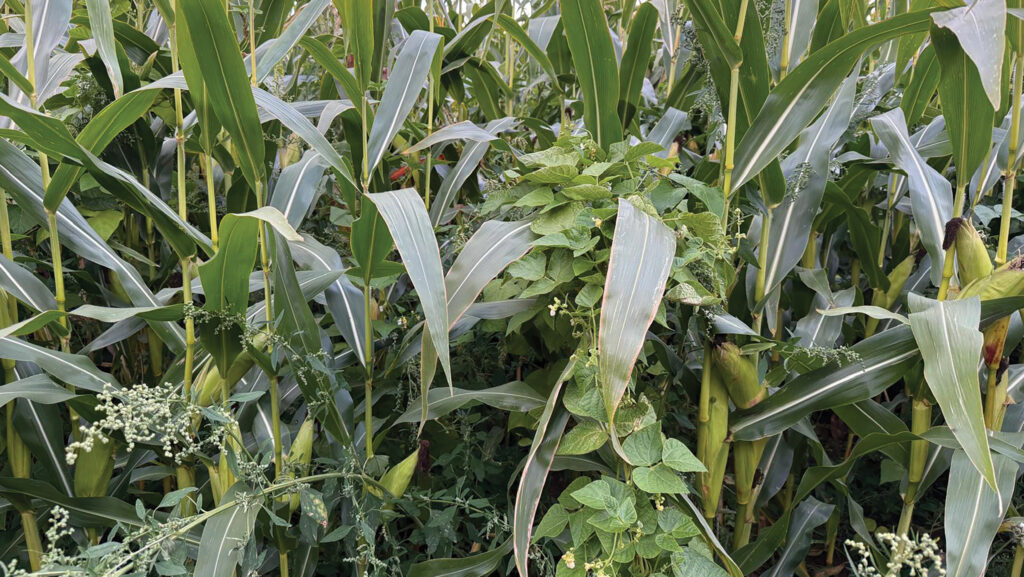 © Lucy Noad
 Faced with a reliance on maize but driven by a commitment to regenerative farming principles, Lucy and Rob Noad set out to prove that maize can be grown more sustainably.
See also: How growing maize with beans can improve silage quality
The Noads milk 200 autumn-calving cows at Woodhouse Farm, Semington, Wiltshire.
Their regenerative farming journey began when they joined the First Milk co-operative and started supplying Yeo Valley Production’s non-organic Naturally Better Dairy Group – a partnership launched between the two British milk manufacturers in 2023 that rewards regenerative practices.
“I didn’t know anything about regenerative farming, but it was a eureka moment,” says Lucy. “I realised how much more resilient our business would become by adopting these practices.”
Farm facts: Woodhouse Farm, Semington, Wiltshire
- Farming 227ha
- Milking 200 cows
- Autumn block-calving
- Yielding 8,200 litres at 4.7% butterfat and 3.6% protein
- Supplying First Milk/Yeo Valley
The Noads have embraced “an eclectic mix” of practices through First Milk’s regenerative plan, including improved hedgerow management and herbal leys to boost biodiversity, and are moving towards eliminating chemicals and sprays. However, maize presented a dilemma.
Why maize matters
“Maize makes up 50% of the ration in the winter, and we simply cannot grow enough forage without it,” says Lucy. “We are a dry farm in the summer, so maize suits us well.”
The young herd, which comprises 70% first and second calvers, currently averages 8,200 litres with a target of 8,500 litres.
Operating a grazing-based system means milk from forage is a key performance driver. This sits at 3,700 litres, up from 2,100 litres two years ago.
But the Noads believe maize plays an essential role in sustaining this improvement.
Rather than walk away from the high-value crop, Lucy decided to rethink how it could be grown more sustainably.
Cultivation and herbicide trial
In 2024, they began trial work to assess whether they could change cultivation practices and eliminate herbicide use.
Half the maize was min-tilled rather than ploughed, then undersown with white clover to provide green cover after harvest and protect the soil. There was also a plot of strip-tilled maize.
Despite having no herbicides, the crop grown using reduced cultivation and undersown with clover yielded 34.3t/ha (13.9t/acre) and cost £29/t (£71.63/ha) to establish and harvest.
The strip-tilled maize produced the same yield. In comparison, conventional maize yielded 39.52t/ha (16t/acre) but cost £41/t (£101.27/ha) to establish and harvest.
Ease of travel at harvest was also better on the minimally cultivated ground.
“We can grow more maize to compensate for the yield penalty. The real eye-opener was cost savings,” says Lucy.
Maize and beans trial
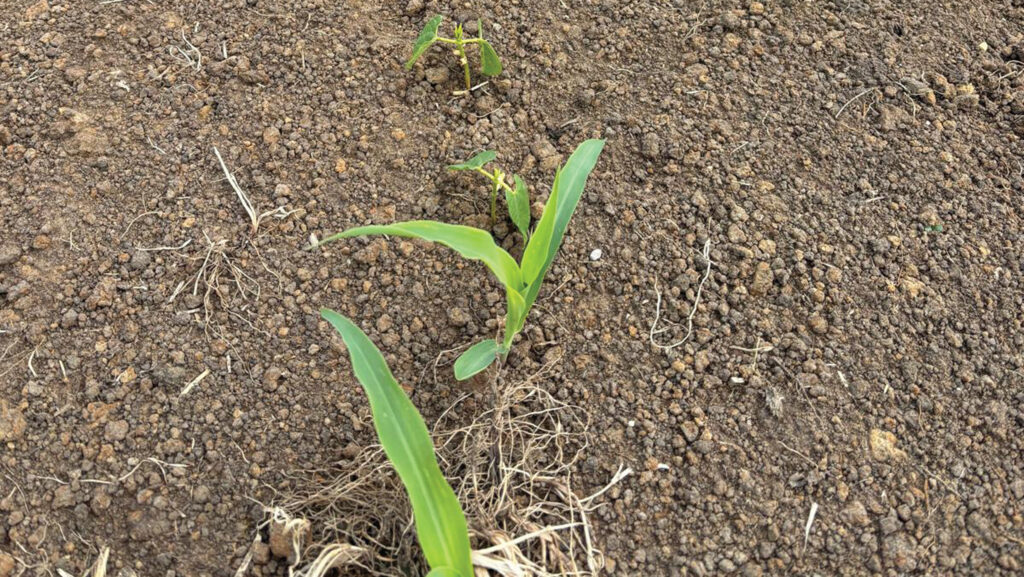
Crops were sown at 70% maize and 30% beans © Lucy Noad
The success of the trial encouraged her to experiment further. Last year, she grew a dual crop of maize and beans (a cross between a dwarf and runner bean) undersown with a herbal ley.
The aim was to reduce soil erosion and disturbance while improving the crop’s feed value – maize is typically high in starch but low in protein.
Lucy thought the beans would complement the maize, boosting protein in the ration. In addition, the bean flowers would be beneficial for pollinators.
She enlisted the help of Jonathan Coombe from St Catherine’s Seeds, and Neil Groom from Grainseed.
About 19ha (48 acres) were planted on 10 May at 111,000 seeds/ha. They opted for the maize variety Bonnie for its good drought tolerance, early harvest and sturdy stalks to take the weight of the beans.
Neil recommended using Rancho and Djrango beans, and these were sown together with the maize seeds at a rate of 70% maize and 30% beans.
The varieties and seed rates selected had proven successful in previous German trials.
On the advice of the contractor, beans were not added to the first and eighth seed hoppers to prevent them from tangling the header at harvest.
The dual crop was established into “tufty” permanent pasture, which was shallow ploughed at a depth of 7.5-10cm to “skim off the grass”.
Meanwhile, newer grass leys were tine-cultivated in one pass, then power-harrowed and drilled. Glyphosate was applied to only one field, for comparison.
No fertiliser or herbicide was used; only 30t/ha of farmyard manure was applied before cultivation. Beans can fix 30-50kg/ha of nitrogen, adds Neil.
From 1 February until mid-June, there was no rain. Even so, maize germinated within two weeks, with beans following three days later.
A GS4 herbal mixture was broadcast on 3 June using an Einbock harrow.
The crop was harvested on 27 September once there were fully formed pods on the beans. It averaged 32.4t/ha, although yields varied:
- 31t/ha on permanent pasture that had been shallow-ploughed
- 44.5t/ha on lightly cultivated land, which retained more moisture.
“It wasn’t a clean crop, but it wasn’t bad enough to affect yield, and it was a compromise we were willing to make. There was no difference in the weed burden on the field that had glyphosate compared with the others,” explains Lucy.
The herbal ley struggled because of the drought, and by the time it was out of the ground, the maize was already at knee height and shaded the herbal ley from the sun.
Feeding performance and ration impact
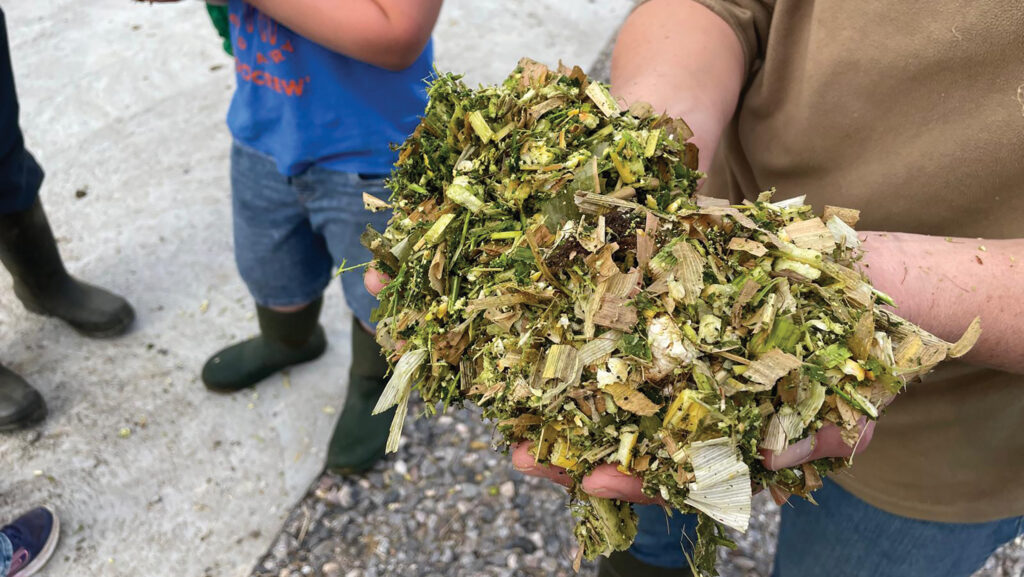
© Jonathan Coombe
The maize and beans were introduced to the total mixed ration before Christmas. Maize analysed at 31.1% dry matter (DM) with a crude protein of 8.8% and starch of 36.6% DM.
“Palatability is good and intakes have improved,” Lucy notes. “Protein is up about 1.5% on the year and it has fermented very well.”
As a result, they have been able to lower rape meal content by 0.5kg a head a day and milk is averaging 32.5 litres daily at 4.7% butterfat and 3.6% protein.
Next steps
Despite challenging growing conditions, the results have reinforced Lucy’s belief that combination cropping maize has a future.
“Given the dry year, it wasn’t a fair assessment — and neighbouring maize crops failed completely,” she says.
“But we need crops that cope with weather extremes and allow us to establish something behind them to protect soils over winter.”
The plan now is to strip-till maize and beans into an established herbal ley to give ground cover a better chance.
Lucy says rather than aim for perfection, she wants to prove maize can be grown in a regenerative way.
Top tips for growing maize and beans
- Wait for warm soils Beans require a soil temperature of 14-15C, compared with maize at 10C and rising. Either drill both crops together in mid-May when conditions allow or establish maize first and follow with beans once soils are warm enough.
- Start with a clean field Follow grass or ensure weeds are controlled before drilling. There are no safe post-emergence herbicide options for beans.
- Feed the crop at peak demand Apply nitrogen in the seed-bed, then top up with foliar nitrogen when crops reach waist height. Demand is greatest from the third week of June until August.
- Monitor pod fill closely Bean pods can rapidly fill after flowering.
Source: Neil Groom, Grainseed
Explore more / Transition
During the series we follow our group of 16 Transition Farmers through the challenges and opportunities as they seek to improve their farm businesses.
Transition is an independent editorial initiative supported by our UK-wide network of partners, who have made it possible to bring you this series.
Visit the Transition content hub to find out more.
