

Spring grazing strategies to maximise lamb performance
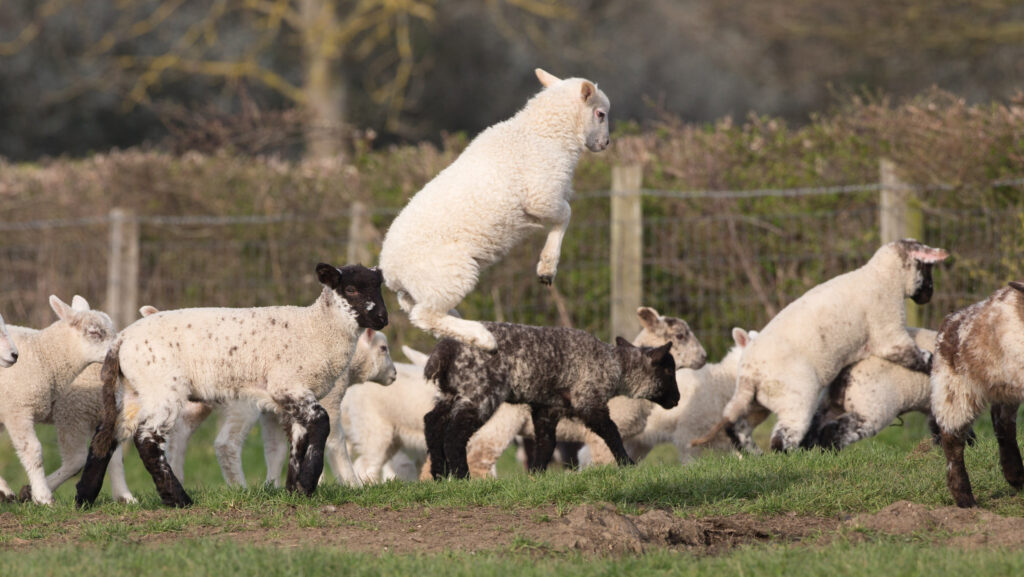 © Tim Scrivener
 As spring grass starts to flourish, it’s important to plan this year’s grazing to get lambs finished quickly.
Adapting grazing strategies to try to minimise the effects of severe weather is also becoming more important.
Many of our clients with established herbal leys saw better sward heights during the drought because of long roots.
Multispecies swards can fix nitrogen and also supply higher protein content than grass alone, which allows better growth rates in lambs.
See also: Tips to prepare grassland for post-lambing turnout
About the author

Annie Kerr is a veterinary surgeon at Paragon Veterinary Group.
Here, she outlines the importance of good grazing management, regular monitoring and timely interventions to give lambs the best chance of thriving.
Grazing strategy
Rotational grazing is underutilised, but increases output. Set stocking will only utilise 50% of pasture potential, but regular moves based on sward height increases this to 80%.
Starting this strategy in spring grows more grass and extends grazing in the autumn, which helps reduce feed costs.
Use sward height to guide when to graze – 8-10cm pre-graze height for ewes and lambs, moving on when it drops to 4-6cm – and to work out kg/ha of grass in a field for feed planning.
This offers grass at its peak energy content and prevents damage to the plant caused by overgrazing, which slows down grass growth.
Preferably, move stock at least every five days to prevent damage to regrowth.
Ideally, finishing lambs should not graze where ewes and lambs have been that season, as these fields are high risk for parasites.
Lamb weights
Collect a baseline birthweight by sampling a portion of newborn lambs and averaging.
Lambs should then be weighed at eight weeks of age to assess ewe performance.
Ideally, the average daily liveweight gain should be more than 250g/day, with lowland systems aiming for at least 320g/day.
At eight weeks old, a lamb is receiving more energy from grass intake than milk, so performance at this point allows us to put a weaning plan in place.
Make sure growth rates are recorded alongside grazing history each year, so that if there are fields where lambs perform better, they can be identified.
Weaning
If eight-week growth rates are below target, then consider early weaning at 10 weeks of age, with lambs given preferential grazing.
If lambs are performing well and grazing is good, weaning can be delayed past the usual 12-13 weeks.
It is important for ewe lambs to be weaned aged 10 weeks to allow them to continue to grow before tupping.
Weaning is stressful, so avoid any other dietary changes at this time.
New feeds (creep or forage) can be introduced while still grazing with their mothers, so they have time to adapt.
Vaccines and wormers should also be given pre-weaning to allow better immune response and reduce stress.
If lambs are not performing at grass
- Check sward height – if below 5cm then move on or provide additional feed. Sward heights over 12cm can contain a lot of dead grass, of lower quality.
- Are there more weeds than grass? Check soil quality.
- Worm burden – has a faecal egg count been performed in the past three weeks? If lambs were wormed recently, was a post-treatment faecal egg count performed?
- Trace element deficiencies – test a portion of lambs and consider testing ewes pre-tupping. Cobalt, selenium and copper deficiencies can cause poor growth rate in lambs, and iodine deficiency in gestation can cause low birthweights, which may present as poor growth rate at later weigh checks.
- Lameness – increased lameness levels result in reduced grazing time. The five-point plan will help: cull, quarantine, treat as soon as possible, avoid spreading infection, and vaccinate.