

Tips on choosing brassicas for home-grown winter forage
 © Tim Scrivener
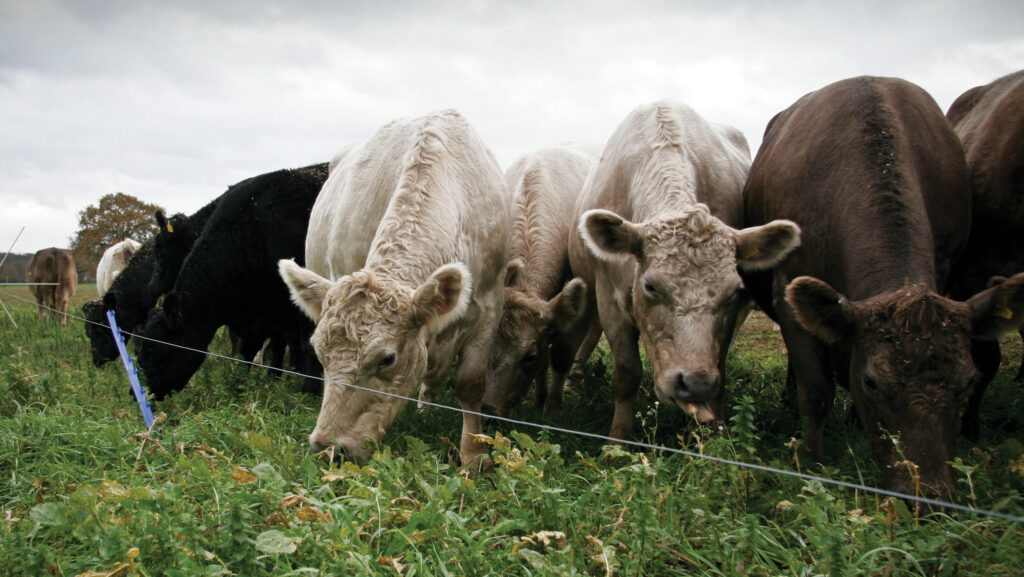
 Brassicas dovetail neatly with grass production, producing forage in the months of lower grass growth, from August to February, depending on the variety. Given good growing conditions, they can provide a valuable source of home-grown feed.
“You can buy in feed, you can try and make an excess of silage, or you could consider brassicas in the system,” says Claire Bailey Archibald, Germinal area sales manager for north-east Ireland. “Self-sufficiency is king, if you have the land available.”
See also: How roasting beans for beef rations improved liveweight gain
That land, however, needs to be able to withstand stock grazing in winter without damaging the soil. “Avoid wet, heavy soils – they will just make life harder for outwintering,” she advises. And brassicas are hungry crops, so growers must be on top of nutrient management. “Soil test, lime if needed, and feed the crop accordingly.”
Feeding advice for brassicas
- Give stock seven to 10 days to transition onto brassica diet
- Fibre must be offered alongside (30% inclusion rate)
- Plan ahead for outwintering: set out bales of hay/silage after sowing to keep machinery out of fields in winter
- Use a double-wire in case of breakouts
- Seek advice on including dietary minerals to avoid deficiencies.
Choice of crop
Which type of brassica to select depends on when it’s needed for grazing (see table). “Always remember, the best nutrients are in the leaf. But the highest-yielding crops are not always the best – it’s all about quality and utilisation.”
She adds that tall varieties used for game cover are most at risk of lodging and not suitable for forage. “So, when looking through a product list, make sure you’re looking at forage varieties.”
Hybrid brassicas (kale cross rape) such as Redstart have a wide sowing window, between April and August. An early sowing can yield two grazings; alternatively, the crop can be used as a break before an autumn reseed, giving two opportunities to control weeds.
Drilled later, it provides autumn/winter grazing ready for a spring reseed. Sow at 8.5-10kg/ha.
Forage rape should be sown July-August and often follows winter cereals. “It’s fast to establish and you can sneak [sowing] past the end of August – but the later you push sowing, the less amount of growth you’ll have,” says Claire.
Good sowing conditions are also important: “If you sow into bone-dry ground, seed will sit there and wait for rain. And beware a ‘wet drought’: a bit of rain between dry periods that’s not enough to do anything for you.”
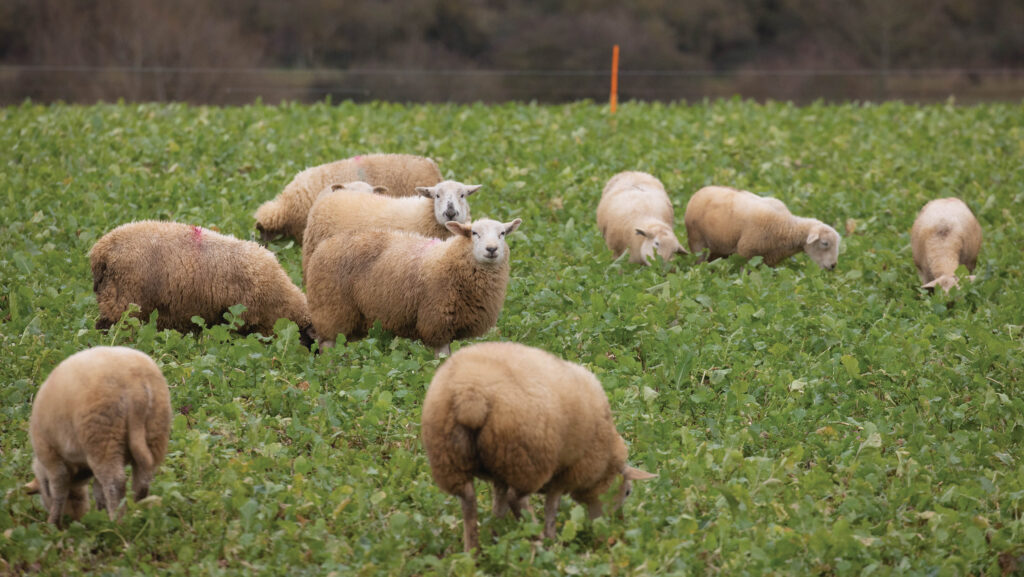
Leafy turnip can be sown between April and September at 5-7.5kg/ha for use between July and January. Advice on timing is similar to forage rape: “You can push sowing later but really, earlier is better,” she says. Like hybrid brassicas, early sowings give potential for regrowth.
© Tim Scrivener
When to take stock off
How long a late summer/autumn-sown brassica crop will last into the new year depends on the level of utilisation, says Germinal’s technical director, Dr Mary McEvoy.
But grazing should not be extended beyond the end of February, when the plant will start flowering. “When that happens, production of glucosinolates increases, which can be toxic to animals.
Especially if you’ve got a decent crop, don’t leave it until February to start grazing, rather aim to finish by mid- to late February,” she says.
Both kale (sowing rate 6-7.5kg/ha) and swedes (2.5kg/ha, precision drilled with graded seed) should go in the ground in May and June, ready to graze between November and February.
When do you need your brassica crop? |
|
|
Summer/early autumn (June to September) |
Autumn/winter (October to February) |
|
Stubble turnip |
Stubble turnip |
|
Forage rape |
Hybrid brassica |
|
Hybrid brassica |
Kale |
|
|
Swede |
|
Source: Germinal |
|