

Great British Beef Week returns with focus on sustainability
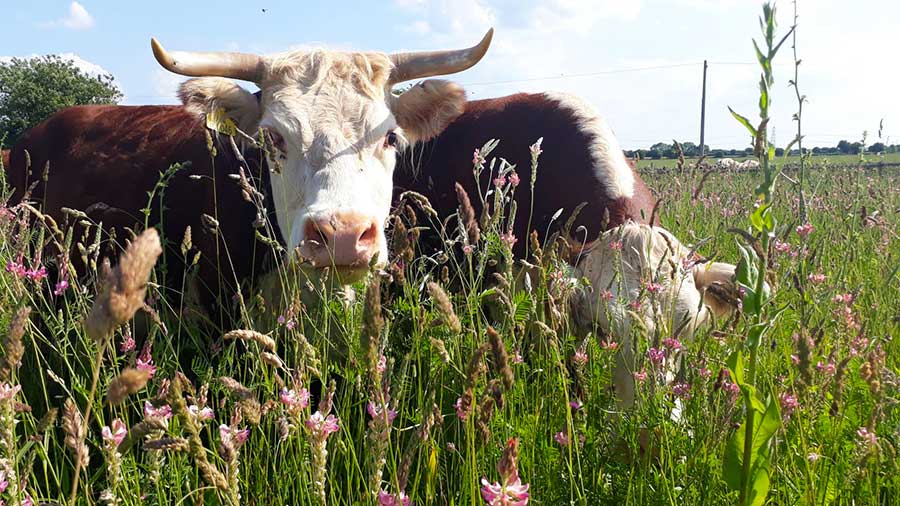 © Great British Beef Week
 Great British Beef Week will shine a light on the environmental sustainability of domestic beef production next week, drawing on data that shows its carbon footprint is half that of the global average.
Co-founder Jilly Greed, who produces beef in Devon, said this year’s campaign would highlight why British beef is among the most sustainable in the world.
See also: Livestock sector can cut emissions by 23%, says report
“Britain has the perfect climate conditions, with plentiful rain and sunshine to nurture our pastures, valleys and moorland, enabling us to produce beef sustainably, with a carbon footprint half the global average,” said Mrs Greed.
“Our grass-based beef production creates biodiversity of plants, herbal leys and wildlife, supports forests, hedgerows and marshes, enabling more carbon to be absorbed into the soil from the atmosphere than any other UK habitat.”
Great British Beef Week, now in its 12th year, will kick off on Saturday 23 April, St George’s Day.
Farmers, processors, supermarkets, butchers, farm shops, pubs and restaurants will unite to promote beef on social media using the hashtag #GBBW22.
Great British Beef Week is the brainchild of Ladies in Beef, a voluntary organisation of female beef farmers co-founded by Mrs Greed and NFU president Minette Batters.
Share stories
“Great British Beef Week is all about giving our UK beef farmers the opportunity to share their stories and showcase the work they do to produce such an exceptional, nutritious product,” said Mrs Greed.
“It really is fantastic to see the British beef industry coming together to celebrate our environmentally sustainable beef, world renowned for its great taste, quality and nutritional benefits, including vitamin B12, iron and protein.’’
A number of shopper-focused special events will also be held across the UK to raise funds for the Royal Agricultural Benevolent Institution.
Share your stories with @Ladiesinbeef1 on Twitter and use the hashtag #GBBW2022 or @ladiesinbeef on Facebook.
In numbers: UK beef farming industry
- 64% of farmland is grass and absorbs more carbon from the atmosphere than slow-growing forests
- 19,000ha of wildflowers provided by beef farming, aiding the recovery of the bee population
- 681,000ha increase in woodland by beef farmers since 1981, equivalent to four times the size of London
- By 2040, the beef industry aims to be carbon neutral