

Banning CO2 pig stunning will place high cost on industry
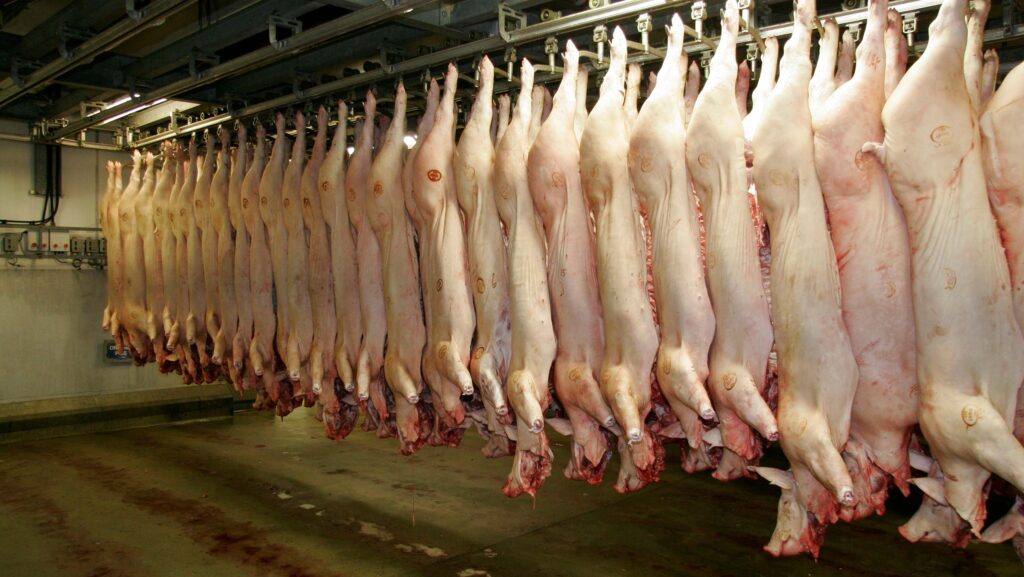 © Tim Scrivener
 New analysis by the AHDB has highlighted the significant extra costs and disruption that could result from a ban on the use of carbon dioxide in pig abattoirs.
Currently 90% of pigs reared in England and Wales are stunned by being exposed to high concentrations of carbon dioxide, while the remaining 10% are mainly stunned using electricity.
See also: Animal Welfare Committee seeks end to CO2 stunning of pigs
Defra said it wanted to ban carbon dioxide gas stunning as part of its Animal Welfare Strategy published last year.
The Animal Welfare Committee, which advises Defra on such matters, had previously called for a transition to alternative methods within five years, having concluded that high-concentration carbon dioxide stunning may cause respiratory distress to pigs.
It deemed other inert gases, such as argon, to be significantly less aversive, while electric stunning was found to result in near instant unconsciousness without pain or suffering.
Cost implications
However, research by Europe Economics for the AHDB shows there are significant cost implications to any transition, as well as considerable logistical challenges.
The report considered three possible alternatives to using carbon dioxide:
- Argon, with additional slaughter capacity to allow for slower throughputs
- Argon, with extended slaughterhouse operating hours
- Electrical stunning, with suitable constraint apparatus
While carbon dioxide stunning costs were estimated 42p/pig, the research showed the first argon option would raise this to £1.49/pig (up 257%), while the second would cost £1.36/pig (up 226%).
Electrical stunning would incur an estimated cost of £1.11/pig (up 165%).
The research also unveiled a number of wider impacts, for example logistical problems of shutting down slaughter lines to change to new systems, the need for additional storage to cope with slower throughputs, and the risk of increased imports as UK processing costs increase.
“Taken together, the evidence indicates that, within the ranges tested, all currently available alternatives to high-concentration CO2 are expected to increase plant-level costs materially, with significant upside risk from transition logistics, site-specific constraints and other unquantified elements,” the report concludes.
Producer response
The National Pig Association (NPA) has welcomed the “detailed and pragmatic” report findings.
NPA chief policy adviser Katie Jarvis said: “We absolutely understand and acknowledge the concerns and issues regarding CO2, and we are very much part of the conversation about developing viable alternatives.
“However, this report highlights that, currently, there is no feasible alternative – both argon and electrical stunning have their own challenges in terms of animal welfare implications and commercial application.
“We must avoid forcing change domestically, whilst our global competitors continue to use existing stunning and slaughter methods.
“This industry knows all too well that pushing domestic animal welfare standards and costs higher whilst importing product produced to lower standards can have a disastrous impact, while doing nothing to improve welfare.”
A full Defra consultation is expected soon.