

How a scoring tool can help close gaps in pig biosecurity
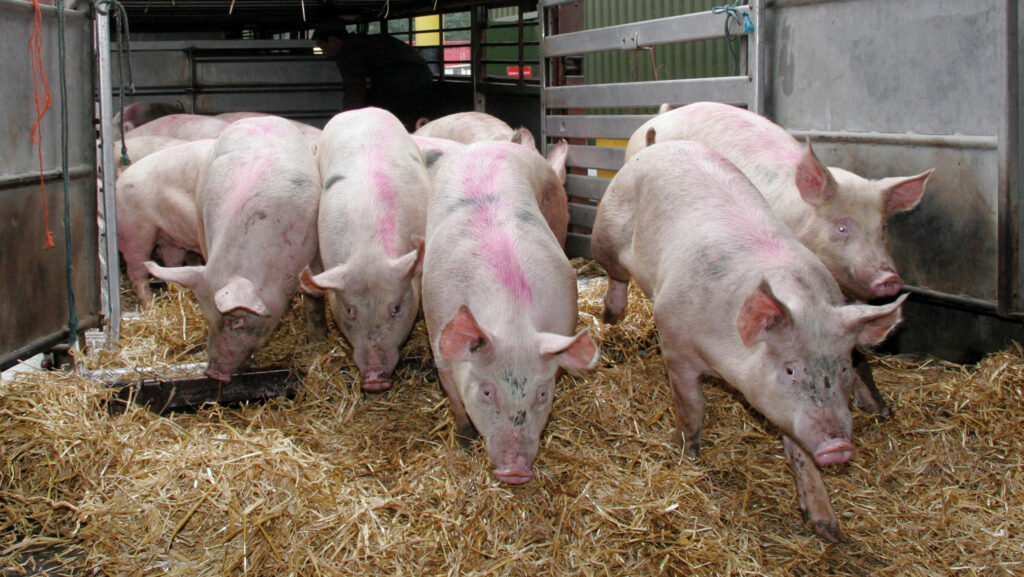 © Tim Scrivener
 Biosecurity is the foundation of disease control on pig farms and a powerful driver of performance.
But despite its importance, it can feel abstract on farm, leaving producers unsure what to tackle first to ensure they are doing all they can to keep disease out.
That is where structured tools can help, says Dr Alex Thomsett, pig specialist and director at the George Veterinary Group, Malmesbury, Wiltshire.
“Farmer-vet teams now have the ability to put data and figures against the measures already being taken – in effect, to make the invisible visible,” she explains.
See also: 6 ways to help protect against African swine fever
Tools such as Biocheck, a risk-based scoring system to quantify on-farm biosecurity, can help turn day-to-day routines into measurable scores.
They allow teams to benchmark current performance, identify weak points and track progress over time.
Users complete a survey for different animal species, which generates a personal report with detailed results highlighting areas for improvement.
Assumption versus reality
Alex is clear that Biocheck is not the only factor in decision-making but sees it as a powerful starting point.
“It highlights things you thought you were doing well, but where you can still improve,” she says.
“It also brings up issues you hadn’t even considered might be relevant. It makes you really think about the process.”
One of the most valuable aspects of the tool, Alex says, is that it challenges assumptions.
On one unit, for example, the team believed pig and people movements operated in a strict one-way system.
However, the report revealed that real-life logistics between sites meant the flow was not truly unidirectional.
Often, she adds, it is the small habits that undermine otherwise sound systems.
On another farm, the assessment flagged that some staff and visitors moving between sites were not fully following shower-in and entry procedures.
“Casual chats at the loading ramp led to people stepping onto the farm side without properly following biosecurity rules,” she says.
“These weren’t intentional breaches, but Biocheck made those little chinks visible so they could be fixed – and identifying those little bits can make a big difference.”
Biosecurity benefits
Studies in Belgium have shown that focused coaching and advice on biosecurity can deliver measurable improvements, according to Dr Nele Caekebeke of Biocheck.
In one group of farms, finishers gained an extra 7.7g/day and mortality fell by 0.6 percentage points after targeted changes to biosecurity practices, she says.
Help identifying priorities
The structured reports generated by the tool can also help teams prioritise.
Alex worked with one farm to identify four to five key areas to target first, focusing on “quick wins” linked directly to risk – including staff movement between units, adherence to protocols and transport hygiene.
Yet she cautions that tools like Biocheck must be interpreted, not followed blindly.
Success depends on matching recommendations to what can realistically be done on the ground.
“In one case, the tool suggested changing the order of transport, which was impossible because the lorry would have been too heavy to get up the hill,” she recalls.
“You use the output, but you adapt it to your reality. The devil is in the detail.”
Building on progress
In one herd, previously stable for porcine reproductive and respiratory syndrome, routine monitoring picked up the virus.
A diagnostic investigation, combined with a Biocheck assessment, helped identify weak points that likely contributed to the breakdown.
Six months later, a repeat assessment showed where scores had improved.
The farm-vet team built on that progress with new actions, using the tool as part of a cycle of baseline, action, recheck and refinement.
The herd health status was restabilised, allowing removal of an extra vaccination step.
This cut labour and vaccine costs and contributed to reduced antibiotics use as herd health improved.
What matters, Alex adds, is making small, continuous improvements that are measurable.
“You can make a 1% incremental improvement on a daily basis, and eventually you make a huge difference by just doing a little bit at a time,” she says.
She added that the Biocheck tool can also be used as part of the Animal Health and Welfare Pathway.
Information on funding via the Animal Health and Welfare Pathway
Biocheck tool
The Biocheck.UGent tool provides:
- A clear, objective overview of farm biosecurity strengths and weaknesses
- A detailed digital report, free to access with AHDB’s advanced vet accounts, with scores for each subcategory of internal and external biosecurity
- A basis for action planning, making it easier to prioritise the most impactful improvements and monitor progress over time
- Evidence for assurance and herd health planning
Source: Francesca Green, animal health and welfare scientist, AHDB