

How to make biosecurity effective on pig farms
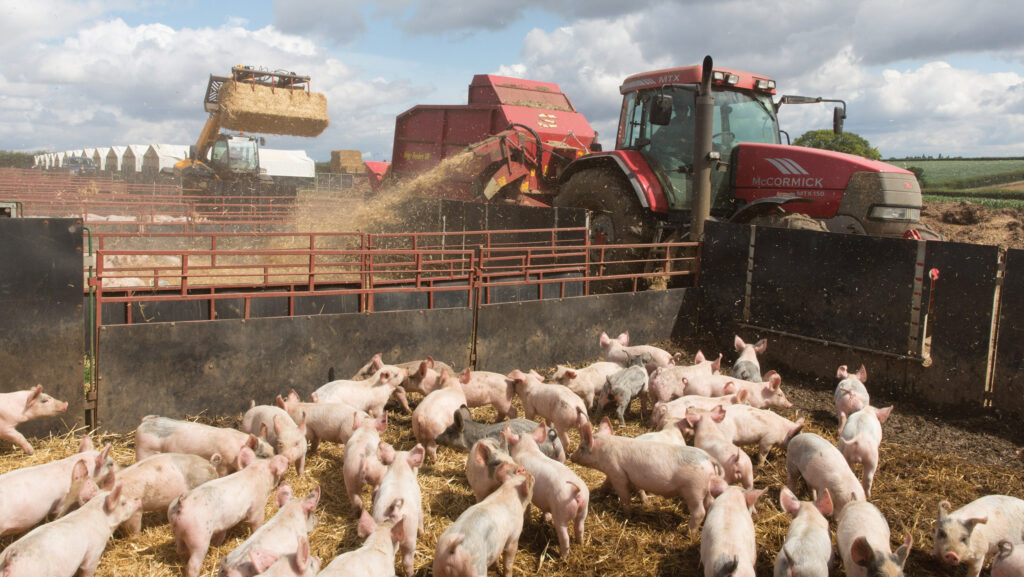 © Tim Scrivener
 The government’s consultation on a compulsory porcine reproductive and respiratory syndrome virus control and eradication scheme, for farms in England with more than 50 pigs, will soon close.
Alongside a stream of alerts through the industry’s reporting system for swine dysentery, there has never been a better time to do a thorough review of your farm’s biosecurity protocols.
Farm biosecurity can be split into two distinct areas – external biosecurity covers everything that is coming on and off the farm, and internal biosecurity focuses on the movements and activities occurring within the farm.
See also: 6 ways to help protect against African swine fever
Toby Allcock, Bishopton Veterinary Group

Toby is a vet at Bishopton Veterinary Group in Ripon, North Yorkshire.
He graduated from the Royal Veterinary College in 2020, and has worked in pig practices in East Yorkshire and Scotland before joining the Bishopton Team.
Many holdings will have requirements for visitors, such as farm-specific clothing and any necessary “pig freedom” (the time since a person last came into contact with other pigs).
However, it is important to consider whether every person who comes onto your farm is subject to the same requirements.
Do you ask your electrician the last time they were on a pig unit? Does your handyman always change into farm-specific clothing? Did the builders sign the visitor’s book?
Potential risks
It is not just people that should be viewed as a potential risk.
If tradesmen are bringing equipment onto the farm, do you know where their kit has been previously? Has it been cleaned and disinfected?
You might want to consider keeping frequently used pieces of equipment available on the farm, so that they do not need to be brought in from an external source.
Vehicles are a significant threat and, where possible, feed and hauliers’ wagons should be kept off the unit, or as close to the edge as possible.
Where layout necessitates vehicles coming onto a farm, it is essential they are properly cleaned and disinfected beforehand.
Higher health and breeding units may want to request a first visit of the day or week by these services to further reduce risk.
One particularly high-risk visitor is the deadstock collector, and again every effort should be made to limit or avoid contact with live animals.
Site deadstock bins as close to the edge of (or as far from) the unit as possible. Hand hygiene – wearing gloves and washing during and after the handling of deadstock – should also be observed.
This is particularly relevant for units that have several age groups and classes of stock.
Where possible, different members of staff should take responsibility for these specific areas, thereby limiting the movement that is required between them.
Staff know-how
When anyone moves between areas of the farm, it should be done in pig-age order, starting with the farrowing house, then moving through the growing period, finishing with gilts, and finally the older sows.
The gold standard also dictates that separate footwear and overalls should be used for each area of the farm: farrowing, nursery, grower/finisher and sows.
Common-sense measures such as regularly replenished foot dips (ensure you are using a suitable disinfectant that is active in the presence of organic material) should be available at the entrance to each room/compartment.
As with deadstock, changing gloves and hand-washing in between rooms – and certainly sections of the farm – will help reduce the risk of disease spread.
Cleaning policy
Internal biosecurity would not be complete without a cleaning and disinfection policy.
Clearly, this is much more practical in an all-in-all-out system where rooms are empty between batches.
A procedure including pre-soaking, detergent, disinfectant and, crucially, an adequate period for the room to dry should achieve the best results.
Pig movements
One crucial area of internal biosecurity often overlooked or compromised is the movement of pigs themselves.
If an animal is not of a sufficient size to move to the next stage of production, it is an often-employed tactic to put them into a younger group to give them more time – particularly on units with weekly production.
Remember, there could be a good reason why an animal is behind the rest of its age group. And by doing so, you could be inadvertently moving a disease challenge into the next batch.
Instead, find a suitable area within the farm where a “B-stream” group of animals could be kept, allowing them to be finished without the risk of compromising other pigs.
In the real world, the space available, layout of the farm, availability of staff and potential for investment will all have an impact on what can be achieved.
Few farms will be able to achieve perfection in every area. Being aware of the specific risks relevant to your farm and the best ways to mitigate them is the most important thing.
And while the government wishes to make it mandatory in future, funding is currently available to carry out a biosecurity audit on any farm in England with 51-plus pigs (a similar programme is also available in Scotland).
This will allow you to go through all of the above steps – and more – with your vet. Tailored recommendations can then be made for how you can improve.
For more information, get in touch with your veterinary practice.