

4 year-round biosecurity focus areas to combat bird flu risk
Poultry farmers can enhance year-round biosecurity to prevent avian influenza by focusing on vermin control, water management and human activity.
Wild waterfowl such as geese, swans and ducks, are the primary source of infection, and vweaknesses within farm systems can allow the virus to reach housed poultry, says Dr Paul Talling, biosecurity adviser at consultant Livetec Systems.
See also: Bird flu vaccination trial under way in turkeys
He warns that only a very small amount of virus is required to trigger an outbreak. These typically peak during the winter, but cases do also emerge in the summer.
“You don’t need a lot of virus to infect the flock; a bird dropping from an infected bird that then infects just one bird in your flock is enough,” he says.
By focusing on year-round biosecurity in the following areas, risk can be significantly reduced.
1. Disease spread by vermin
© Tim Scrivener
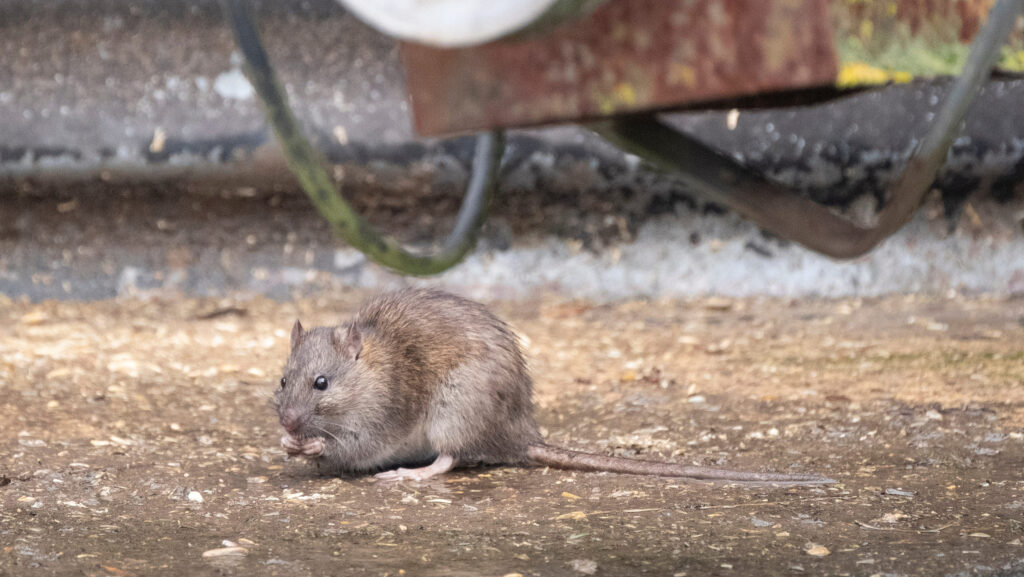
Rodents such as mice and rats can carry avian influenza on their fur or in their gut and spread the virus directly in sheds, by either rubbing on surfaces or through their faeces.
Maintaining buildings and preventing vermin access are key preventive steps. Paul advises using rodent-proof materials on lower sections of doors and walls, alongside working with professional pest controllers.
Hidden infestations can easily go unnoticed, and says that whole-house gassing can uncover significant rodent activity in sheds that were believed to be vermin-free.
2. Hazards of contaminated water
Contaminated water can act as a vehicle for disease spread.
“Water doesn’t need much of a route in – it will go through very, very small gaps, and it will take whatever it’s got with it,” he warns.
Standing water on yards also presents a significant hazard.
The avian influenza virus can survive in water for about 100 days at temperatures as low as 4C, so producers are encouraged to follow good range-management practices to prevent water puddling.
“If there is virus in the water and the rats drink it, it will pass through the rat. It’s a very effective way of getting that virus into the building,” says Paul.
Vehicles driving through contaminated water may also transport infection between areas or sites.
Gary Ford, head of strategy at the British Free Range Egg Producers Association, advises farmers to regularly assess how rainwater is collected and drained, maintain clean gutters and ensure run-off is directed safely away from poultry housing.
He says downpipes should be checked to ensure they are working properly. “Do they fit into the soakaway that goes into the ground?
“Or have they been knocked, or are they not going into that hole in the ground, and spilling over the concrete and potentially getting through the dwarf wall or even under the double door?”
3. Risks posed by humans
Human movement is also a major pathway for disease incursion. Ongoing staff training is essential to reinforce consistent biosecurity behaviour.
Paul stresses the importance of protecting birds inside housing, particularly during mandatory housing orders.
Internal hygiene barriers and well-designed entry rooms play an important role in reducing the risk of the virus getting into the shed, he says.
Gary encourages farmers to review farm layouts and work closely with vets and specialist advisers to identify weaknesses in existing systems.
“We don’t see our own flaws,” he points out, recommending independent assessments to help pinpoint biosecurity bottlenecks such as shed entry points.
Practical measures include clearly marked biosecure zones with adequate space for hygiene procedures.
Paul adds that, while concrete borders installed around poultry sheds and high-risk areas can be costly, they can also help reduce contamination.
4. Visitor management
© Tim Scrivener
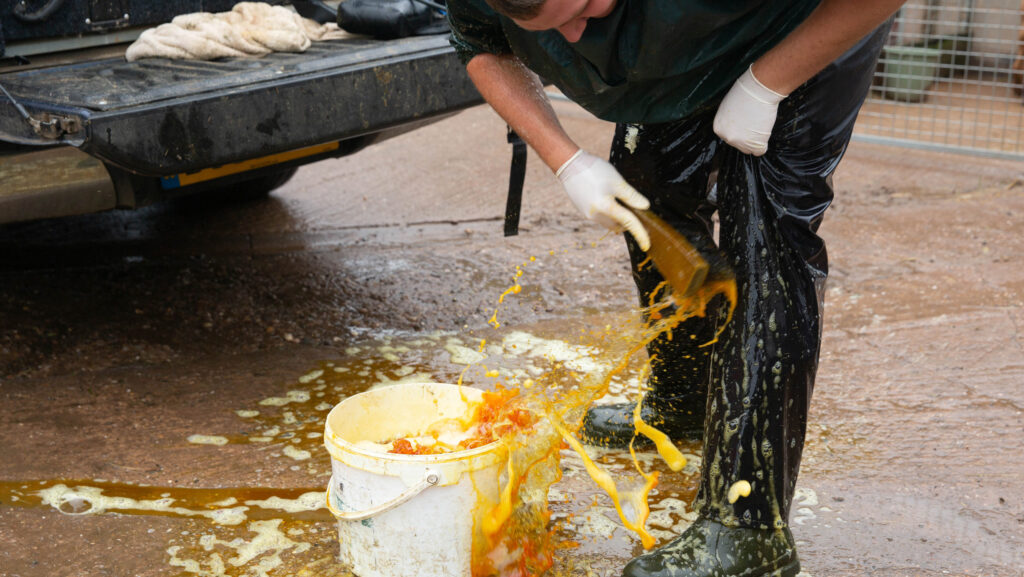
Gary says visitor management is critical. Farmers should set expectations from arrival by installing secure entry points and infection-control barriers for delivery drivers and contractors.
Proper storage of poultry bedding is another key consideration as damaged packaging increases the risk of contamination.
Any compromised material such as wood shavings should be disposed of with manure, and plastic wrapping should be removed from the farm in a compliant way.
Dr Paul Talling and and Gary Ford were speaking at a recent webinar organised by Livetec Systems