

Predicting species vulnerability to climate change
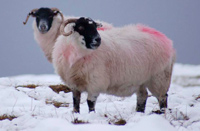
Recent extreme weather has proved that winters are starting earlier. But with seasonal breeders, such as sheep, relying on day length as a cue for growth and breeding, climate change is placing animals under increasing pressure.
However, scientists have identified a key trigger mechanism in animals, which could have implication on the adaptation of seasonal breeders to such unpredictable conditions.
By defining the molecular pathways through which day length synchronisation operates, we open the way for genetic analyses of the impact of climate change on seasonal species, and may be able to predict species vulnerability, explains David Hazlerigg from the University of Aberdeen School of Biological Sciences.
A study, which was carried out in collaboration with the universities of Aberdeen, Manchester and Edinburgh, looked at the primitive Soay breed of sheep, which relies on strong seasonal biology to survive in the wild on the North Atlantic islands of St Kilda.
Prof Hazlerigg said: “We conducted a previous study in 2008 where we identified the key signal to the brain controlling seasonal behaviour and physiology.
“We found a chemical known as thyroid stimulating hormone (TSH) acts in the brain to control the activation of seasonal breeding in sheep, and it is regulated by day length.
“However we did not know how changes in the daily cycle of light and dark triggered the production of high levels of TSH in the spring and a decline in the autumn. We have now identified that ‘switch’, linking the daily ‘circadian clock’ to the yearly seasonal clock.”
Understanding this process is vital, as seasonal changes in day length are used by animals to synchronise major life-history events such as migration, moulting and reproduction.
It enables seasonal animals to anticipate and prepare biologically for what is going on in the outside world, rather than adapting to it once it has happened, for example growing a thick coat in preparation for winter.