

How farmer manages ewe condition through weather extremes
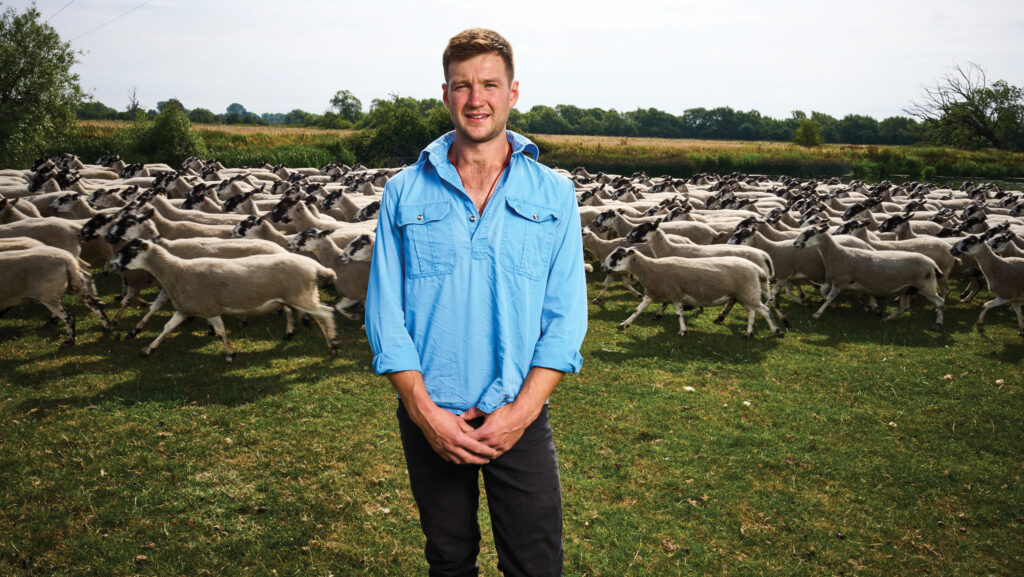 Tom Bird © Oli Lees
 Feeding ewes through last summer’s drought cost Tom Bird, Farmers Weekly‘s 2025 Sheep Farmer of the Year, a lot of money.
But there are no regrets: scanning rate averaged 210%, in line with previous years. “It will have paid for itself, as we’ll have the lambs to sell. It was the right decision to bang in the food,” he says.
A nimble approach to managing his high-input, high-output flock of North Country Mules is key to Tom’s success.
See also: How to get the best from stubble turnips for forage
Farm facts Ferry Lane Farms, Derbyshire
- 162ha owned and 342ha rented, plus winter grazing of grass and cover crops
- Growing 311ha permanent pasture/improved grass, 137ha arable cropping, 56ha in environmental schemes
- 2,300 North Country Mules
- Flock replacements bought in
- Suffolk, Texel, Charollais and Suffolk cross Texel rams
- Finished lambs sold to Tesco (Tesco Sustainable Lamb Group premium)
- 40-70ha mown for hay, 25ha cut for silage
In part, this is because much of the land he farms, with his father William, is light and prone to burning up in late spring and summer.
However, Tom also has to contend with regular flooding in winter. Even the light land became saturated and difficult to manage this year.
And it made grazing stubble turnips a particular challenge, with water levels “up and down like a yo-yo”, he says, adding that they strip-graze the crop on three-day breaks.
“In one field, when we started it was dry and the ewes were leaving barely a root or a leaf behind.
But as they went down the field, they started leaving more and more behind – up to 50% – as the turnips were so muddy.” Tom resorted to blowing in straw to provide ewes with a dry lying area.
Flexible options
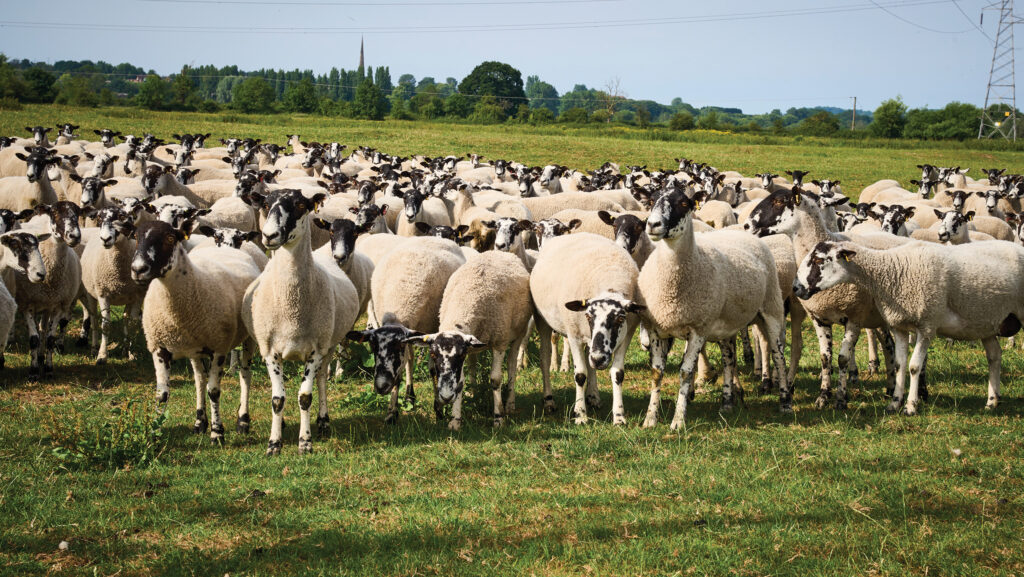
© Oli Lees
The day after scanning, ewes are split into seven groups: first by raddle colour (red or blue), then further divided into single-, twin- and triplet-bearing ewes, plus a group of late lambers and barrens.
The following day, body condition scoring is used to fine-tune the groups and, consequently, diets.
Twin-bearing ewes graze 45ha (110 acres) of stubble turnips sown at the end of July over winter.
As brassicas are low in iodine, Tom gives the ewes an iodine injection (at £1/dose) to boost mineral status and avoid the risk of goitres in newborn lambs.
This year, wet weather forced an early retreat, and the ewes went onto grass for a week, before coming indoors four weeks before lambing.
“We like to keep them out as long as possible because it’s easier to feed concentrates from the snacker feeder.
“Once they’re indoors, we have to use bags to maximise pen space – we feed ewe rolls [19% protein] along the inside edges and down the middle of the pens,” he explains.
Targeted management
Triplet-bearing ewes get too heavy (up to 110-115kg at lambing) to thrive on turnips, according to Tom, so instead they graze new short-term silage leys sown in August/September.
Seven to eight weeks pre-lambing, they are housed and moved onto ad-lib silage and 0.3kg/day of ewe rolls, increasing to 1kg/day at lambing.
Singles graze rougher grass, although they are fed for six weeks before lambing – enough to ensure they are in good enough condition to rear a foster lamb, as well as their own.
Despite being relatively hardened to droughts and floods, this wet winter has prompted Tom to consider investing in another shed, so that more ewes can be brought in earlier if necessary.
The 2026 Farmers Weekly Awards
The 2026 Farmers Weekly Sheep Farmer of the Year Award is open for entries.
Enter or nominate now on our Awards website.