

Sheep sector braces for shake-up over tailing and castration
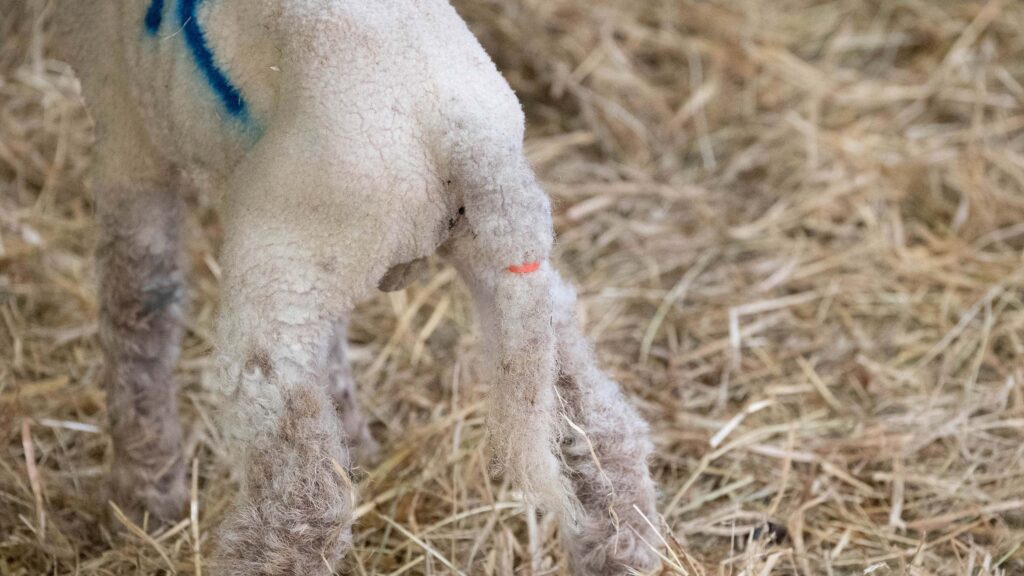 © Tim Scrivener
 Sheep farmers have less than a week to respond to Defra’s consultation on tail docking and castration – proposals that could reshape flock management across the country.
The UK-wide consultation, which closes on Monday 9 March, aims to move away from routine procedures, promote the use of higher-welfare methods and introduce mandatory pain relief.
See also: Expert advice on assessing and managing lambing difficulties
While legal changes are unlikely before 2028, many sheep farmers oppose the proposals, and Phil Stocker, chief executive of the National Sheep Association (NSA), is urging the industry to share their views.
What is being proposed?
Currently, the Animal Welfare Act permits the use across the UK of rubber rings without pain relief for castration and tail docking in lambs under seven days old, although Scotland allows rings up to three months with pain relief and clips up to three months without it.
Pressure has been mounting on the government from the Animal Welfare Committee (AWC) to review legislation.
Defra’s proposals would:
- Move away from routine tail docking and castration
- Prohibit both procedures on lambs less than 24 hours old
- Remove the seven-day limit and allow rings and other methods up to three months of age, provided pain relief is given
- Restrict surgical methods and procedures after three months to vets
- Require stockpersons to undergo training
- Permit clips up to three months without pain relief, as they are considered less painful.
The aim is to standardise legislation across the four nations while improving welfare outcomes.
However, many producers fear unintended consequences. Furthermore, industry bodies claim they were not given an opportunity to provide feedback before the document was released.
Industry concern
Vet Kate Hovers warns that the limited availability of licensed pain relief is a major barrier to implementing changes. Currently, Procaine is the only local anaesthetic licensed for use in sheep.
She is worried drugs may not be widely available by the time proposed changes are introduced.
Farmers would then be forced to rely on off-label prescribing under the cascade system, adding complexity.
NSA policy manager Michael Priestley says many farmers are keen to improve welfare where possible, but members are also wary of creating greater animal welfare issues later in life and passing cost pressures down the supply chain.
“If the proposals are deemed workable and worthwhile, which remains to be seen, the industry needs a roadmap for change,” he says. “Several years will be required to answer concerns on pain management products, both from vets and farmers, and trial work will need to test clips in more farming systems before law changes can be made with confidence.”
He urges the whole industry to respond to the consultation, which is closing imminently.
What are the concerns with current proposals?
- Uncastrated males lead to ram taint/unwanted pregnancies/inbreeding in ewe lambs
- Increased incidence of fly strike may be caused by longer tails
- The routine administration of pain relief will be costly and impractical for many farms, particularly large flocks or those lambing outdoors
- Ewe lambs and ram lambs would require separating when sold, creating potential supply chain problems
- Some retailers will not buy entire ram lambs, with processors warning dirty tails will pose hygiene risks and increase disposal costs.
What does scientific evidence say about pain?
The science behind lamb pain has been central to the debate.
Cathy Dwyer, professor in animal and veterinary sciences at Scotland’s Rural College (SRUC), says there is no scientific evidence that young lambs experience less pain than older ones.
“In fact, there is substantial evidence that inflammatory injuries caused by rubber rings cause disruption to physiological and neurological development in young animals,” she says
Research shows elevated stress hormones, increased heart rate and behavioural changes lasting up to four hours following procedures. Lesions from the rubber rings can persist for up to 28 days.
Studies indicate that lambs tail-docked on day one experience more pain than those docked at 10 days old, and ewes docked show increased parturition.
Studies also show a measurable impact on performance. One trial showed a 2kg difference between castrated and uncastrated lambs at four weeks.
Alternative methods
Defra-funded pain mitigation research by SRUC explored two alternative approaches to reduce pain:
- ClipFitter, which applies a clip over the tail or neck of the scrotum
- Numnuts, which delivers a targeted anaesthetic injection at the same time as applying a rubber ring.
ClipFitter lowered pain thresholds compared with using rubber rings, with lambs assessed as “comfortable, relaxed and calm”.
Cathy says: “The rubber ring slowly crushes the nerve, which is why we see these pain responses for a long period of time. When we attach a clip, the nerve is damaged straight away, so you get a small burst of pain.”
Numnuts reduced pain in tail-docked lambs but proved less effective for castration.
Practical experiences from the field
For Perthshire hill sheep farmer and vet Ann Van Eetvelt, the current seven-day limit on tailing and castration is prohibitive.
“We mark around four to six weeks, or sometimes later,” explains Ann, who runs 850 ewes, mainly Blackies, with 50 Cheviot crosses, alongside her husband.
She has been trialling various methods and shares her experience, along with those of her clients (see “Methods compared” below).
She encourages farmers to stay open-minded and try products before committing.
“It’s important to realise that pain costs a business money, and by using some of these newer techniques, it might save us money. But there is no one-size-fits-all,” says Ann.
She adds it might be appropriate to use different methods for different lambs, as clients have found.
Methods compared |
|||
|
Pros |
Cons |
Advice |
|
|
Not castrating/tailing |
|
|
Potential to use on biggest lambs/get them away quickly |
|
Rubber ring |
|
|
|
|
Short scrotal (testicle pushed into abdomen and ring placed over it) |
|
|
|
|
Rubber ring with pain relief |
|
|
|
|
Numnuts |
|
|
Best for bigger lambs. Holding the applicator upside-down helped when using it
|
|
ClipFitter (biodegradable) |
|
|
Best for small lambs |