

How to ensure calves absorb vital antibodies from colostrum
 © Tim Scrivener
 Calves with poor immunity have a lower chance of reaching first insemination and reduced conception rates, resulting in delayed age at first calving.
This finding was from a recent study looking at the longer-term outcomes of transfer of passive immunity (TPI), an indicator of how well the calf absorbs protective antibodies from colostrum.
It shows there is a significant long-term impact on productivity if calves are not getting the right start in life.
See also: Benefits of feeding transition milk to calves
All farmers know the importance of colostrum, but it is worth reminding that this must be of good quality (containing 50g/litre of immunoglobulins), measured using a Brix refractometer (more than 25%) or a colostrometer.
Colostrum quality declines after six hours; contamination with bacteria during collection will also compromise quality.
About the author

Annie Kerr is a veterinary surgeon at Paragon Veterinary Group.
Here, she outlines the importance of consistently good colostrum management and how regular monitoring to check its effectiveness is essential for long-term herd productivity.
Timing of colostrum feed
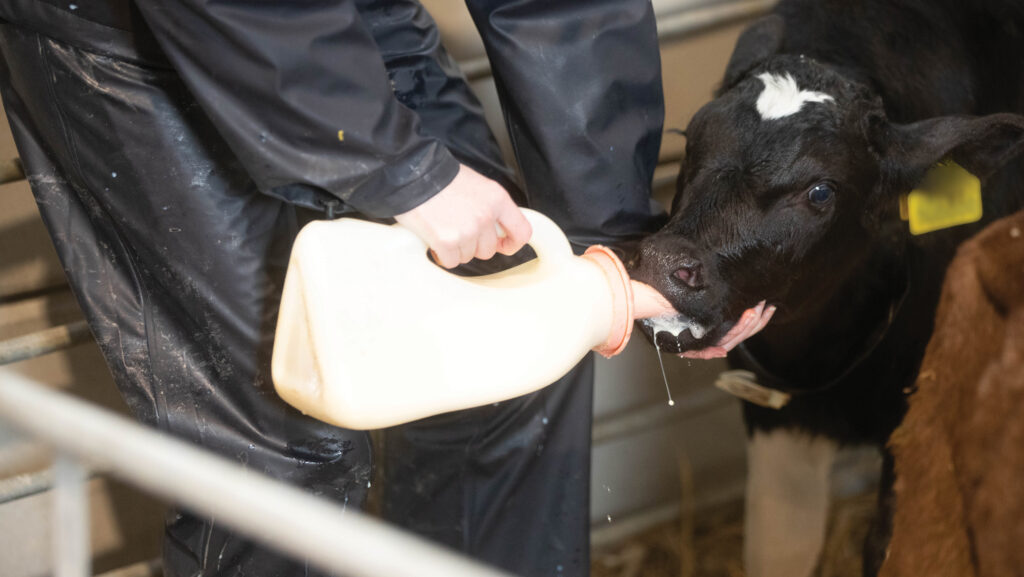
The calf needs 3-4 litres (roughly 10% bodyweight) of high-quality colostrum within the first two hours of life, or as soon as practically possible.
This can be split into two feeds (which may be necessary for smaller breeds).
The timing of this feed is crucial because calves lose much of their ability to absorb antibodies within the first six hours of life, and by 10 hours, it is dramatically reduced.
Therefore, it is important to rapidly harvest colostrum and quickly feed it to maximise TPI.
The colostrum should be fed at body temperature (about 38C), which prevents milk from going into the rumen and causing acidosis.
Calves that are left to suckle from their dams are nearly two-and-a-half times more likely to have failure of passive transfer, so it is best to feed the colostrum by bottle, or through a stomach tube by a trained member of staff.
This also helps with Johne’s disease management, and means colostrum can be fed in the cleanest way possible.
Hygiene test
Feeding equipment hygiene can be assessed using an adenosine triphosphate (ATP) luminometer, which gives a reading of total bacterial count.
If poor hygiene is identified, it is vital to investigate farm cleaning protocols to ensure that biofilms are broken down during the cleaning process.
The use of a luminometer in the UK dairy industry is not yet widespread, but Paragon Veterinary Group has invested in one and is using it on farms to demonstrate the importance of hygiene for pre-weaned calves.
Regular monitoring
TPI levels can be monitored through blood samples taken by the vet from calves at one to seven days of age. The higher the value, the better the passive transfer.
Calves with a TPI level of less than 5.1 are in the “poor” category and have increased susceptibility to diseases (scour and pneumonia), which significantly impacts productivity.
Staffing issues, time constraints and timing of calving can lead to calves falling into the low TPI categories. Regular monitoring can pick up on potential issues if values fall below expected results.
Members of the Paragon Calf Health Club have TPI monitored every week, with monthly reports sent to clients.
Farmers and farm staff are keen on these reports, as they are constantly striving to have a TPI monthly average above 6.2.
This not only improves calf health, but can provide additional motivation – especially for calf rearers – to do their best to improve TPI values.
Values for transfer of passive immunity |
|
|
Transfer of passive immunity (TPI) category |
TPI value |
|
Excellent |
More than 6.2 |
|
Good |
5.8-6.1 |
|
Fair |
5.1-5.7 |
|
Poor |
Less than 5.1 |
|
Source: Annie Kerr, Paragon Vets |
|