Pickup buyer’s guide 2026-27
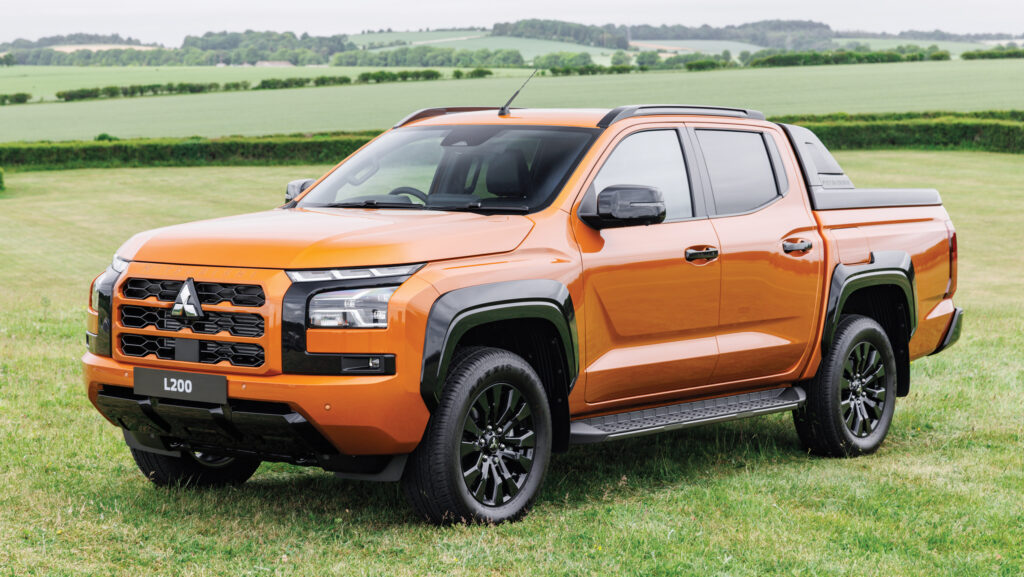 Mitsubishi L200 pickup © Mitsubishi
 From nippy Japanese mini trucks to the hottest performance pickups, this Farmers Weekly Ultimate Guide covers a broad range of vehicles for duties around the farm.
They include a selection of 4×4 estate cars and SUVs available to “van” specification for comfortable load lugging.
In this year’s pickup listing, new and updated models abound, including a larger selection of vehicles with electrical power wholly providing or contributing to their performance.
Pickup and commercial-spec SUV buyer’s guide 2026-27
Download a PDF of the 2026-27 pickup guide and commercial-spec SUV guide
BYD
Full details have been revealed of BYD’s first double-cab pickup, the Shark, being of the plug-in hybrid genus, using a combination of petrol and electrons to deliver a maximum output of 430hp and 650Nm of torque.
There are two electric motors, one for each axle, and a 1.5-litre four-cylinder engine that predominantly is employed as a generator, either to feed the motors directly or to top up the battery.
If used on its own – such as during high-speed motorway cruising when internal combustion is particularly efficient – it can deliver up to 148hp.
See also: On test: Toyota Hilux gets better looks but same old drivetrain
While the powertrain stats look favourable against diesel-powered rivals, there are some concessions.
For one, the Shark comes in heavy – its 2,710kg kerb weight roughly 700kg up on an Isuzu D-Max.
This, and the choice of double wishbone suspension front and rear, results in an underwhelming 790kg maximum payload and 2,500kg towing capacity.
Consequently, it doesn’t qualify as a commercial vehicle and VAT will remain in the pocket of the taxman.
Foers Ibex
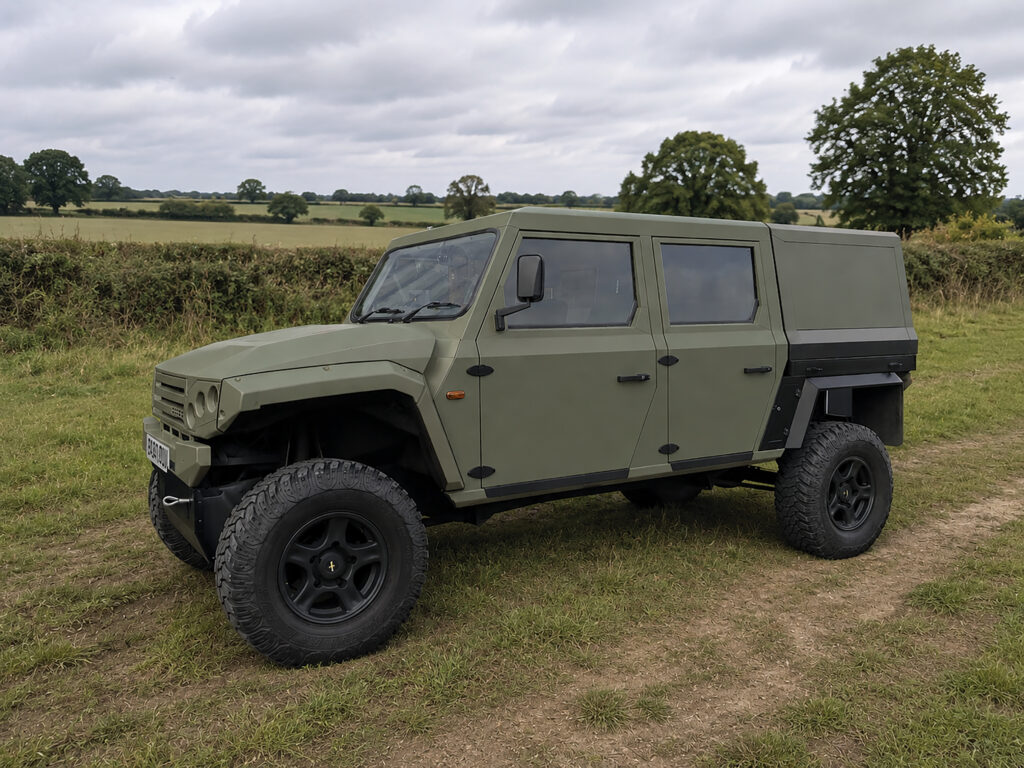
Foers Ibex © Foers Engineering
Foers Engineering’s hard-as-nails Ibex range is now available with a 3.2-litre diesel engine from Austrian manufacturer Steyr Motors.
This compact six-cylinder motor apparently has a particularly high power-to-weight ratio that suits the vehicles’ off-road bent, delivering 272hp/610Nm all told.
It is also capable of running on various fuels without any impact on performance, including – once calibrated – light heating oils and biofuels.
As each of the pickup and hard-top vehicles is built to a custom spec, buyers have plenty of other options in the powertrain department – starting with second-hand Land Rover 300tdi or TD5 units and running through a 3-litre, six-cylinder BMW diesel and GM’s 430hp V8 petrol.
These are partnered with a manual or automatic transmission, a two-speed transfer case and lockable or limited slip differential.
For the eco-minded, there is also a battery-electric setup.
Ford
Several variants have gone from the Ford Ranger line-up as the last of the 2-litre engines has been used up, but with several incomers maintaining a broad choice of power and specs.
There’s now a 3-litre version of the entry-level XLT, for example, and the Limited moniker has returned to the line-up with a 2.3-litre four-cylinder diesel working in conjunction with a 75kW electric motor and plug-in battery.
Limited spec loses the XLT’s load bay ladder rest but gains a cargo box lamp, front fog lamps, privacy glass, heated power-adjusted front seats and a few other niceties.
A locking rear diff and underbody protection are separate options, with the former being standard on Wildtrak models, among which is the new “tax special” Double Cab 2-Seat version with storage space behind the front seats in place of a rear bench.
The 2-Seat is available with both engine choices married to the 10-speed auto box and full-time four-wheel drive system that features on all Rangers.
Ineos
A Grenadier pickup that combines all the features of its two editions in one vehicle is the latest update from Ineos Automotive.
The “elite specification” Trialmaster X brings together what Ineos describes as the most rugged Trialmaster specification with the more refined and comfort-orientated interior of the Fieldmaster.
It therefore sports locking diffs front and rear, and BF Goodrich All-Terrain T/A KO3 tyres on its 17in alloy wheels.
The “X” is also prepared for high-load electrical demand, has an all-important raised air intake for wading adventures, Safari windows, privacy glass and a spare wheel lockable storage box.
A 7t gross train weight and standard-fit tow ball emphasise the Grenadier’s trailer-hauling ability.
Inside, there’s two-tone grey/black or all-black leather seat upholstery, heated front chairs, a premium sound system and carpet floor mats to cosset bootless feet after a lengthy trek.
Trialmaster X spec is available with the five-door Station Wagon.
Isuzu
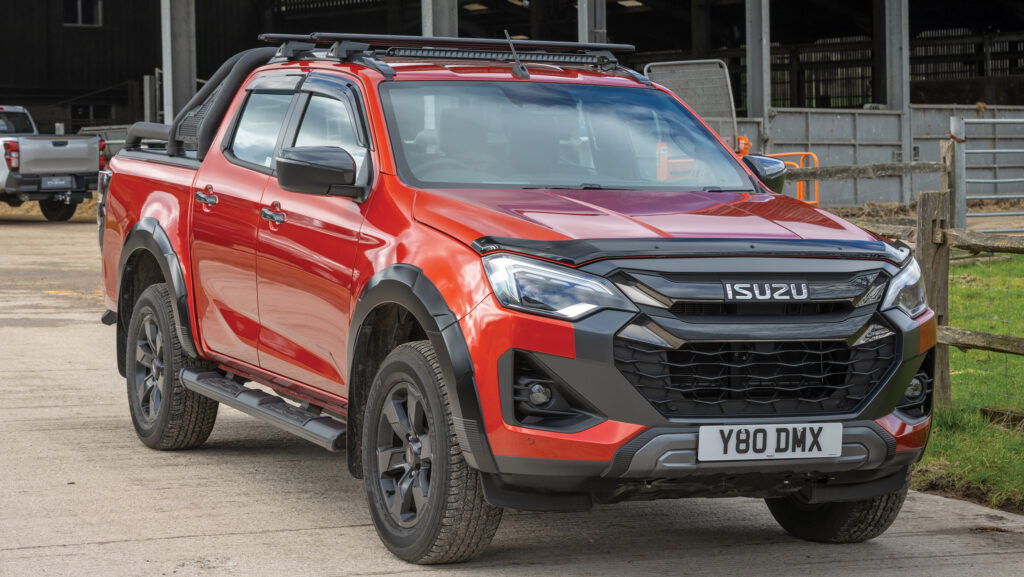
Isuzu D-Max V-Cross © Isuzu
Several newcomers feature in the Isuzu D-Max line-up in this year Ultimate Guide, not least the maker’s first battery-electric model – and the first electric pick-up with at least 1t payload capacity and 3.5t towing ability.
The D-Max EV comes in eDL20, eDL40 and eV-Cross specs, all with 149kW (200hp equivalent) of electrical power from a 45.9kW (61hp) unit up front and a 103.4kW (139hp) version at the rear, both supplied by a 66.9kWh lithium-ion battery.
This set up provides full-time four-wheel drive and the only other major change from the EV’s diesel counterparts is the switch from a beam axle to a semi-independent De Dion design with separate drive shafts to the wheel hubs and leaf spring suspension.
While the official WLTP range is 163 miles, a simulated cycle of mixed driving environments extends that to a more attractive 224 miles; and using the Eco drive mode will doubtless help in that regard.
Meanwhile, the diesel-engined range has had a revamp, largely with the installation of a 2.2-litre turbo diesel engine to replace the familiar 1.9-litre version.
Power output is unchanged at 164hp but there is a tad more torque, upgraded emissions control to meet latest rules and some added features – among them a 360deg surround view system for the DL40 and top-notch V-Cross variants.
A DL40-spec Extended cab model is new to the range, as are tax-beating Commercial versions of the Double Cab versions, which have a bulkhead and lined storage area behind the front seats and blanked out rear door windows.
KGM
An electric, and altogether different, version of KGM Motors’ Musso pickup has landed in dealer showrooms with a keen price but compromises in terms of cargo and towing capacity.
Rather than adapting the diesel Musso for its first battery-electric effort, KGM has based the design on its Torres EVX, a car-like SUV that gives the pickup more attractive ride and handling characteristics, according to the manufacturer.
But with a more sophisticated suspension system incorporating coils rather than leaf springs at the back, payload is significantly down at 690kg and towing capacity likewise at 2.3t.
Front and rear motors, fed by an 80.6kWh lithium iron phosphate battery, give a combined output of 204hp/339Nm and full-time four-wheel drive.
And like other vehicles of this type, the battery can also be used to run power tools or accessories from load-bed outlets.
Meanwhile, the Musso Rhino has been given a thorough makeover with fresh styling, material upgrades and driving aid tech updates designed to add to the vehicle’s appeal.
Powered by KGM’s e-XDi 2.2-litre diesel engine paired with a six-speed automatic transmission, the latest Musso Rhino sports all the essentials of a working pickup, including its ability to carry more than 1,000kg in the tub and tow up to 3.5t with a braked trailer.
Standard drivetrain kit includes selectable four-wheel drive, giving drivers the option to engage propulsion to all wheels as needed, and a rear axle limited slip differential.
New “top level” safety systems are installed, including advanced driver assistance, adaptive cruise control, which monitors and responds to the speed of a vehicle in front, and “intelligent” speed warning.
Clear Sight Ground View helps navigate rough tracks strewn with rocks – as well as kerbs and other low-down obstacles – and drivers will welcome the Apple CarPlay and Android Auto smart-phone systems for entertainment and navigation.
Land Rover
In the load-lugging SUV category, Land Rover’s two-seat Discovery Commercial has gained the same enhancements as its five-seat counterpart, with the Landmark edition joining the SE and Tempest.
All are fitted with the now mandatory driver attention monitor that uses a driver‑facing camera to check for signs of inattention or dozing, with audible and visual alerts giving a virtual prod to pay attention to the road ahead.
Alarm-intolerant pilots can adjust or disable the system using the driver assistance menu in the touchscreen infotainment display.
A centre console cooler and sliding panoramic sunroof are also part of the package.
The Landmark otherwise focuses on visuals, such as the new metallic Tasman Blue colour, word mark and mountain logos dotted about, Graphite Atlas accents for the grille, side fender vents and “Discovery” script, and the Dark Grey Contrast colour for the 22in alloy wheels.
Mitsubishi
Mitsubishi L200 pickup © Mitsubishi
The L200 double-cab is back in the Ultimate Guide, having dropped out back in 2021 when Mitsubishi bowed out of Europe citing stiff economic headwinds whipped to untenable levels by tightening emissions regulations.
Spearheading its second coming are yesteryear’s bestsellers: two flavours of the seventh-generation diesel-powered L200 – the Titan and Barbarian – imported by Midlands-based International Motors and supplied through 50 of Mitsubishi’s 120-odd service centres.
Further variety comes with the Commercial versions, which forego rear seats for extra cargo space and the tax benefits that brings.
Power comes from a new 204hp, 2.4-litre bi-turbo diesel engine, which runs through a six-speed automatic transmission lifted from the previous model.
Cab niceties and shiny wheels aside, differences between the Titan and Barbarian come down to the four-wheel drive system; Titans keep things simple with a conventional part-time set up with low range and a rear differential lock.
Barbarians, meanwhile, get the pukka Super Select-II and its lockable central diff, which allows it to be driven in “four high” at road speeds of up to 62mph.
Electronic sensors help manage the distribution of torque to the front and rear axles, from a typical 33/67% split on tarmac to half and half where grip is elusive.
They also get a twin-speed transfer box, seven drive modes that fettle throttle response and traction control to suit different surfaces, and active yaw control, which shifts torque across the rear axle and brakes the inside wheel to improve cornering stability.
The ladder frame chassis is both lighter and stiffer than before; the body a smidge longer, 35mm higher and 50mm wider.
This growth spurt has freed up more interior space, such that it apparently beats the competition for shoulder room in the front and knee room in the cheap seats.
There’s a new 9in touchscreen too, but heating and ventilation controls remain the business of physical switches.
Toyota
The ninth generation of Toyota’s venerable Hilux includes four-cylinder diesel derivatives built in South Africa and, for the first time, a battery-electric version emanating from Thailand.
The diesel version’s engine, mildly hybridised in 2025, has been left alone as has the six-speed auto, so the focus of the latest generation is very much on injecting some style, inside and out.
The Hilux now heads out with a honeycomb grille and sheer vertical nose, though with squinting rather than square headlights bedded into chiselled front quarters, while bonnet bulges soften the straight lines but interrupt the view from the seat to the corners.
At the back, Toyota has half-inched Ford’s idea of adding side and rear access steps to the load bed.
Chunky switchgear and hard-wearing materials that are softened where skin meets furniture lift the interior and there’s decent storage provision: a wireless phone charging tray, bigger central bin, assorted drinks holders and two glove boxes – the upper one is cooled.
And while base Active versions make do with a simple 9in display, better-equipped versions operate with a 12.2in landscape-oriented unit, while a longer cushion and better padding suggest more comfortable seats, those in the Invincible variants now being clad in leather rather than cloth.
In contrast to the latest Hilux’s emphasis on looks, it’s all about the power source in Toyota’s first battery-electric pickup.
Identified by its blanked-off grille, 17in “aero” wheels and plastic-free wheel arch surrounds, the Hilux BEV promises quieter, smoother and potentially cheaper travel.
Light-load range is reckoned to be around 160 miles, rising to 236 miles of mixed road driving.
But with an extra 300kg in total weight, load carrying and lugging performance are compromised at 710kg and 1,600kg, respectively.