Be farm safe: Faulty vehicles and incorrect licensing
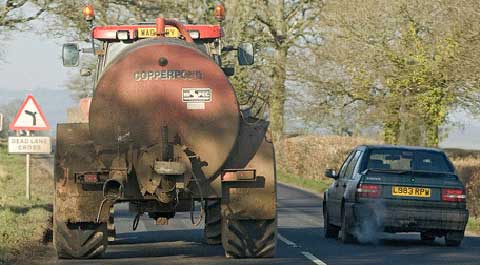
Faulty kit is leaving farmers open to large fines, tractor confiscation and potentially fatal accidents.
Every year dozens of farmers die in farm accidents, most of which could have been prevented by better machinery maintenance, training or safer working practices. Couple this with the fact that around 85% of agricultural machinery in the UK is faulty and the risk is all too obvious.
A quarter of all farm deaths are transport-related, according to HSE inspector Tony Mitchell. Between 2001 and 2008 some 96 farmers were killed by machinery and an estimated 1063 suffered a serious injury such as a loss of limb. About 6340 had to take more than three days off work due to a transport-related injury.
“Agriculture employs about 1.5% of the UK’s population, but accounts for 15-20% of its fatalities. It is important that you understand you’re in a high-risk industry,” says Mr Mitchell.
The main causes of accidents are badly maintained equipment, a failure to follow safe working practices and poor operator training. Some of the most common accidents are caused by brake failure. Most of the people struck by moving tractors are the drivers themselves, as a result of handbrakes not working properly.
“One in eight tractors has a defective handbrake or parking system, 15% have defective PTO guards, and 18% have worn trailer hooks, according to research,” says Mr Mitchell.“Only 14% have no faults at all, while 69% were not roadworthy in tests. Tractors need to be better maintained and, unless you improve your standards, you aren’t going to get any derogations in the law.”
Farmers should follow a vehicle health check every day, and ensure repairs are carried out promptly, he adds. “It’s stuff that lorry drivers do every day – it’s just about being professional.”
The industry, in conjunction with HSE, has now produced a Farm Vehicle Health Check Scheme. This code of practice, supported by BAGMA, NFU, HSE and others, that gives practical guidance to farmers to ensure machinery is safe and meets regulation on farm. It also includes self-audit sheets.
Research shows that trailer-braking standards have fallen far behind tractor development. Newer tractors are capable of towing larger, heavier-laden trailers than ever before, but the vast majority of trailer brakes don’t work, potentially leading to accidents and expensive tractor damage.
The maximum gross train weight in the UK is just over 24t, 18t of which could be the trailer and the speed limit on the road is 20mph. However, most farmers now drive faster, often with heavier trailers, says Mr Mitchell. “Up to 75% of the kinetic energy comes from the trailer. But most trailers only brake at 6-7% efficiency, against a legal requirement of 25% and a practical requirement far greater than that.”
Pulling overloaded trailers at higher speeds without improving the brakes severely damages your tractor, he adds. Farmers can get their trailer brakes tested at BAGMA-approved dealers and should consider upgrading existing brakes, Mr Mitchell advises. “Insist on high-spec brakes on any new trailers. This may cost an extra £1000 or so as a one-off payment, but is significantly cheaper than replacing worn-out tractor brakes every couple of years, or being responsible for an accident.”