Inventions Comp 2026: Low-cost tools and attachments
Farmers have been busy in their workshops getting creative with clever tools and attachments to make life easier and save cash.
We round up some of the best of these inventions from this year’s competition.
See also: Farmer combines Karat and Solitair for one-pass bean drill
Tom Gibbs’ track grader
© Tom Gibbs
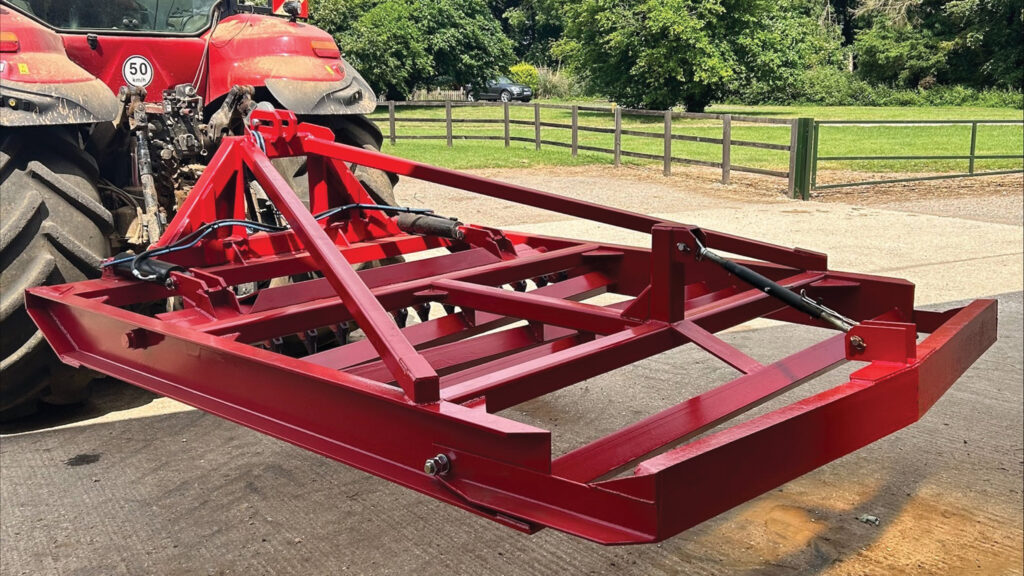
Sick of making short-term, sticking-plaster repairs to Yattendon Estate’s badly potholed tracks only for them to deteriorate a year or two later, assistant farm manager Tom Gibbs formulated a plan to address them properly.
It certainly wasn’t going to involve splurging a five-figure sum on a ready-made grading sledge for use three weeks a year, so he instead set about building his own.
It has 10 ripping tines on the front – redundant 250mm-wide Series 1 Dutch Openers that proved a flop on the seed drill – that are lowered into work by a pair of rams whipped off an old Vaderstad TopDown.
These are used to tear through potholes up to 10cm deep, breaking up the track’s top layer so that the existing material can be redistributed.
Those in the worst condition get up to five passes, with the rippers thrust into action for the first.
They are then withdrawn so that the series of angled grading bars can do their bit, passing the loosened material from side to side to leave a level finish.
At the back is a chunky chevron-shaped bar, the pitch of which can be adjusted on a turnbuckle to form a camber that discourages water from pooling.
According to Tom, one of the keys to the implement’s success is its substantial weight, which ensures the skid plates remain in contact with terra firma while the tractor’s top link pin floats in an elongated slot.
The steel for the project cost about £2,000.
And it has already paid dividends, having slashed the estate’s outlay on bought-in aggregate, saved wasted time on repeated repairs, and made life a whole lot more pleasant for those on corn carting duty.
Charlie Harris’s tractor weight
© Charlie Harris
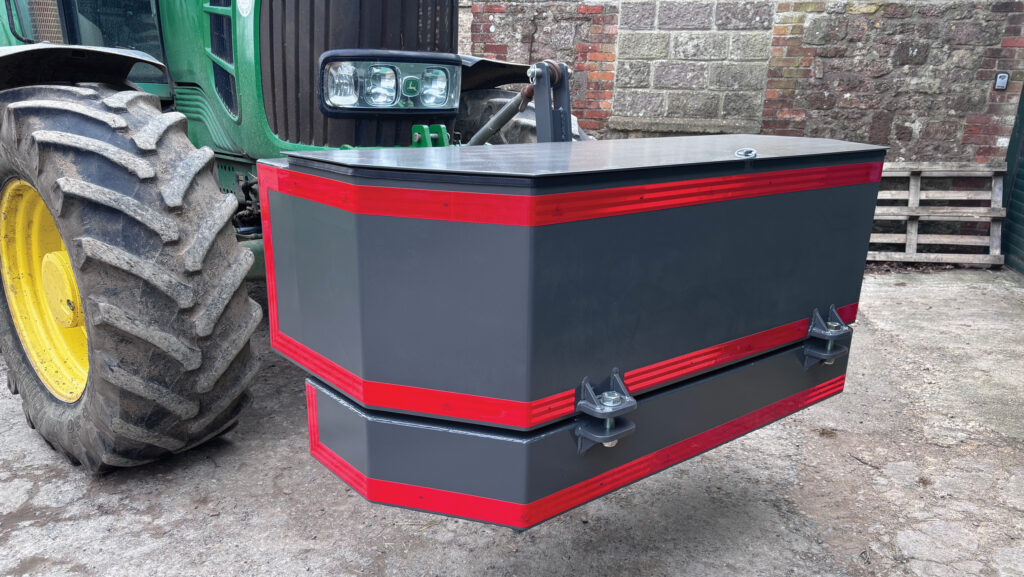
Following a friend’s fruitless search for a front weight block incorporating removable belly ballast and an integrated diesel tank, Charlie Harris of north Dorset came up trumps.
He spent £3,000 building his take on the concept, which covered all the 4mm and 5mm he fabricated himself, and the services of a local engineering firm to CNC plasma cut and press some of the steelwork.
Adding concrete to the main box got it up to the requested 700kg, with a further 520kg available through the fitment of an underslung block.
This is attached by a pin-and-cone connector on the back and two bolts up front, which are cranked up tightly to hold it in position.
Inside, there’s capacity for 180 litres of diesel; the tank procured from a company that specialises in custom kits for boats.
This allows the attachment’s new owner to refuel the tractor without having to return to the yard overnight.
Richard Darling’s trailer compressor
© Richard Darling
A converted lorry drag has proved to be a handy low-loader at Green End Farm.
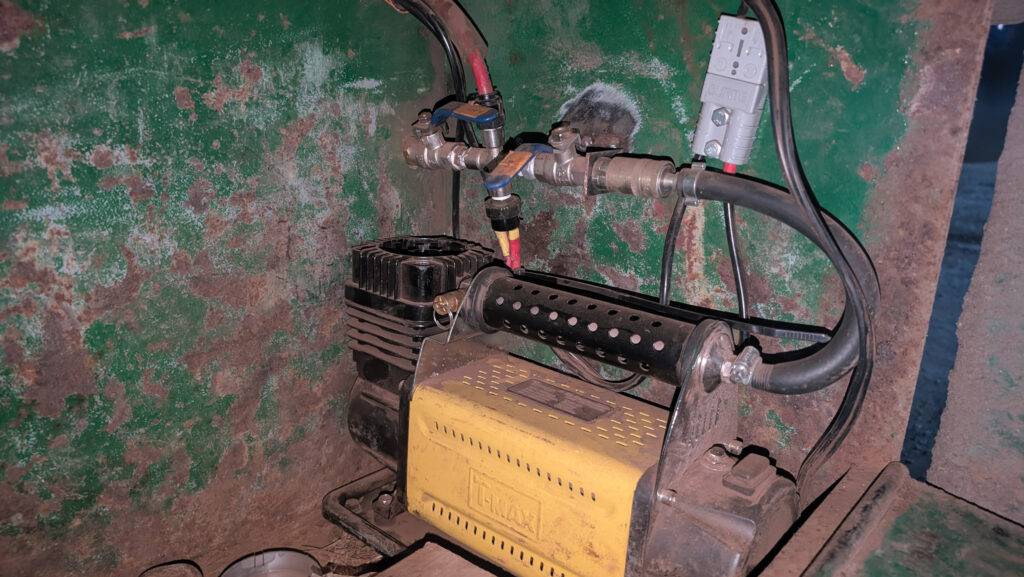
And, thanks to foreman Richard Darling’s natty workaround, it doesn’t have to be towed by a tractor capable of supplying air to the trailer’s braking system.
This means he can use a telehandler to move seed from field to field during the drilling campaign, rather than tying up the firm’s JCB Fastrac.
Central to the setup is a 12V compressor, which he plumbed into the trailer’s red airline to keep the brake system pressurised.
It is powered by an Anderson plug mounted on the back of the handler, with a pressure switch in the positive wire turning the compressor on and off automatically as required.
Switching between the Fastrac and the Loadall is simple, with two manual taps diverting the air flow accordingly.
The compressor can also be removed from the trailer should it be required for another job.
Total spend was about £180, two-thirds of which went on the compressor.
Pipe and airline fittings (£40), and the pressure switch (£10), accounted for the rest.
Paul Cass’s twin-pump pto pressure washer
© Paul Cass
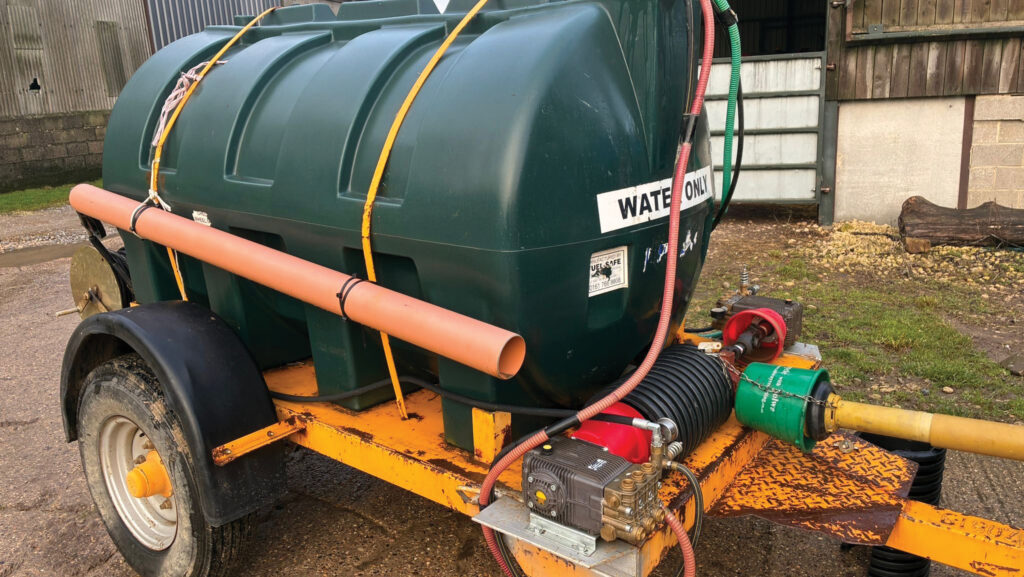
Unable to find a suitable twin-pump pto pressure washer for cleaning out his pig and sheep sheds, North Yorkshire farmer Paul Cass decided to make one.
One of the key criteria was that it needed to carry plenty of water, so he sourced a 2,500-litre tank and a suitable second-hand trailer to mount it on.
As he wanted to run two lances at the same time, he fitted a pair of pressure washer pumps, driven from a from a T gearbox using custom-made shafts.
Because the power requirement is relatively low, he can run the host tractor virtually on tick-over with the 1,000rpm pto speed engaged to give the required 540rpm output to run the pumps.
The rig has also been put to good use watering trees on the neighbouring Duchy Estate and for jetting drains.
Total build cost was about £1,800, though he already had one of the pumps and a hose reel from a previous project.
James Borrill’s small-seed drill
© James Borrill
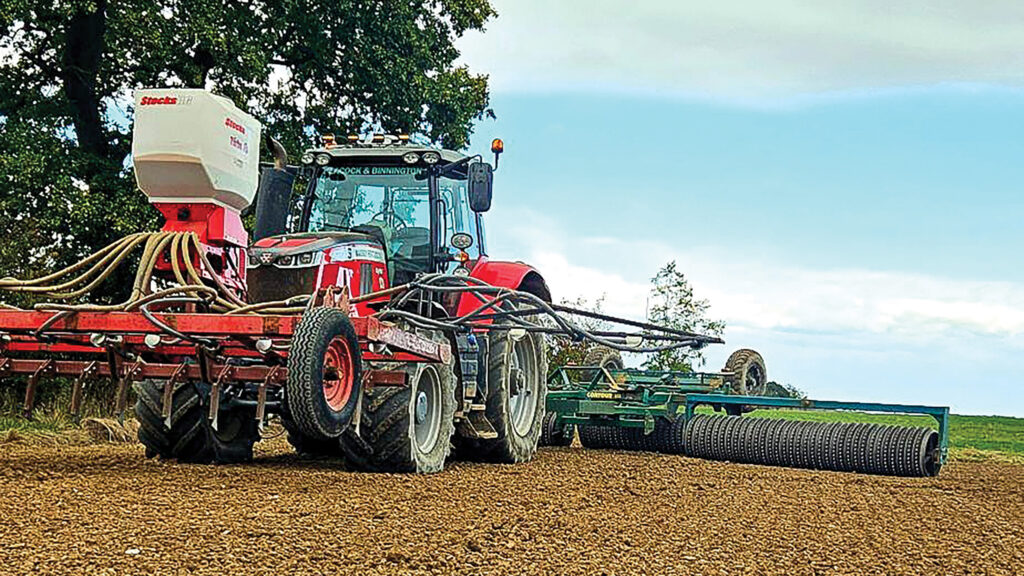
An old Bomford drag frame provided the base for James Borrill’s multi-purpose small-seed drill.
The 3.5m-wide implement is mounted on the tractor’s rear linkage for sowing oilseed rape, with the gang of Amazone Cayena coulters laying seed in rows spaced 35cm apart.
It can operate at speeds of up to 18kph, depending on whether he’s working on cultivated ground or directly into stubble.
Alternatively, he can hold the implement in a raised position on the front linkage, fold down the 8m boom and broadcast grass seed through the spreader plates, while simultaneously towing a set of Cousins Contour rolls.
Travel speed in this guise is about 9kph, though he can get up to 15kph if he does away with the rear roller.
Both formats make use of the Stocks Ag Turbo Jet 10 on top, and he’s also working on a band applicator to lay starter fertiliser along the seed rows.
According to James, the drill has paid for itself more than twice over in its first year of operation.
It has a low draft requirement and disturbs very little soil, which helps retain moisture when drilling rapeseed on his farm just outside Habrough, Lincolnshire.
Murdo Fraser’s front fertiliser hopper
© Murdo Fraser
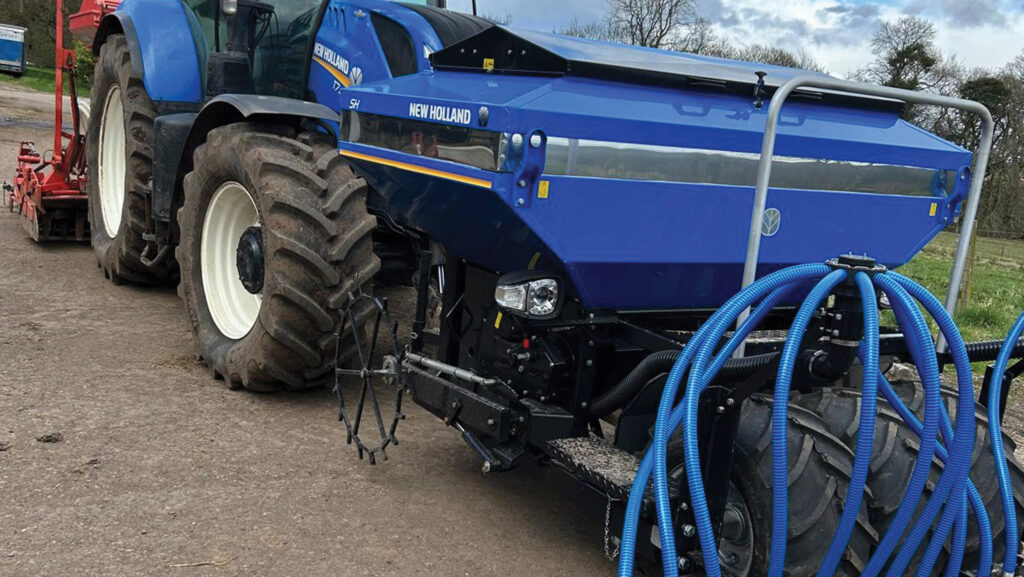
Unsatisfied with the carrying capacity of most split hopper combi drills, Fife grower Murdo Fraser commissioned a separate front tank to team with this 3m Kuhn Venta.
Rather than blow the product to the rear, which would limit application rates, he opted to sprinkle it on the surface using a series of outlets.
The task of assembling his creation was entrusted to local engineer Kenny Duncan, who based the build around a Nordsten front tank with mechanical metering wheel.
Beneath this, he fabricated a sturdy frame to hold three press wheels and support two 10-outlet distribution heads.
These feed into a series of tubes secured on a bar positioned just above the ground.
To make the outfit more manageable on the road, the outer bar sections fold back to make it narrower.
It’s also fitted with headlights and indicators.
Another perk of the setup is that Murdo is able to buy in cheaper fertiliser blends as he doesn’t have to rely on it being flung long distances with a spinning disc spreader.
In addition to fertiliser application, the hopper can be used to broadcast small seeds, or cereal crops when it’s too wet to establish them using conventional means.
Ken Hopkins’ straw spreader
© Ken Hopkins
Devon native Ken Hopkins is on a mission to build every attachment imaginable for his diddy Weidemann 4512 telehandler.
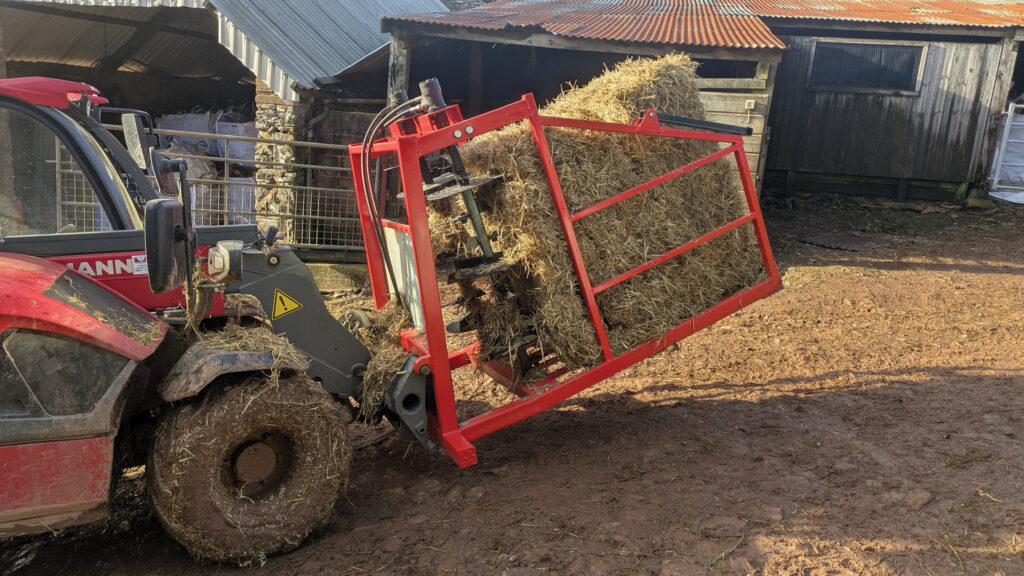
A mini straw spreader is the latest addition to the Landrake Farm armoury, joining the usual assortment of buckets and grabs, a home-built wire winder and a modified post knocker.
See also: On test: Merlo TF30.7 – small frame, pokey hydraulics
With a big square bale on its side, strings removed, he simply scoops up one half through the open front, before a swing-down bar holds it in place.
He then works the handler’s third service to deliver oil to a pair hydraulic motors, spinning them up to about 400rpm.
Crowding the headstock feeds the bale into the contra-rotating beaters, which shred and spread the straw 1.2m each side and through an open section underneath.
Weaponry includes welded-on combine straw chopper blades, interspersed with discs armed with header knives to cut the material and paddles to throw it.
As the rotors are reversible, any bung-ups are easily cleared by spinning them in the opposite direction.
Ken says the biggest advantage is its manoeuvrability in his small sheds, plus it’s perfectly matched to his handler’s lift capacity. It cost him £800 to assemble.
Oliver Collingham’s track grader
© Oliver Collingham
Having spent years pining after a grader to maintain his farm tracks, Oliver Collingham decided to do something about it.
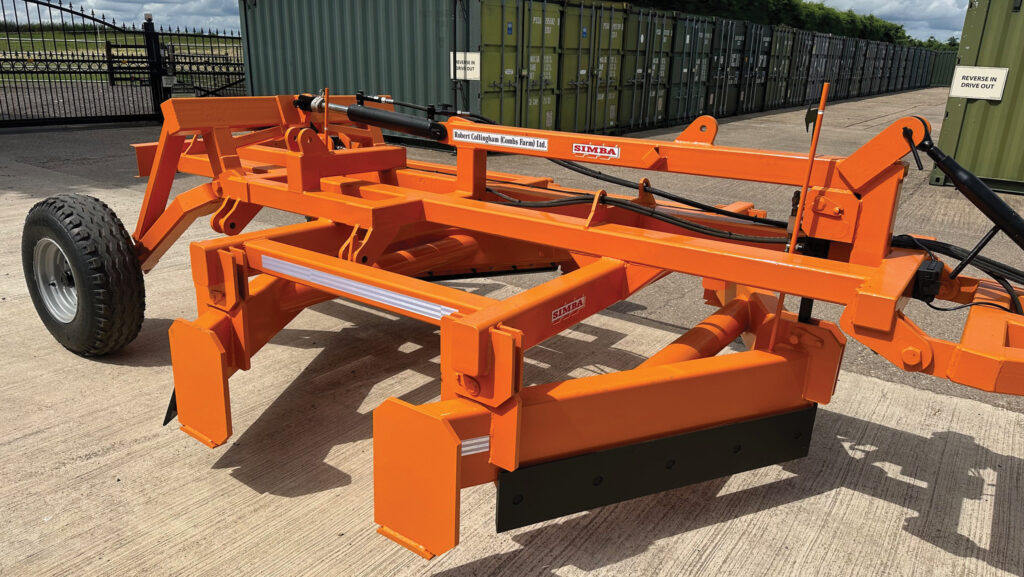
Unimpressed with most off-the-shelf offerings, the Notts-based farmer hatched a plan to modify an old Simba double press that had been languishing in the nettles on a neighbouring farm.
Plenty of work lay ahead, so he enlisted the help of local engineer Rob Dawes to get it finished in a timely fashion.
Together, they cut off all components bar the central frame and hydraulic lifting rear axle.
To this, they fitted two V-shaped grading blades, each of which was secured to the chassis with a pair of pivots at the sides and hydraulic rams at the points.
These allow the angle to be adjusted on the fly, giving the track either a flat or cambered profile.
The front blade is the narrower of the two and is designed to dig deeper into the surface, busting up holes and working up material for the rear blade to level.
To finish the job, he treated it to a fresh coat of Simba orange paint before applying period-correct decals.
He’s fooled some of the locals too, who’ve said they hadn’t realised Simba made a grader.
Dan Newton’s tanker-to-umbilical injector conversion
© Dan Newton
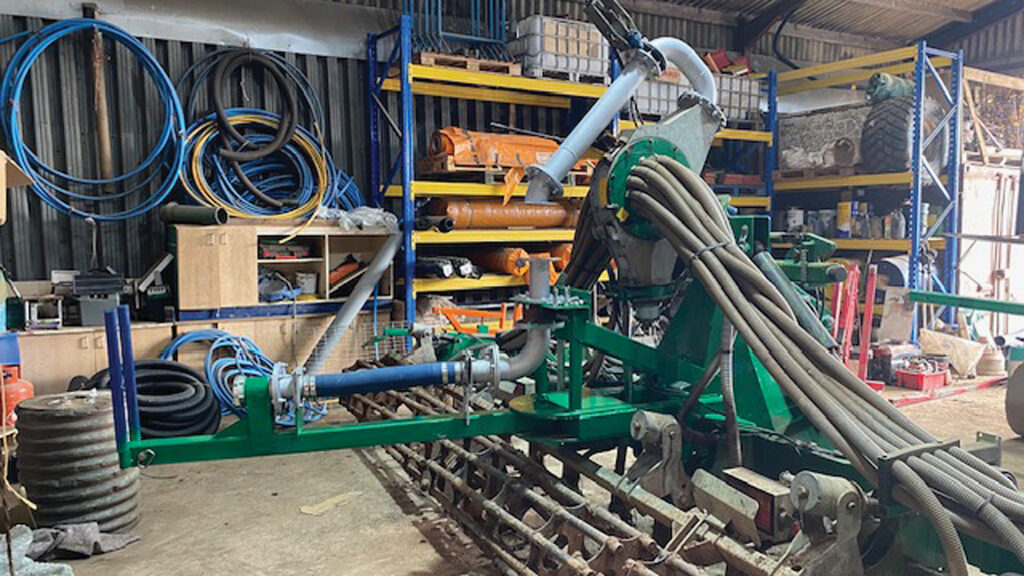
Rather than shell out for a pricey umbilical slurry injector, Dan Newton from Shropshire decided to modify one that had originally been mounted on a tanker.
The process involved making a bracket to alter the geometry of the top link pin, as well as fabricating a swing arm to tow the umbilical pipe.
Stops were included so the swing arm allows the tractor and implement to turn without running over the pipe and he modified the pipework to accommodate a flow meter.
Frankie Turner’s bale net lifter
© Frankie Turner
When she was 16 years old, Frankie Turner was well up to the task of piloting the farm’s McHale V6 round baler.
Yet she struggled when it came to changing heavy and unwieldy rolls of net wrap.
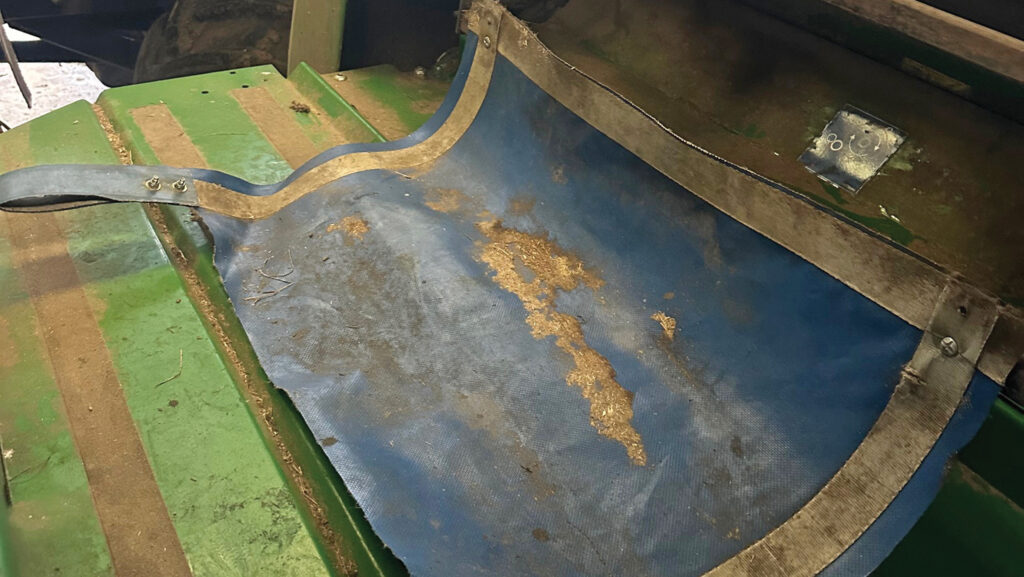
Her solution was to fabricate a pivoting metal frame mounted to the base of the wrap holder with a piece of lorry curtain-sider fabric attached, complete with handles.
Cleverly, she managed to do this without drilling any extra holes in the machine.
Once the roll of wrap has been slid onto the fabric, it’s then a simple task to grab the handles and lift it into position.
John Roberts’ sward lifter
© John Roberts
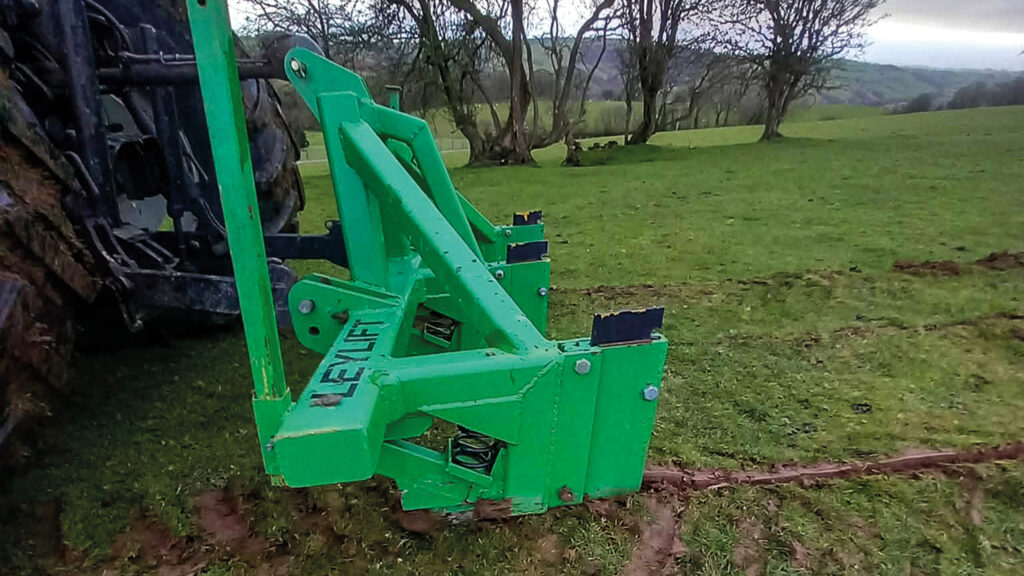
A three-leg sward lifter is the latest creation to emanate from the workshop of Powys hill farmer John Roberts.
After assembling a sturdy box-section frame he attacked an old excavator bucket, carving up the tough steel on the leading edge to form the legs and 100mm-wide flat feet.
These operate at a depth of 250-300mm, breaking up the plough pan to improve drainage and aeration.
He also fitted a knife fore of each leg to minimise soil burst at the surface; their mounting frame incorporating car coil springs that allow them to ride over rocks.
There’s no rear roller, as he prefers to let the ground settle naturally, returning about a month later to consolidate if necessary.
Total spend was £1,500.
Richard Joseph’s budget grass seeder
© Richard Joseph
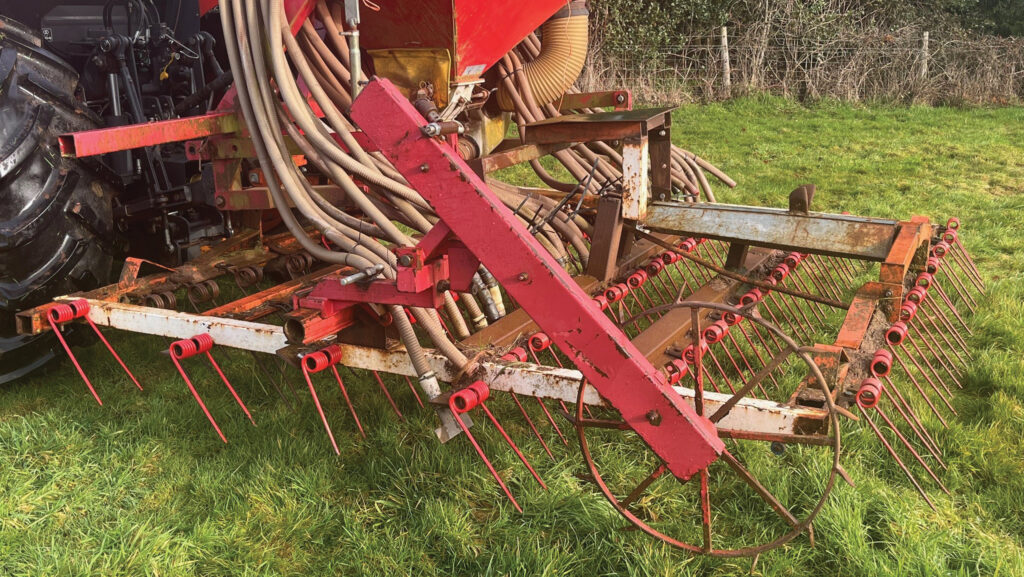
Armed with a 3m mounted Parmiter chain harrow frame and an old Farm Force pneumatic drill, Herefordshire farmer Richard Joseph built himself a low-cost grass seeder.
First on his agenda was welding six pieces of 3in box section to the harrow frame, which allowed him to attach 63 double tines.
Heavier duty ones were used at the front to work up some tilth, while lighter ones were employed at the rear for covering the seed.
Next, the drill was mounted on top with it’s 32 outlet tubes secured so that they sprinkle seed in front of the fourth row of tines.
It still has its original pto-driven fan, with a spiked land wheel driving the metering mechanism.
Another of his recent workshop creations is a 6m folding weed wiper, with a compact 12V sprayer tank feeding chemical to lengths of folded carpet.
He’s also fitted two sections of roller platform into the base of his Fleming link box to create a speedy method of dropping IBCs in the field.
Iain Reid’s low-loader
© Ian Reid
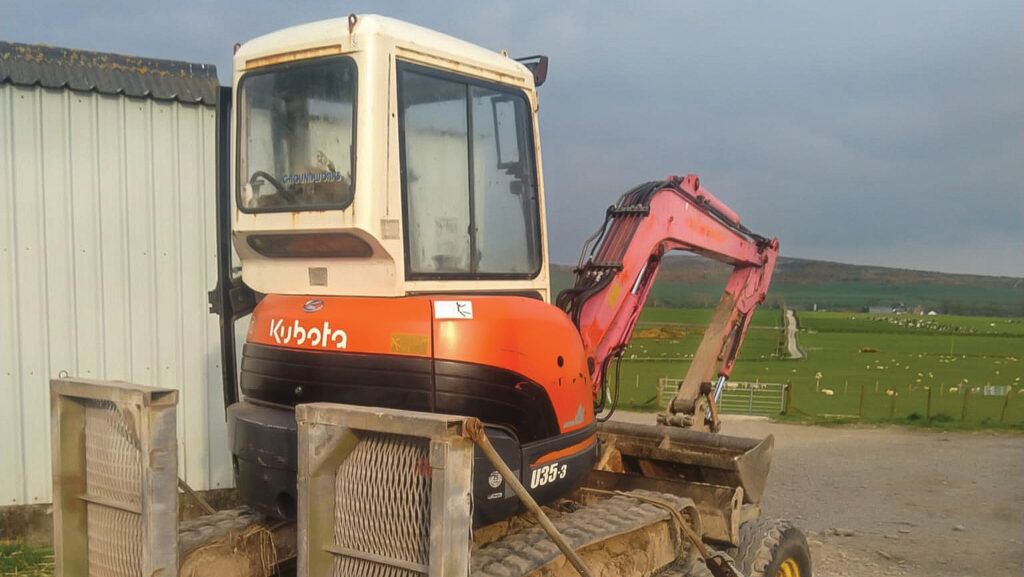
Super-frugal contractor Iain Reid built a small low-loader for moving his 3t digger around the Isle of Bute.
To a 6t Fraser trailer he fitted a frame, cut to size from scrap fish farm cages, before welding on old gate eyes and accompanying pins to hold the ramps up.
The project didn’t cost him a penny.
Jim Calcutt’s greasing station
© Jim Calcutt
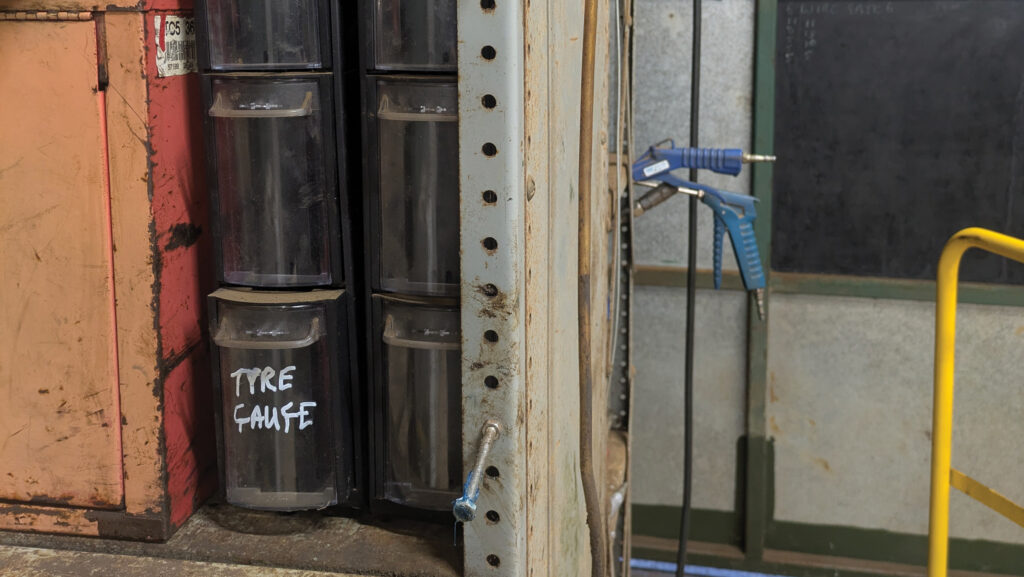
Fed up with getting mucky fingers when extracting grease gun cartridges, Jim Calcutt decided to put a well-placed bolt on his workshop racking.
This can be used to hook out empties in a flash, while keeping mess to a minimum.
While he was at it, he attached an old combine knife section above, which makes short work of cutting up rags.