FW Awards: Meet the 2026 Contractor of the Year finalists
 Alastair Priestley, Steven Horsley and Nigel Harper © Tim Scrivener John Eveson Nathan Stirk
 Three very different businesses are in the running for this year’s Contractor of the Year title.
See also: Forward-control JCB Fastrac offers contractor plenty of versatility
The finalists
- Dean Farming – East Mere, Lincolnshire
- Horsleys of Abbeytown – Old Junction Yard, Cumbria
- ND Harper – Cloud Hill Farm, Cheshire
The judges
- Jill Hewitt – Jill is chief executive of the National Association of Agricultural Contractors, the industry body that represents contractors across the UK
- Douglas Stephen – Douglas’s Kelso-based business, Crop Services, bagged Farmers Weekly’s Contractor of the Year crown in 2025
- Oliver Mark – Oliver is Farmers Weekly’s Machinery editor and has been on the Contractor of the Year judging panel for over a decade
Dean Farming – East Mere, Lincolnshire
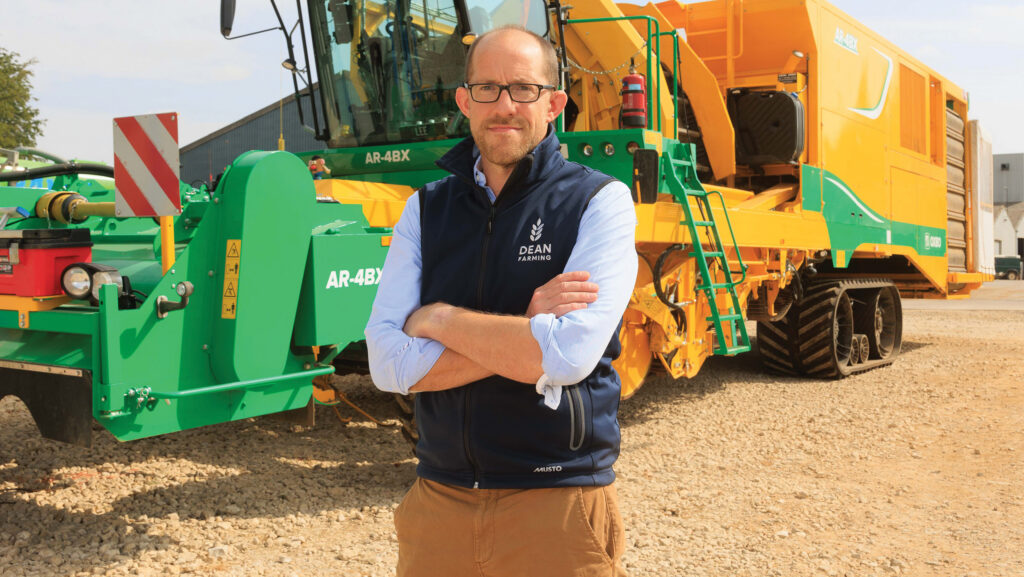
Alastair Priestley © Tim Scrivener
What do you do if an essential business tool quadruples in price? Faced with this quandary, the team at Dean Farming decided to take matters into their own hands by building a bespoke machinery management app.
The web-based platform digitises daily checks for every piece of equipment, is used to record breakdowns and transfer pictures to the workshop, and details road escort responsibilities for its carriageway-straddling root crop harvesters.
It also makes all the data readily available for inspections and, in the future, will be expanded to include staff timesheets and diesel use.
Plus, it was free to build – bar a week of labour – using artificial intelligence and only costs £30/month.
Most importantly, it is helping staff work safely and report issues quickly across the business.
Their workload is spread across a diversely cropped 1,200ha home farm – including cereals, potatoes, onions and vining peas – as well as another seven that encompass 2,025ha of arable land.
It also has 50 sugar beet harvesting customers on the books (1,100ha).
Machinery
Big acres call for reliable kit, and Dean Farming is suitably tooled up with an £800,000 Oxbo AR-4BX potato harvester, Holmer self-propelled sugar beet lifter, two Claas combines and 10 John Deere and Fendt tractors.
To make sure these earn their keep, managing director Alastair Priestley focuses on working them hard, thus spreading the capital investment over a large working area.
Tractors typically clock 1,750-2,000 hours a year and stay until the firm’s calculated replacement sweet spot of 8,000 hours – for which they are covered by warranty where possible.
Equipment is selected for a balance of output, reliability and cost per hectare, with a raft of spreadsheets detailing the expense of every operation.
Figures for labour, depreciation, fuel use, maintenance and an allocation of overheads are regularly reviewed and spot-checked against actual field performance, and prices for single-job operations incorporate a fuel escalator/de-escalator alongside the base fixed price.
There’s also plenty of older kit where new technology is less critical and the workload less pressing.
A four-bay workshop keeps the irrigators, cultivators and trailed potato harvesters in tune.
And the business has also made use of grant funding, most recently for an in-line slurry analysis system for its Bauer tanker to improve management of the 24,000cu m of pig slurry it applies annually.
Staff and customers
The aforementioned focus on maximising machinery utilisation also applies to staff, of which there are 27 across the whole business.
By having a broad range of root, tuber, veg and cereal crops, seasonal peaks dovetail to maintain a solid workload.
As a result, it isn’t overly reliant on seasonal labour, with full-time employees able to cope with the summer arable harvest and then potatoes and sugar beet – the latter running from the end of September to early March.
In all, just nine “extras” arrive to cart potatoes and drive forklifts, and they’re paid for a minimum of 50 hours/week irrespective of the weather.
This reflects the firm’s broader approach to staff management: safety is taken seriously and a central part of day-to-day operations, as opposed to occasional standalone exercises.
High-visibility uniforms are mandatory, walkways are established in the yards, and there are quarterly toolbox talks.
Near-miss reporting has also been incentivised with a £50 prize draw, and staff get yearly health checks and structured annual performance reviews alongside regular informal feedback to set expectations with the aim of offering progression within the business.
The numbers
- 8 contract farming customers
- 7 years in contracting business
- 27 full-time staff
Farm facts
- Primary services offered: Combinable crop, sugar beet, potato and onion establishment, spraying, fertiliser spreading and harvesting, slurry application
- Main customer base: Arable
- Area covered: Up to 10 miles from East Mere base
What the judges liked
- Proactive approach to staff safety and training
- Developed own app for pre-use machinery checks and breakdown reporting
- Made use of grants to reduce the cost of new technology
- Clear management structure with defined roles and regular performance reviews
- Geared up to cater for a diverse range of crops, allowing customers to prioritise the most valuable crops and, where appropriate, use cereals as a break in the rotation
What the judges say
“In-house development of a dedicated machinery management app demonstrates the problem-solving mentality of Dean Farming’s leadership team, and its proactive attitude to the safety, training and wellbeing of staff.”
Horsleys of Abbeytown – Old Junction Yard, Cumbria
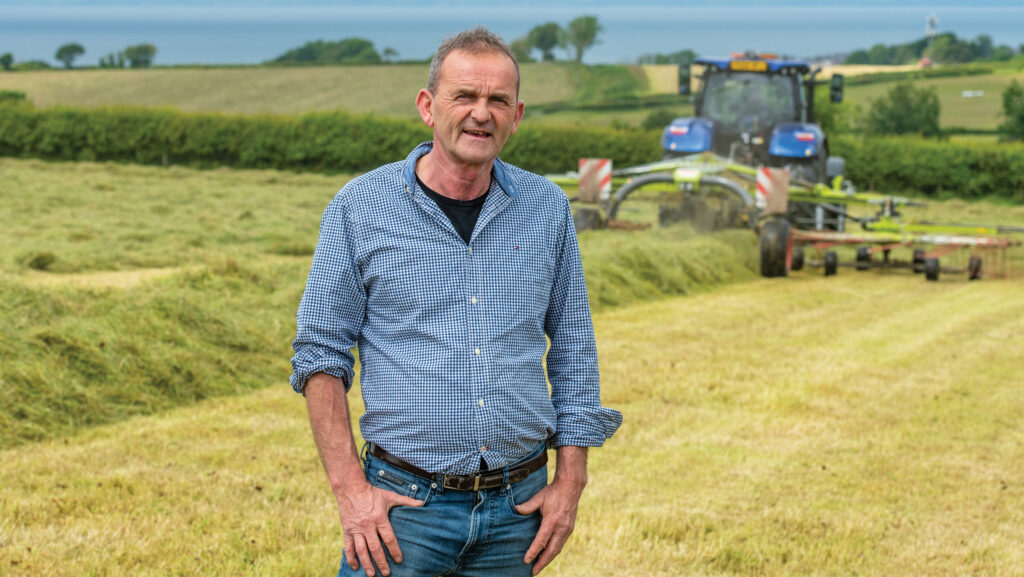
Steven Horsley © John Eveson
Three generations of Horsleys now preside over a Cumbrian contracting operation that started with a £400 threshing machine in 1962.
And it has been a force to be reckoned with ever since, delivering a timely, high-quality service to its now 120 customers – more than half of which it has served since the early days.
Such longevity has seen it ride countless agricultural waves, from the highs of the late 1980s and early 1990s when dairy farms bought inputs low and sold milk high, to the current commodity price squeeze and widespread farm consolidation.
But none have proved a tougher obstacle than the £1m payout to a director just four years ago.
Such adversity would have seen to the end of most businesses, yet the Horsleys hatched a plan to pay it back within three years and, remarkably, did just that.
It is now in the hands of brothers Steven and Andrew – albeit under the watchful eye of dad John – who are in the throes of revamping their Old Junction Yard base.
Machinery
The not-so-secret art to the business’s success is hard graft, honesty and timeliness.
Delivering on the latter relies on an acute understanding of customers’ expectations, their fields and their crops.
It also requires discipline, honed through decades in the job. This means maximising the workload without overstretching, and running the latest and most efficient kit without overspending.
Adding to the challenge is the variability of the Cumbrian climate, which means gearing up with just enough kit to get through a catchy season.
Among the fleet are four drills and three combines, the latter operating through an extended harvesting window thanks to 400ha of early-cut winter barley – 40% of which is crimped – alongside spring barley and winter wheat.
Then there are the two foragers that chomp through 5,700ha annually. Though the area could be ramped up, the Horsleys have resisted the temptation for the benefit of their business – and those of their customers.
Rising machinery costs are an undoubted challenge, handled by selectively extending replacement cycles.
Tractors have been pushed from 6,000 to 8,000 hours – typically five years – and they’re a mix of brands chosen according to value for money, performance and support. Claas, New Holland, Case IH and John Deere are all currently represented.
While those machines are covered by warranty and service packages, the Horsley workshop takes care of general maintenance and repairs – Andrew having learned his trade at Lloyds and Steve a dab hand with the welder.
They also service local farms’ machinery and have a close relationship with independent fitters.
Staff and customers
The Horsley operation is a family affair. John (82) still drives one of the two sprayers – the other piloted by Tony (70), who has spent his working life at the business – while Steven’s daughter, Sarah, does the paperwork.
Such is the firm’s reputation that job seekers come looking for work. Most are self-employed, though they are kept busy through a chunk of the off-season washing kit, moving slurry and hedgecutting.
The firm’s customer base is gradually changing, with smaller farms being incorporated into larger ones. However, the relationships remain tight, with the brothers always on the end of the phone to offer advice and plan work.
Their ingrained knowledge of customers’ farms means they can accurately quote prices, and invoices are sent out promptly in smaller, more affordable chunks.
And they are feathering in the latest technology to suit demand, with section control now on the sprayer, fertiliser spreader and Vaderstad Tempo drill.
The numbers
- 120 dairy and arable customers
- 64 years in business
- 6 full-time staff
Farm facts
- Primary services offered: Cultivating, drilling, spraying, combining, grass harvesting, supplying and spreading of lime, muck and slurry application
- Main customer base: Dairy and arable
- Area covered: Up to 35 miles from Abbeytown base
What the judges liked
- Strong customer relationships, many of which have been forged over decades
- Selective of work taken on to ensure bills are paid and the business isn’t overstretched
- Provides a reliable, honest service, regularly engaging with customers to offer advice and manage expectations
- Close-knit team with excellent staff retention
- Resilient business that is planning for succession
What the judges say
“Long-term customer relationships – established through six decades of hard and consistently high-quality work – are the cornerstone of the Horsleys’ business, which has overcome adversity to remain as strong as ever.”
ND Harper – Cloud Hill Farm, Cheshire
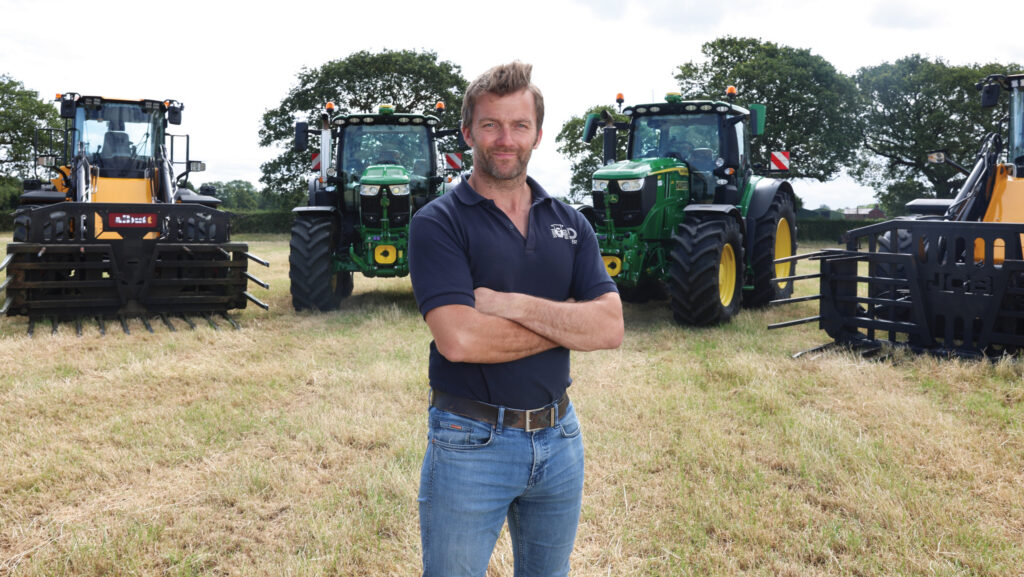
Nigel Harper © Nathan Stirk
Agricultural contracting is a numbers game, and few will have a better grasp of moneys in and out than Nigel Harper.
Since starting out 15 years ago, his business has grown to be the biggest in Cheshire, thanks to a laser focus on delivering value to customers.
This comes not from race-to-the-bottom prices – his services are generally the most expensive in the area – but rather by maximising the performance of crops and cows.
The power behind his approach comes as much from software as it does machines.
To ensure he sees a return on the top-end and often tech-laden kit his customers expect, Nigel scrutinises data from John Deere’s Operations Center platform, the AgDrive work app and Xero’s accounting software.
This allows him to monitor productivity to help find potential efficiency gains and forecast cashflow to protect the margins necessary for long-term sustainability.
Machinery
Nigel has gradually refined the services he offers, going all-in on those that are most important to his customers while sub-contracting or forgoing those that don’t warrant the cost of machinery or staff.
This strategy has seen combining scaled back from 485ha to 100ha and forage harvesting ramped up to 8,100ha, with many customers now on multi-cut systems and visited up to six times a season.
Machinery buying decisions are steered by their needs, as well as advice from agronomists and feed reps, and Nigel’s own research.
One of the most significant recent investments was 14 John Deere tractors, which replaced a fleet of hired-in Case IHs after the hourly rate shot up by 50%.
This move gained him a fully integrated telematics system through Deere’s Operations Center.
One of his subsequent focuses has been machine utilisation – productive work versus transport and idle time – which has become a point of competition among staff.
Meanwhile, AgDrive provides pre-use machinery checklists, timesheet recording and job traceability. The latter has virtually eliminated invoice queries.
Nigel’s replacement policy is partially fluid. Rakes are bought new and stay for about four years and tractors rarely exceed 5,000 hours, while the second-hand loading shovels, muckspreaders and sprayer hang around far longer to help balance costs.
And he opts to hire in the self-propelled Krone choppers, allowing him to fix his costs without tying up capital in power units.
Instead, the money can be funnelled into more efficient implements.
This includes an engine-driven slurry pump to save fuel and depreciation, and two tri-axle Richard Western silage trailers that double up as 50cu m nurse tanks. These allow him to shift more material with the same labour.
Staff and customers
There are now 105 customers on the books, up from 75 two years ago. All are invoiced weekly or set up on monthly direct debit payments.
Given that 85% of them are dairy farms, the latter has proved popular as it mirrors milk cheque income to ease cashflow – an arrangement that suits both parties.
Nigel has delegated some of his previously never-ending responsibilities, with part-time office staff handling credit control and HR.
This leaves him more time to trade advice with customers and understand both how their business is changing and how he needs to adapt accordingly.
Staff support is a top priority, with the 12 contracting full-timers and 16 seasonal extras having annual appraisals, quarterly health and safety meetings, toolbox talks and regular operator training.
To manage their work/life balance, and that of the other eight in Nigel’s expanding dairy enterprise, contracting staff shuffle between the two during winter.
The farming business has grown from 120 cows nine years ago to 1,000 today, and he is now his contracting firm’s second biggest customer.
The numbers
- 105 dairy customers
- 16 years in business
- 12 full-time staff in contracting business
Farm facts
- Primary services offered: Grass harvesting, slurry pumping and spreading, drilling, spraying, combining and baling
- Main customer base: Dairy
- Area covered: Up to 10 miles from Byley base
What the judges liked
- Good management of business growth built on a sharp focus on costs and a close working relationship with customers
- Embraced technology to help find efficiency gains
- Addition of credit control and HR staff supports better employee work/life balance
- Direct debit scheme maintains cash flow, with payments starting prior to first-cut silage
- Formulating succession plan with staff
What the judges say
“Embracing the latest work documentation and accounting software has tightened Nigel’s grip on costs and helped make efficiency gains that improve customer service and make his business more sustainable.”
A word from our sponsor
“After five years of sponsoring this award, spending time with the finalists remains an annual highlight. This year’s trio are operating at the forefront of our industry and setting new standards in customer service.”
Matthew Smart, managing director, Rural Asset Finance