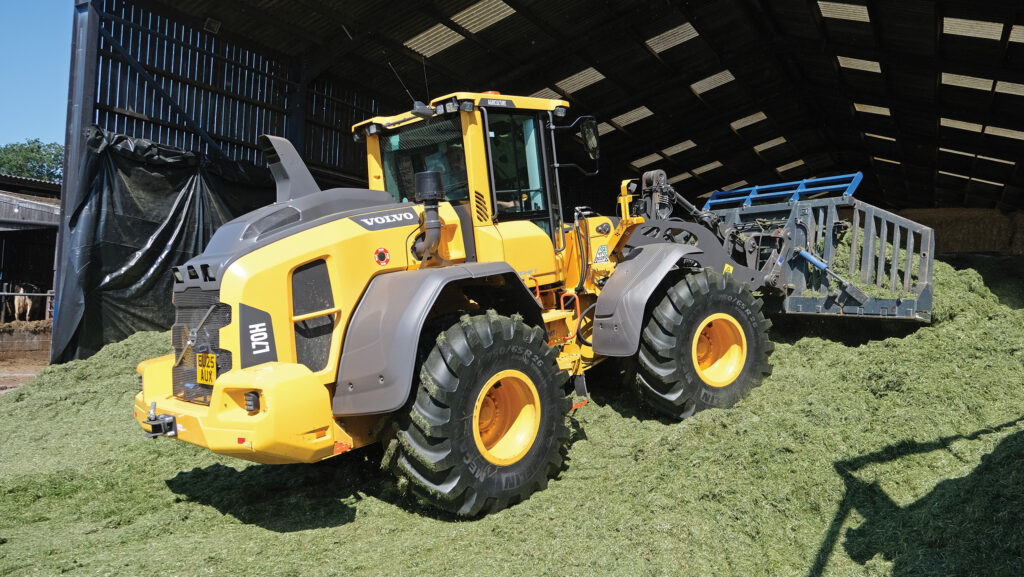
Driver’s view: Mark Tiplady’s Volvo L70H loading shovel
 © James Andrews
 For years, JCB has reigned supreme on the silage clamp, batting off challenges from steadier industrial-grade loading shovels with relative ease. But for some outfits, the extra bulk, hydraulic power and grip of these heavy-duty workhorses are precisely what they’re after.
See also: Driver’s view: The good and bad of JCB’s 435S loading shovel
County Durham contractor Mark Tiplady is one such individual. He added a Volvo L70H to his fleet last year to help with the task of processing 65,000-75,000t of grass, maize and wholecrop silage.
On top of that, there is 100,000t of farmyard manure, water cake and chicken muck to shift, which is applied by a fleet of Ktwo spreaders. Now that it’ has almost 1,300 hours on the clock, we find out how the newcomer is settling in.

Mark Tiplady © James Andrews
Volvo L70H specs
- Year 2025
- Hours 1,290
- Engine Volvo/Deutz 5.7-litre six-cylinder
- Max power 173hp
- Max torque 853Nm
- Transmission Four-speed powershift with torque lock-up
- Top speed 50kph
- Operating weight 12.7t to 15.5t
- Hydraulics 154 litres/min
- Tipping load 8,500kg
- Bucket capacity 1.8-6.4cu m
- Tyres Michelin MegaXBib 750/65 R26
- Price paid £152,000
Why a Volvo L70H?
I’ve been running a JCB 416 and 419 for a few years, both of which have performed well. But I needed another machine to cope with the workload and was keen to try something else.
Volvo shovels had been on my radar for a while and the only reason I hadn’t considered them seriously was that I thought they’d be much more expensive.
However, when a friend got a quote for an L70H that wasn’t much higher than a 419, I decided to price one up. At £152,000, I’d still need to shell out an extra £7,000, although I was pretty sure it would be worth it.
© James Andrews
Unfortunately, I wasn’t able to try one on a clamp before I did the deal, so I trawled through YouTube videos to see how it performed.
I could see that it had some serious pushing power, so off the back of that and a quick drive around a yard, I bought it. Included in the deal was a five-year, 5,000-hour warranty.
On certain farms with big yards and heavy crops we could do with a larger machine, such as an L110H or a JCB 435S. The problem is that they’re just too clumsy when we have to work in tighter spaces – the L70H gets the balance about right.
Likes and gripes
Likes
- Amazing pushing power
- Great build quality
- Comfortable cab
- Very stable
Gripes
- Lacks power on road
- Position of third hydraulic service
- Clonk when torque lock disengages
- Front mudguards too close to tyres
Did you spec any extras?
There weren’t a lot of options to choose from, but because this is an ag-spec model rather than a regular construction-grade machine, it comes with a few extras.
The four-speed powershift transmission has torque lock in all gears, it runs on Michelin 750/65 R26 MultiXBib tyres and has a third hydraulic service.
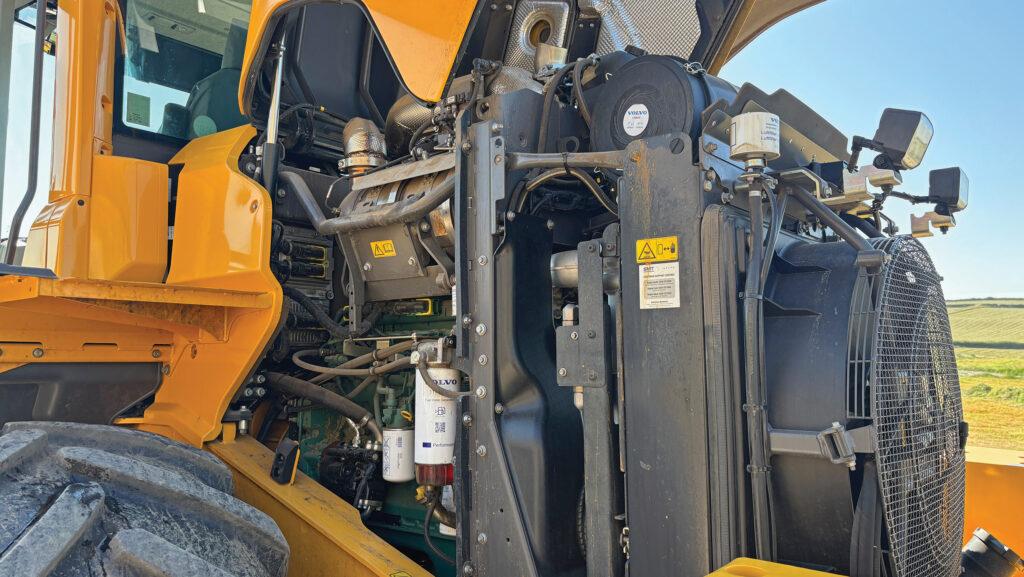
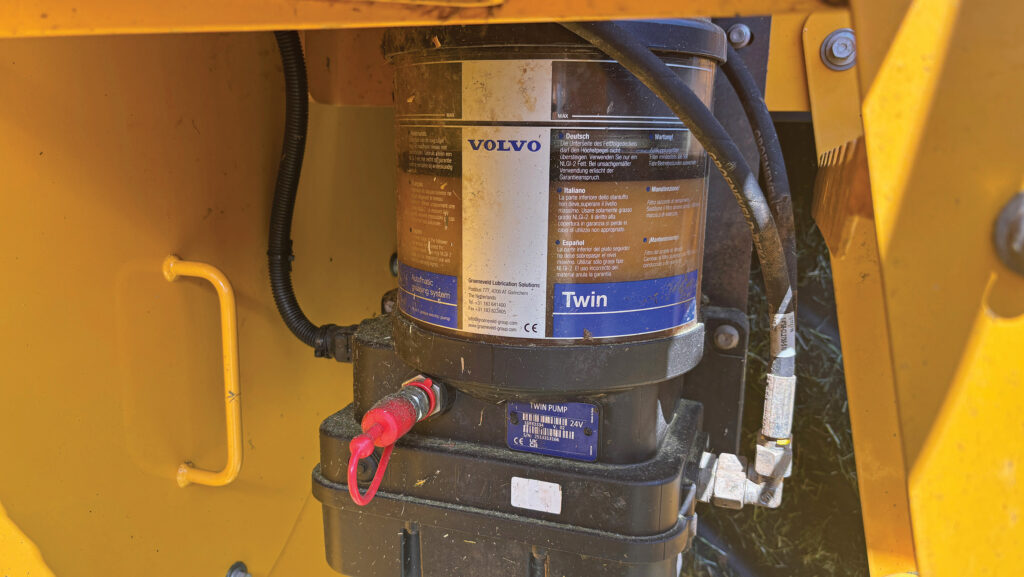
It also came with an auto-lube system that, so far, has proved more reliable than other ones I’ve experienced. For the first time, I signed up to a service package with the dealer, SMT, which should work out cheaper than paying for each job individually.
It monitors the machine on telematics and gets in touch whenever it needs something doing – all I have to do is agree a day.
© James Andrews
How does it perform on the clamp?
The Volvo pushes a lot better than a JCB 419 and there is a huge amount of break-out force, so you never get a refusal when asking it to flick a big load of grass.
It isn’t quite as fast or agile, although that helps you do a better job. In my opinion, good clamp building is all about maintaining a steady pace and keeping the wheels on the grass.
I hate it when operators shove a load up in a couple of minutes and then sit on the yard looking at their phone while they wait for the next one to turn up. Driving a 419 on the clamp can feel a little frantic, while the L70H is solid, calm and composed.
One thing I’m less keen on is the torque lock. If you’ve got this engaged when you start pushing it’ll eventually knock out with a loud clonk, so I don’t tend to use it on the clamp.
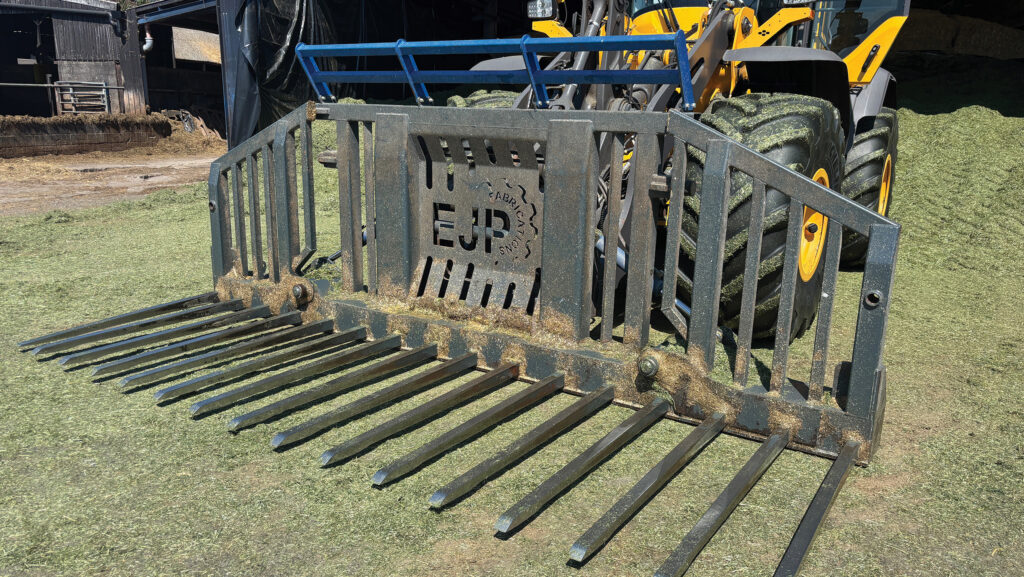
Thankfully, there’s enough torque to manage without. On the front, we run a 14ft EJP Fabrications buck rake, which is about as tough as they get. It’s a good size too, allowing me to push an 18t load up the clamp in one go.
© James Andrews
And loading muckspreaders?
Again, the power, weight and grip make it fantastic for loading spreaders. I’ve never come across a machine that’s so good at pushing into a muck midden, even when ground conditions are poor.
We can fill our 2.5cu m bucket with water cake (which is heavy stuff) and it barely seems to know it’s got it. Lift the same load with the 419 and it’ll be dancing around. The return-to-dig function also comes in handy for repetitive jobs like this, by dropping the loader arms to roughly the right level each time.
What’s it like on the road?
This is where it struggles to match a JCB419 for performance. Not only does it have less power, but with four gears rather than six, it can run out of steam on the hills.
It’s a good job it has torque lock, as it would be fairly hopeless without it. If I had the option of picking all the components I wanted, I’d have the larger eight-litre engine from the L110H and the ZF transmission that JCB uses. It would fly then.
© James Andrews
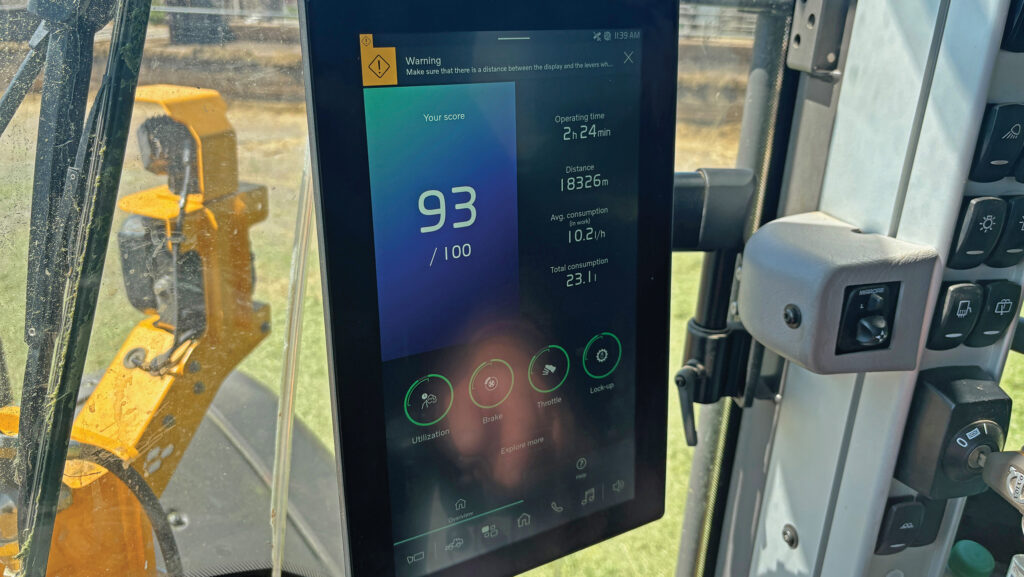
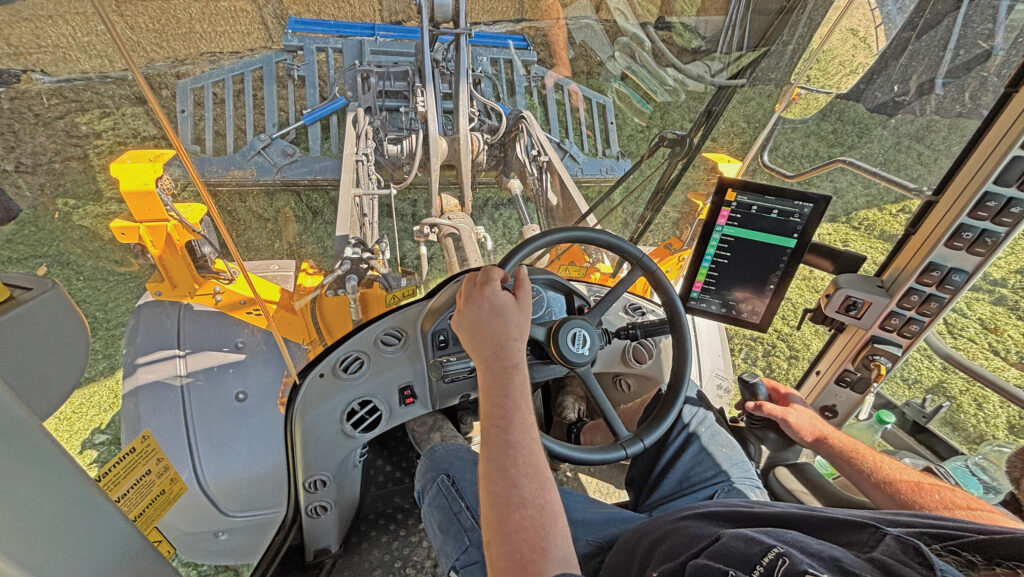
The cab interior isn’t as smart as a JCB either, although that doesn’t really bother me. More importantly, it’s quiet and the visibility is really good. I also like the large portrait screen.
It’s easy to read, has a good rear camera and comes with a performance monitor that gets pretty addictive. It’s a bit of fun seeing which driver can achieve the highest score.
© James Andrews
What else could be improved?
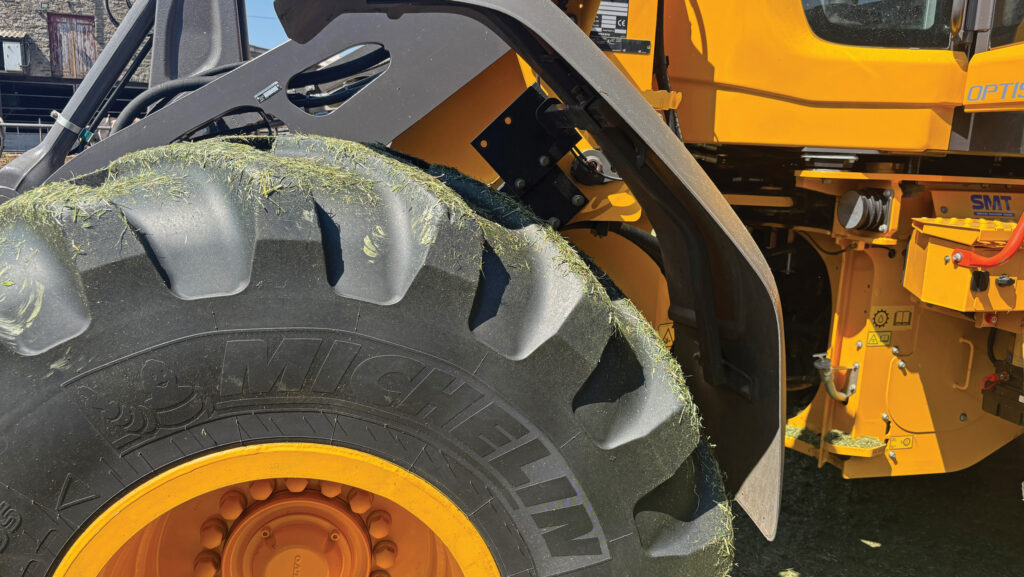
The front mudguards were far too close to the tyres when it arrived and I knew they’d get bunged up on the clamp. We made some brackets to push them further away, but they’re still not quite in the right place.
© James Andrews
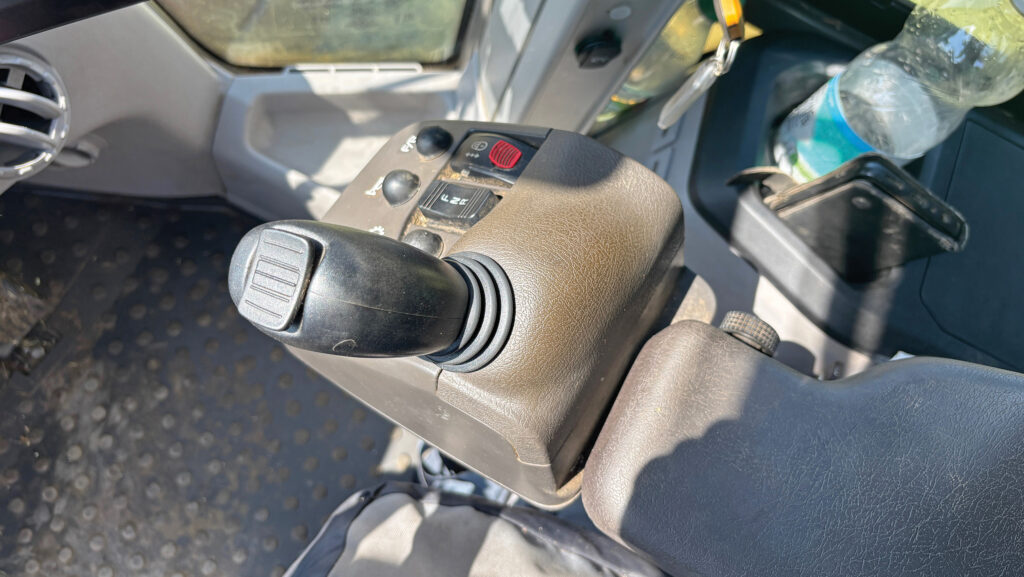
The position of the joystick and forward/reverse shuttle switch is another thing that takes a bit of getting used to. Once you’ve mastered it, though, you can operate the loader and change direction without having to reposition your hand.
© James Andrews
It gets slightly more awkward on jobs where we need to use the third service, such as our toe-tip bucket, as the button is on top of the joystick. If Volvo could shift it to the side, it would make the job easier. These are all minor niggles, though.
We tend to change our shovels every three years, and when it’s time to swap the JCB 419, I’m pretty sure it’ll be a Volvo that replaces it.