

Prepare winter housing for sheep now
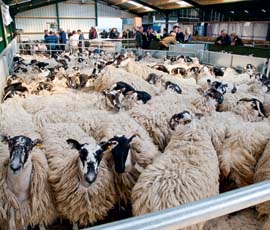
Sheep producers need to sort out their winter housing to maximise ewe and lamb productivity, said EBLEX beef and sheep scientist Liz Genever.
As we enter winter, Dr Genever has advised sheep producers to prepare their winter buildings and plan for any potential housing problems this season.
In particular, producers are urged to ensure there is sufficient space for eyes to lie and feed, because competition for space can impact on the health and welfare of the stock, creating nutritional and social stresses in the run up to lambing time.
Lying area and trough space recommendations for pre-lambing ewes.
Ewe size | Lying Area (m2/ewe) | Trough space (mm/ewe) | ||
Straw | Slats | Concentrates | Restricted forage | |
Small (40-60kg) | 0.9-1.0 | 0.7-0.8 | 400 | 200 |
Medium (60-80kg) | 1.0-1.2 | 0.8-1.0 | 450 | 250 |
Large (over 80kg) | 1.2-1.4 | 1.0-1.2 | 500 | 275 |
She said these space allocations could be reduced by 10% for winter shorn ewes, but feeding space must be retained. While, a stocking rate of 30-40 ewes for every pen was recommended.
Dr Genever also recommended the following:
• Ensure pens are long and narrow, not square, to maximise feeding space
• Set up feed troughs so wasted feed can be removed easily and regularly
• Feed ewes up to nine litres of water a day pre-lambing, and more afterwards
• Ensure water bowls/troughs are designed and located to minimise fouling and freezing
• Provide ample, dry and clean bedding to minimise footrot and hygiene problems
• Keep on top of draughts, but ensure free air is circulated above the sheep
• Ensure housing has good lighting
• Where possible, set up a hospital area for sick or injured animals
• Set up pens for ease of management in terms of cleaning, stock handling and movement
On top of these housing recommendations, Dr Genever said: “Managers are advised to make sure ewes receive booster vaccinations four to six weeks before lambing, and are grouped carefully by scanning result.
“Equally, ewes that are lame or affected by footrot should be separated as they are housed both for special attention and to prevent problems spreading throughout the flock.”