Robotic tractor makers struggle as commercial reality bites
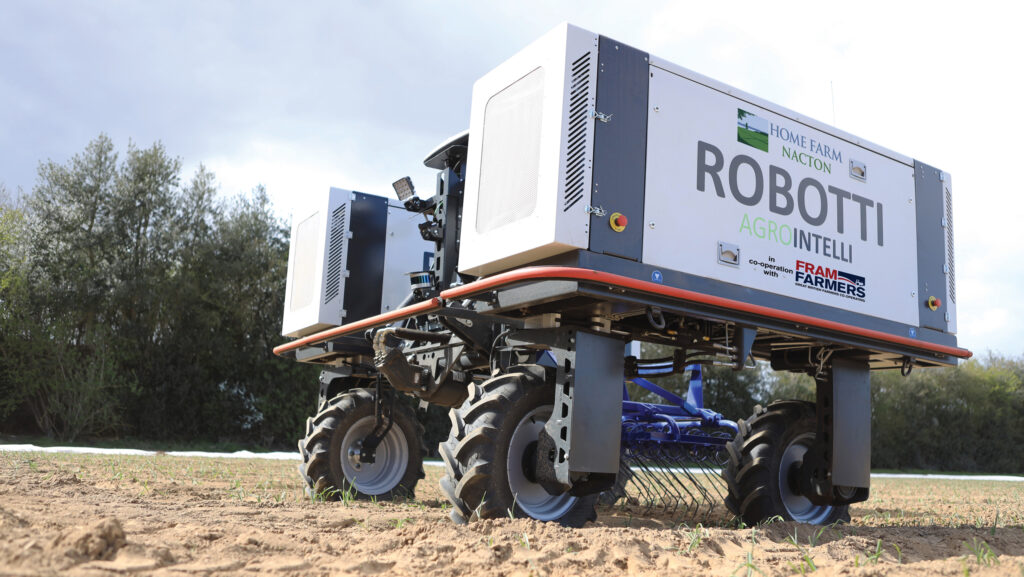 © AgroIntelli
 Pioneers of farm robotics technologies are finding out the hard way that the road to commercial success is paved with often insurmountable challenges.
We take a look at the fortunes of some of the manufacturers who are trying to get the technology to market.
See also: £50k Sabanto Steward kit gets Fendt 700s working autonomously
Monarch’s collapse is Cat’s opportunity
Caterpillar’s acquisition of Monarch Tractor, a California-based start-up selling battery-electric farm and orchard tractors, is likely to be more about accessing zero (at source) emissions and autonomous operation technology than any ambition to move back into agriculture.
Monarch collapsed earlier this year, having reportedly sold 400 examples of its 40hp (70hp peak) MK-V electric drive, operator-optional tractor to dairy farms, vineyards and commercial horticulture businesses.
The machine combines regular tractor axles, hydraulics, pto and so on with battery-electric propulsion and a sophisticated technology package covering guidance, 360deg situation awareness for driver-free operation, farm enterprise planning, and data collection incorporating artificial intelligence functions.
Caterpillar has snapped up the company’s assets primarily for the digital technologies as the construction equipment giant progresses its own autonomous product ambitions.
CNH Industrial was an investor in Monarch, drawing on elements of the company’s technology for the Case IH and New Holland electric tractors unveiled in the US last year but which are yet to go on general sale.
AgroIntelli runs out of cash
Despite winning a further chunk of external investment 12 months ago, Danish firm AgroIntelli, manufacturer of the Robotti self-driving implement tool carrier, collapsed earlier this year and has been broken up.
The Robotti became one of the best-known robotic tractors after its introduction in 2015, the twin-engine machine being capable of operating a number of different implements for cultivation, seeding and planting.
Plans for Kubota Europe to bolster the project by distributing the machine through its dealer network fell flat shortly after they were announced last year.
Administrators sought to sell the business as a going concern but have since sold off assets separately, in particular the intellectual property rights to the digital guidance and operation software to an unknown buyer.
Naio given another chance
The French robotics firm Naio Technologies has emerged from administration with a new €6.4m (£5.5m) finance plan, a restructured executive team, and a product range slimmed to a pair of specialist autonomous vehicles.
“New Naio” manufactures the Ted straddle tractor for vineyards and the miniature Oz tool carrier for small-scale horticultural operations, with the aim of supplying 100 units a year and reaching €11m (£9.5m) annual revenues by 2030.
One potential boost is a plan to jointly develop an autonomous load carrier for fruit and horticultural operations in partnership with the European arm of South Korean manufacturer Daedong.
Agco’s diesel unit develops tractor battery pack
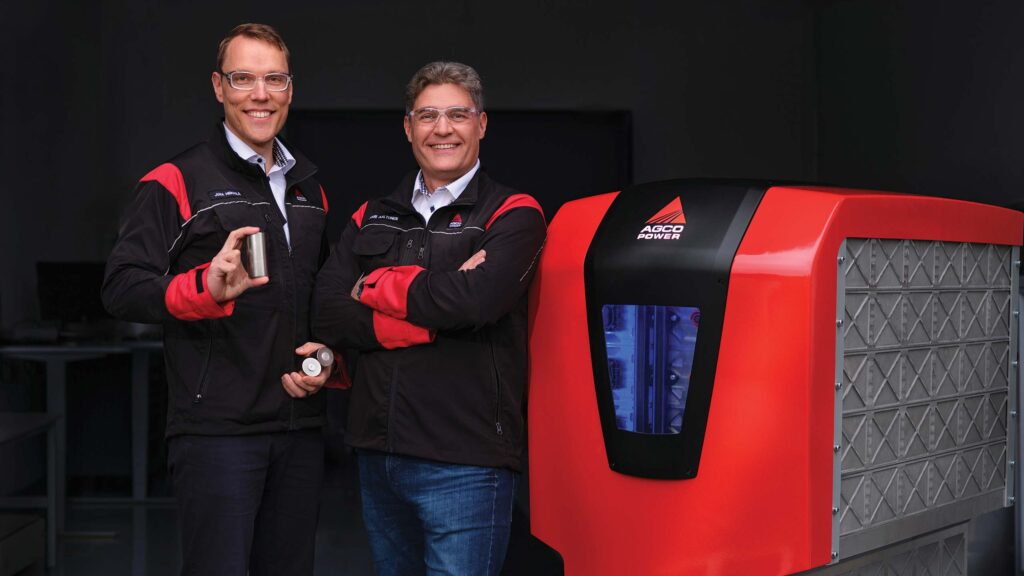
© Agco Power
Battery-electric propulsion for light to medium-size tractors is a new focus for Agco Power, the diesel engine manufacturer, as it develops a concept battery purpose-designed for agricultural applications.
Kari Aaltonen, product development director, reckons battery technology “appears to be more promising for agricultural applications due to the significant energy losses in hydrogen production and in the conversion of energy to electricity via fuel cells.”
Agco Power’s goal with the project is to work towards development of a new-generation electric tractor powertrain.
“There are many battery manufacturers, including some focused on off‑road machinery, but the battery is an expensive component, so we want to design it ourselves,” Kari says.
“Then we can influence cost, make economically sound choices and apply our deep understanding of tractors and agricultural requirements, not least because unlike other vehicles, you cannot design a tractor around a battery; it has to be the other way around because of the space and other component constraints.”
So far, the project has come up with a prototype 150kWh battery pack comprising 1,400 cells based on lithium-ion nickel manganese cobalt technology, which promises strong power output and longevity, according to Agco Power.
Safety in extreme operating conditions and packaging within the physical constraints of a tractor were key design starting points.