Driver’s View: Ed Glover’s Knight KT2060 trailed sprayer
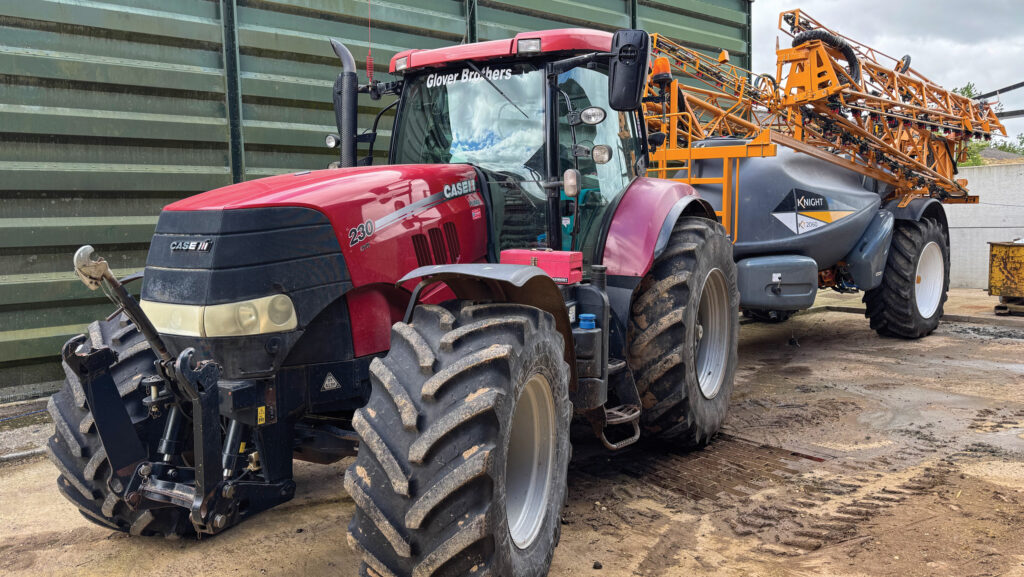 © MAG/Oliver Mark
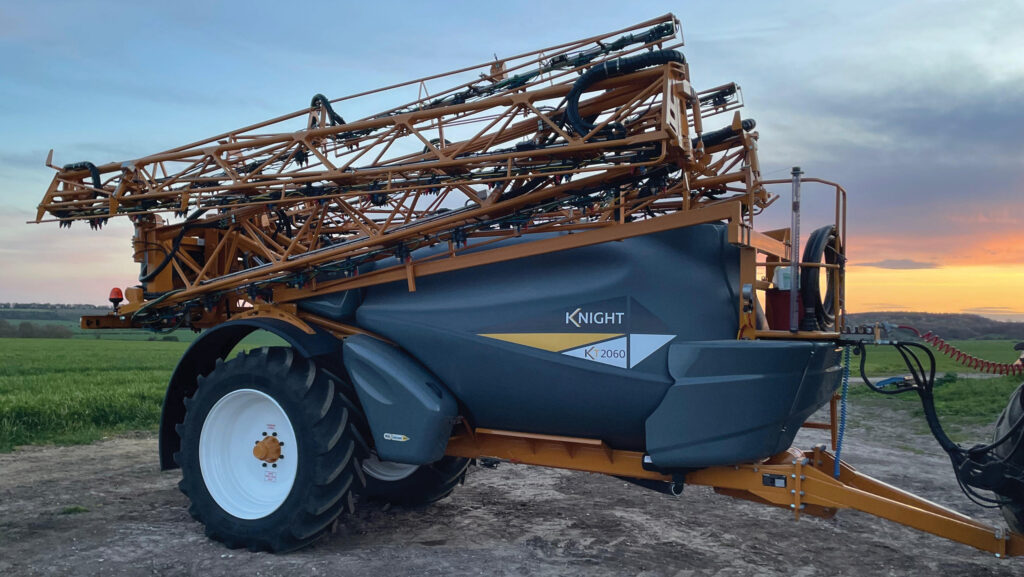
 Knight Farm Machinery unveiled the first example of its KT2060 trailed sprayer at the Lamma show, not only to passing tyre-kickers but also its eventual owner, Ed Glover of Andover-based Glover Brothers Farming.
Updates over the old Trailblazers are modest, with the traditional white tank swapped for grey, neater pipework and the option of a slicker wash-out system.
See also: First impressions: John Deere’s front-cab 550R sprayer
The Glovers opted for a 6,000-litre, 36m model – the range extends from 3,600 to 12,000 litres and 24m to 45m – to take care of the 145ha on their home farm and 320ha on contract for a neighbour.
Knight KT2060
- Year 2026
- Tank size 6,000 litres
- Rinse tank 750 litres
- Nozzle bodies Auto-switching quad
- Auto shut-off 18 sections
- Boom width 36m
- Boom levelling Teejet Contour Master 4G
- Suspension Air bags
- Tyre size Michelin Xeobib VF 600/60 R38
- Price paid £152,000
Its arrival coincided with a drastic change of tack at Blackbarn Farm.
Worn down by the red tape and financial challenges of a conventional arable rotation, the business has instead devoted 170ha of its productive chalky land to rye, barley and oats, and the remaining 74ha to maize.
This is grown for bulk rather than quality for an anaerobic digester plant run by Apsley Farms in Andover.
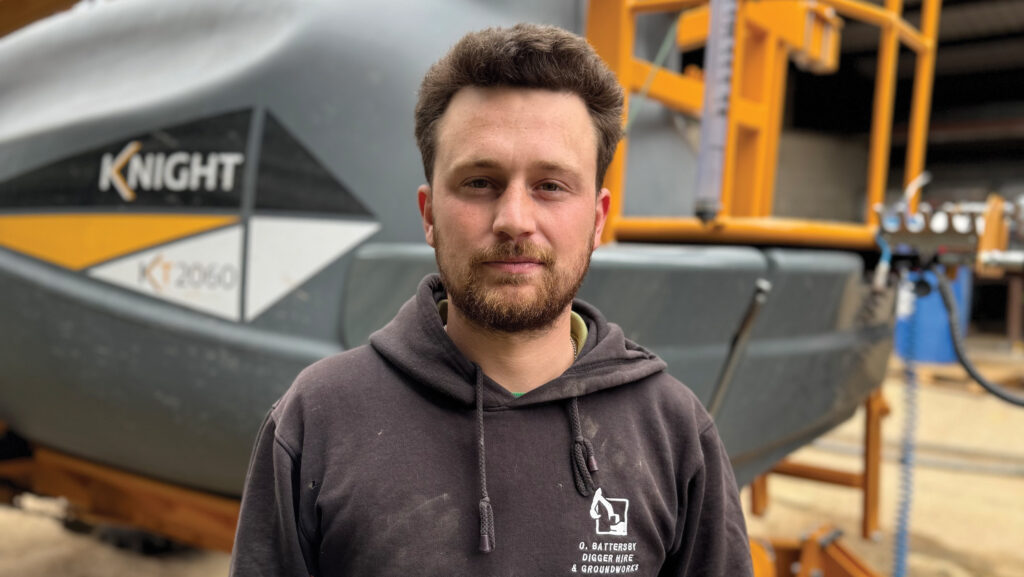
Ed Glover © MAG/Oliver Mark
All the Glovers need do is drill it, then keep it clean and standing; Apsley takes care of harvesting, storage – predominantly in AgBags dotted around the farm – and transport.
The lower-risk approach is expected to deliver the same margin as feed wheat, plus savings on crop handling. It should reduce the workload and see fields cleared early to give cover crops a head start.
Why a trailed sprayer?
It comes down to cost: the new KT was £152,000, whereas we were looking at double that for a 200hp self-propelled.
Business facts
- Operator Ed Glover
- Company Glover Brothers Farming
- Farm size Cropping 145ha on the home farm, plus 320ha contracting
- Crops Rye, barley, oats and maize
And, rather than paying all that extra cash for an engine and cab, it made sense to use our [2014] Case Puma 230 CVX. It’s effectively a free power unit, having been worth £25k-£30k for the last four years and long since paid for.
The only downsides are that we lose it for a week’s worth of spraying when it could be mowing or hedgecutting and, like all trailed setups, there’s less ground clearance.
That said, we find it forces us to get our oilseed rape desiccant and pod-stick timings spot on, and with 36m tramlines the impact is significantly reduced.
If money was no object, then we’d have a self-propelled in a heartbeat, despite the headaches our previous 12-plate Rogator 655 caused.
We ran it for seven years and 5,000 hours. Towards the end, it felt as if we had to throw £2,500 at it every time it left the shed.
The running costs were a killer – probably amounting to £60,000/year – and we stocked a ridiculous number of spare parts. We’ve still got thousands of pounds’ worth of pumps, pins, bearings and ball joints tucked away.
Most of the trouble stemmed from the Chafer steel boom, which was made of cheese, and its mounting linkage.
On one occasion, the stabiliser bar snapped, went through the fold-up ram and caused it to start closing during work. That alone cost us £18,000.
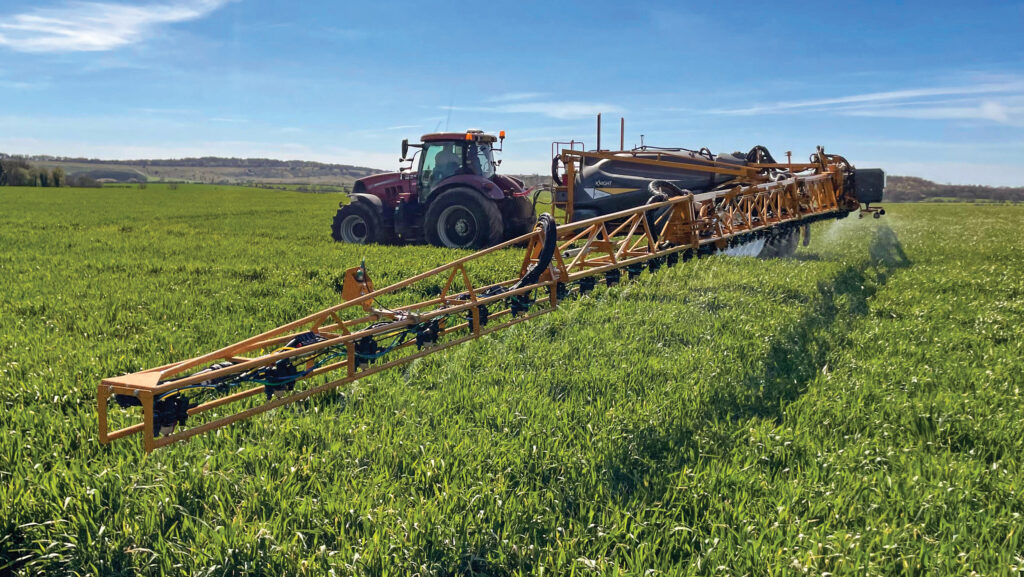
© MAG/Oliver Mark
And nor was it maintenance-friendly. The things that should have been greaseable weren’t: one 20mm pin took us hours to beat out.
In 2023, we ended up buying a second-hand Knight Trailblazer 5200 as backup.
It was a special build so, as well as the 5,200-litre tank and 36m boom, it had 3in plumbing and a 1,400-litre high-flow pump for applying fertiliser to potatoes at 1,000 litres/ha and 14kph.
The idea was that it would do our liquid fert and the Rogator the chemical, but our struggles with the latter meant we had to make a change.
By some miracle, we managed to get £21,000 for it at a farm sale, having only been offered £15,000 as a trade-in. The old Knight was valued at £40,000 part-ex; not bad given we only paid £42,500.
Which brands did you look at?
It didn’t take long to settle on Knight. We quickly chalked off the self-propelled options as, at £300,000, we’d have needed to continue the contract spraying for eight years to make the money back.
The priority was to find something relatively simple and, crucially, with good support. Guy Brewer at GB Machinery did a great job looking after our previous sprayers, so going through him was a no-brainer.
When it came to ordering, we were seriously considering getting the boom and chassis painted in Case red, though now I’ve seen it with the grey tank, I’m glad we didn’t. I love it.
The only real quandary was tank size, as there was just an £8,000 difference between 6,000 and 7,000 litres.
In the end, we resisted the temptation to go bigger. You always want a bit more capacity to finish a particular block of work, but it’s ample and should make the machine easier to sell one day.
Did you spec any extras?
Given the value of product going through the sprayer – £350,000 of fertiliser and chemical last year – we decided to spend money on the boom rather than things like electric taps.
© MAG/Oliver Mark
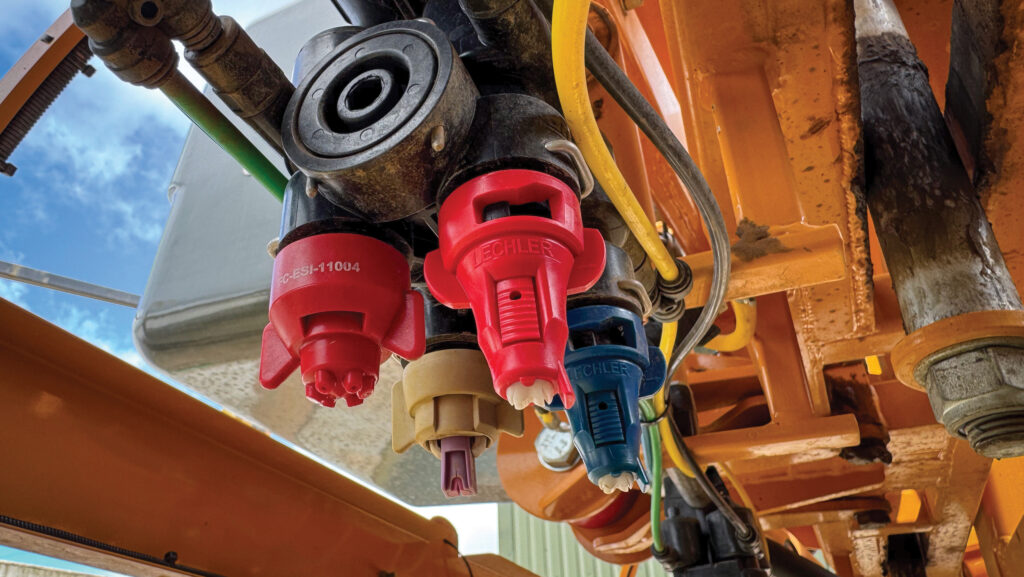
So we opted for Altek’s auto-switching Vario-select quad bodies, which open and close up to three nozzles simultaneously (the fourth is for fert) to maintain application rate and droplet size within a set threshold.
This also gives us turn compensation to account for the slow moving inside sections and fast-moving outers.
The extra accuracy has made a noticeable difference. One of the fields borders a housing estate and the homeowners moan about our proximity to their gardens, but we can now put on a coarse, low-rate spray that unquestionably lands straight on the crop and nowhere else.
We have also invested in nozzles, which aren’t cheap. The blue and pink Lechler IDTAs paint the flag leaf to perfection on T2s, there’s a lilac 025 IDK, and a standard Hypro red umbrella for fertiliser. The latter does a great job, provided its working at 60-120 litres/ha.
They’re currently controlled in 2m sections. Given most of our fields are square, the extra cost of individual nozzle control didn’t seem worth it. There’s always the option of upgrading the system in the future.
Teejet’s new Contour Master 4D boom levelling helps with accuracy too – when it’s working, at least. There are some ongoing teething problems. On start-up, the controller thinks the sprayer is the other way around and gets itself in a right muddle, and the software currently refuses to talk to the AFS700 isobus terminal in the tractor.
This means running a Muller screen purely for boom levelling. The rest of the functions work fine, and a software patch is apparently coming.
© MAG/Oliver Mark
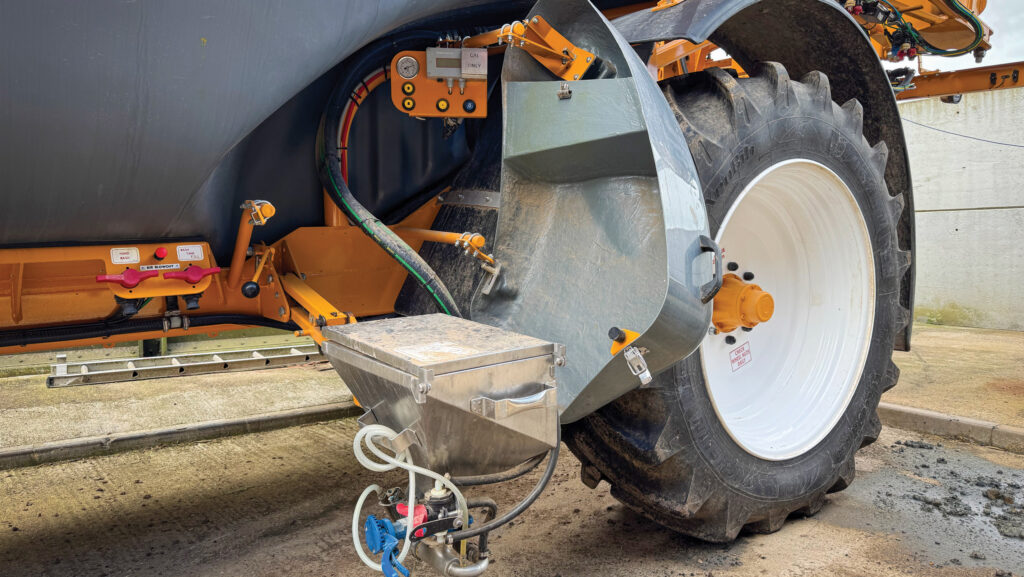
As for other extras, we ticked the boxes for a digital tank level, which means we can see how full it is from the induction area, and air blow-out – probably our favourite feature.
It uses the sprayer’s compressor to clear the suction pipe, which saves us getting wet, requires less muscle, and avoids any spillages.
How has it performed?
Bar the boom levelling glitches, we’ve had relatively little trouble over the 1,320ha covered so far.
The boom itself is really well-balanced, and being steel means Dad can always repair any breaks.
Knight has also tidied up all the hydraulic pipes, such that they’re dead easy to trace and replace.
In terms of breakdowns, the only issues have been a leaky clean water tank and a wonky wheel. Stocks had welded one of the rims 20mm out of line, so it looked like it was about to fall off along the road.
© MAG/Oliver Mark
I also had some muck in the axle steering valve, which caused it to run a couple of centimetres off-centre until I managed to recalibrate it.
We’re now considering fitting a K80 ball hitch to stop the “dink, dink” of the towing eye rattling on the hook when the tank is fairly empty and it’s going up a hill. Not sure it’s worth £3,000, though.
Hopefully, they will be the last of the niggles. The idea behind buying new was that we’ll have the best from it, downtime will be minimal, and there’s scope to upgrade some bits should we want to in the future.
Likes and gripes
Likes
- Solid, stable boom
- Quad nozzle body improves accuracy
- Air blow-out system eliminates spillages
- Option of upgrading to individual nozzle control
Gripes
- Teejet boom levelling teething problems
- Wonkily welded wheel
- Leaky clean water tank