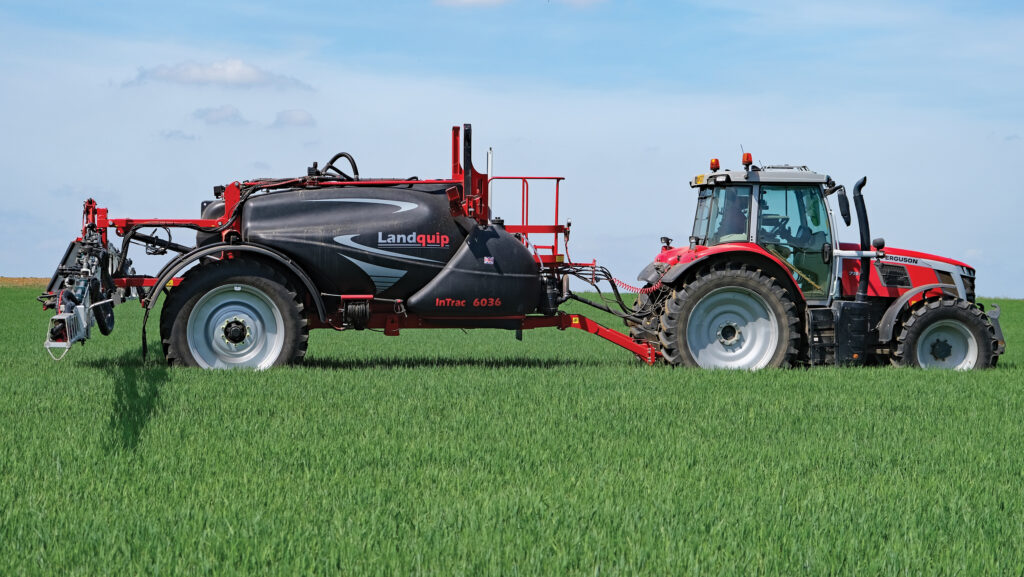
Driver’s View: Neil Hall’s Landquip InTrac 6036 trailed sprayer
 © James Andrews
 The InTrac is Landquip’s contribution to the world of high-output trailed spraying, armed with polyethylene tanks of up to 8,000 litres and booms as wide as 44m.
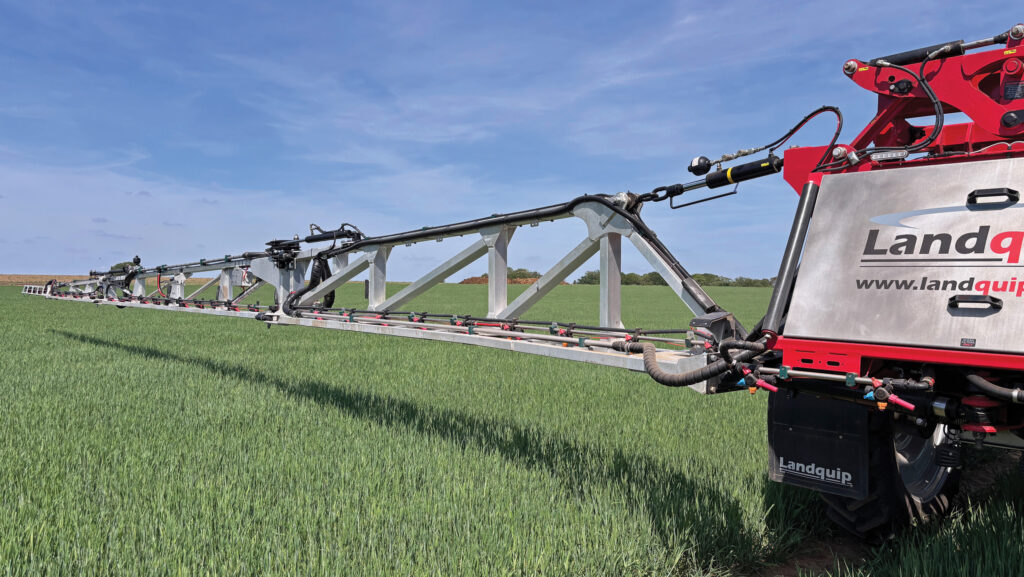
The latter are produced by French manufacturer Pommier – the Suffolk firm has been UK importer for more than 30 years – and are made of lightweight, rot-resistant aluminium.
See also: Forward-control JCB Fastrac offers contractor plenty of versatility
Landquip InTrac 6000
- Year 2025
- Tank size 6,000 litres
- Rinse tank 700 litres
- Nozzle bodies Five-way
- Auto shut-off 12 sections
- Boom width 36m
- Boom levelling Arag
- Suspension Air bags
- Tyre sizes 380/90 R46 and 650/60 R38
- Price paid £120,000
© James Andrews
To ensure they remain well-mannered during work, Landquip has teamed them with a trapezium-style self-levelling system, hydraulic tilt function and hydraulic anti-yaw protection.
They’re also mounted on a high-lift parallelogram linkage that offers spraying heights from 0.3m to 2.2m.
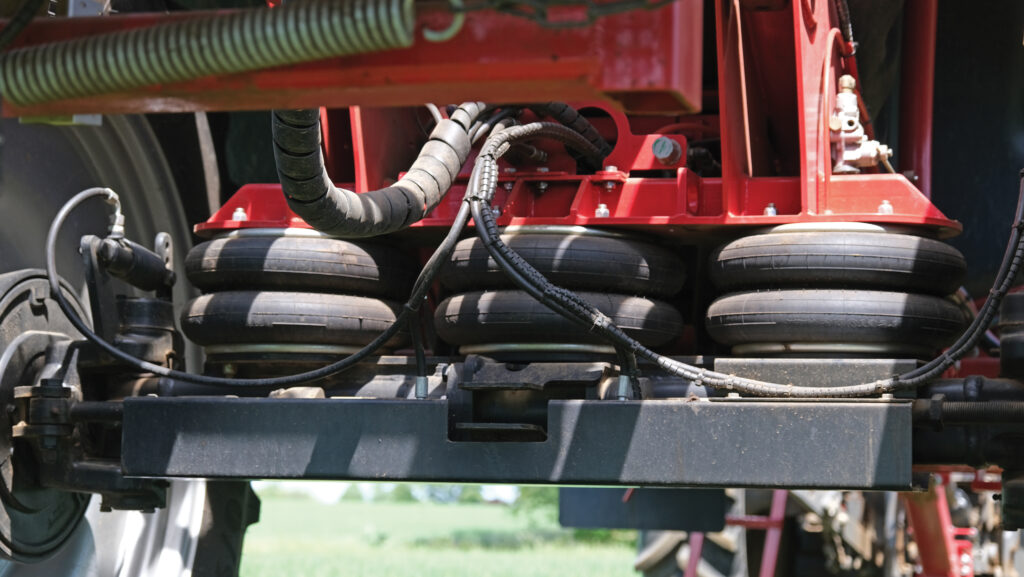
Other equipment of note includes an electronic auto-steering axle that tracks neatly behind the tractor, airbag suspension that runs off the tractor’s compressor, and commercial axles with hydraulic brakes.
For more traction in tough conditions, there’s the option of a PowerTrac version with a hydraulic driven axle.

Neil Hall © James Andrews
A recent entrant to the InTrac owners’ club is Norfolk beef and arable producer Neil Hall, who took delivery of his 6,000-litre model with 36m boom late last year.
By going big on capacity, he hopes he’ll be well on top of his 300ha spraying and liquid fertiliser workload, while freeing up time for other jobs.
Business facts
- Operator Neil Hall
- Company Hall & Sons
- Farm size 300ha beef and arable
- Crops Wheat, sugar beet, winter and spring barley, maize, lucerne
What made you choose a Landquip InTrac 6036?
We used to run two old 24m sprayers – a mounted Gem and a trailed Spraycare – and they were both past their best. Rather than replace them with similar machines, I decided to go for one larger trailed unit and push the boom size up to 36m.
The idea was to dramatically speed up the operation so that I could get products on at the optimum timing and minimise my time on the seat. On top of that, I wanted to move from granular to liquid fertiliser, so I needed plenty of capacity to handle this.
I had a brief look at what different brands had to offer, but I soon settled on Landquip.
Its products are well made, the factory is only about an hour away and I was particularly impressed with the work they’d done on a friend’s sprayer.
Even though his model was about 30 years old, they took it into the factory, gave it an overhaul and updated it to current specs. A machine like this is a massive investment for a farm our size, so that helped reassure me that it’ll have a decent lifespan.
For us, a 4,000-litre tank would probably have been the sensible choice. But the 6,000-litre wasn’t that much heavier and it’s nice to have the extra capacity.
I don’t need to fill it either, so if the ground conditions aren’t great, I’m not really losing out. That said, travelling isn’t usually a problem for us as we’re on very sandy, free-draining land.
Another perk with Landquip is the aluminium Pommier booms. They’re light and don’t rust, which is a massive bonus when using liquid fertiliser.
Did you spec any extras?
© James Andrews
I spent about a year deciding on the spec, which meant there was plenty of time to carefully weigh up the options.
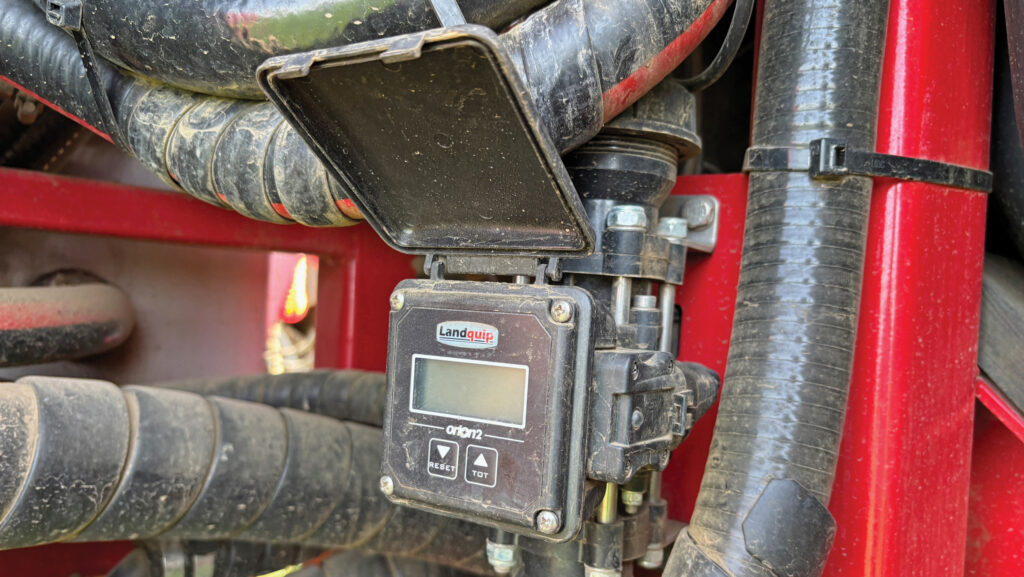
First on the list was an auto flow meter, which means I can set how much water I want it to add and it will cut out as soon as it reaches that volume.
When I first got it, I was religious about double-checking this against the manual sight gauge, but it’s always accurate so I don’t really need to bother.
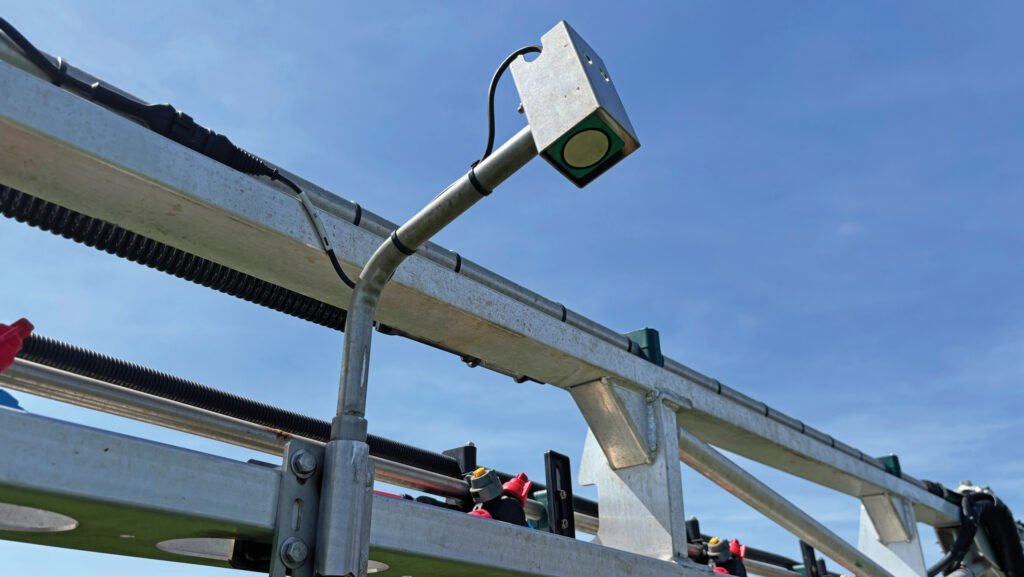
Automatic boom levelling is another feature that I thought was important, particularly as I was jumping from a 24m to 36m boom.
© James Andrews
And because I wanted to apply fertiliser, I decided to upgrade from three-way to five-way nozzle bodies. I can now have all of my go-to nozzles fitted at once, so there’s no faffing when I’m busy.
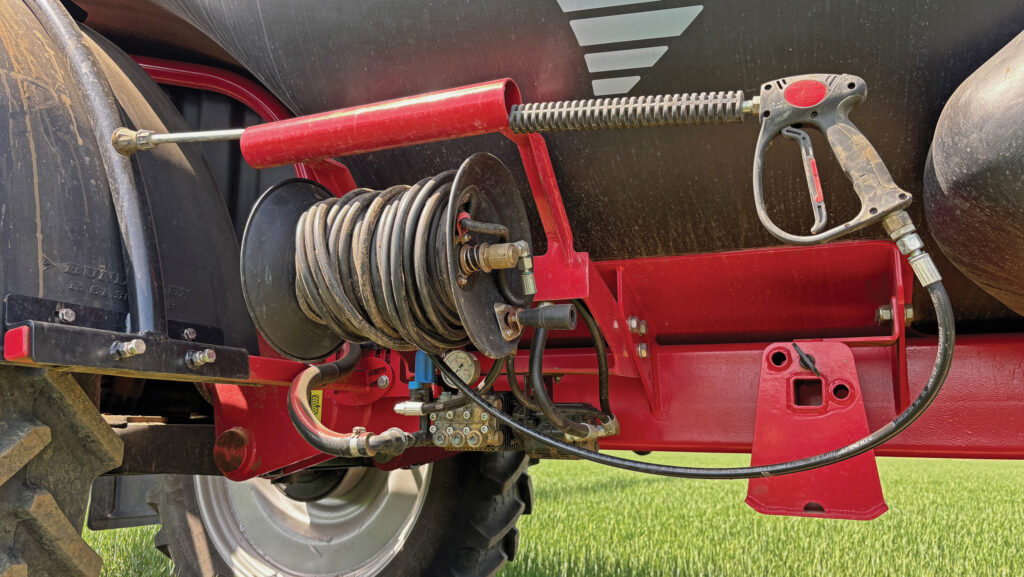
It might seem like a luxury, but I’ve been particularly pleased with the on-board hydraulic pressure washer. As soon as I’ve finished work, I can give the machine a quick blast, which is important after it’s been coated in liquid fert.
© James Andrews
There’s loads of power in the pump and a decent water supply as it draws from the 700-litre rinse tank. I can do a thorough wash out and still have plenty of water left for sluicing the outside down.
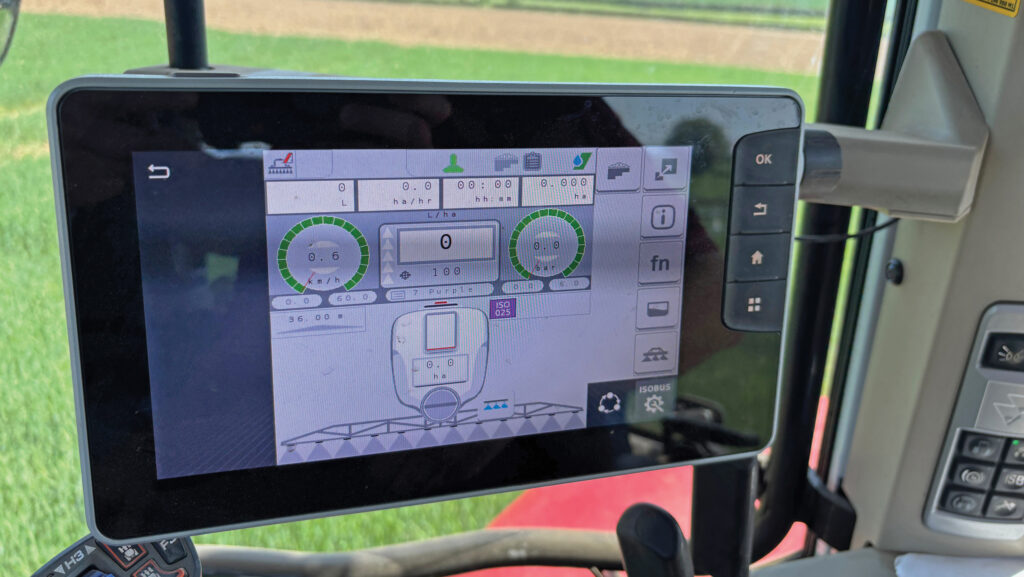
Twelve-way auto-section control came as standard, which I felt was ample for us. And I’m only really using it in the winter at the moment, anyway.
This is because I switch from running the sprayer on our Case Puma 175, which has GPS but no row crops, to our Massey Ferguson 7S.155 that has precisely the opposite setup.
It hasn’t actually been that much of a hardship, as I only have to flick one button on the in-cab controller to turn the sections on and off in sequence. However, I’m sure I’ll treat the Massey to a dome at some point.
© James Andrews
I’ve also got a closed transfer system from Frontier, which makes it much faster and safer to draw in products from IBCs, and two sets of wheels – 650/60 R38s and R380/90 R46 row crops.
Swapping them is obviously a pain, but we clubbed together with a couple of neighbours to buy a Trakjak and a wheel changer, which makes the job so much easier.
How has it performed?
I’m seriously impressed with the output – it has halved spraying time and turned spreading nitrogen into an enjoyable one-person job instead of two. We used to have one of us on the spreader and another carting fertiliser to field with telehandler to get a similar amount done in a day.
The induction hopper is excellent, making it quick to fill up, too.
As friends have pointed out, it’s a big unit – but I’ve been impressed with how manoeuvrable it is.
The electrohydraulic steering system is partly to thank for this as it forces the sprayer to track neatly behind the tractor. It’s easy to slip through gateways as a result and it only leaves one set of wheel marks when turning on the headland.
© James Andrews
Boom stability is impressive as well, with the hydraulic suspension and anti-yaw system keeping it nice and steady.
I’d also say that the variable geometry boom, which allows each side to move independently, makes it easier to manage than our old 24m sprayers.
The auto-levelling system is a bit more of a mixed bag, though. It’s great when the plants are small and there’s plenty of soil for it to detect, but it does occasionally get into a muddle in thicker crops.
© James Andrews
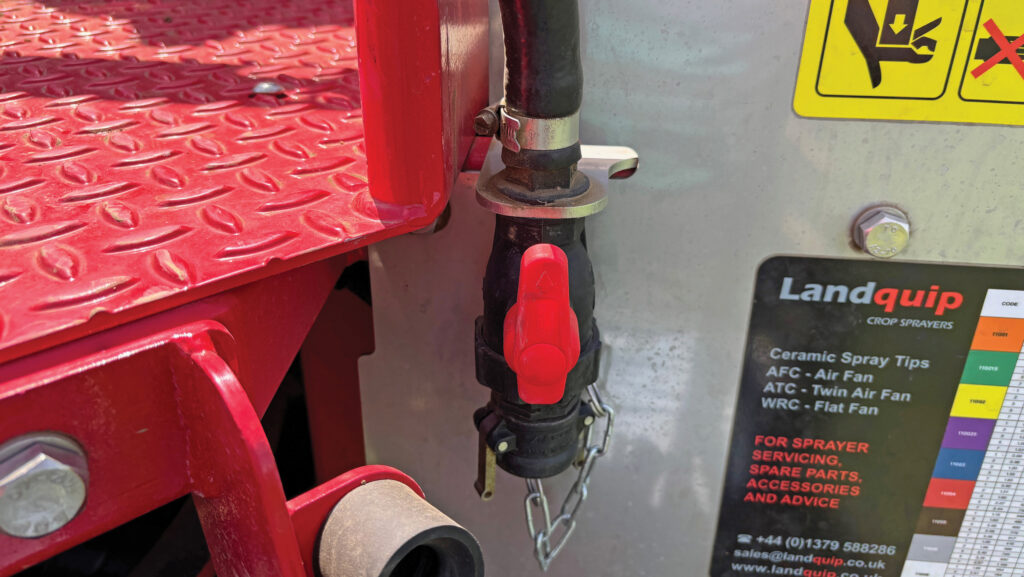
Another thing that needs to be improved is the filling pipe for the clean water tank. From the factory, it came with a regular hose pipe, which takes aeons to fill.
So, to save time, I end up dragging the main fill pipe up the steps and filling it through the lid, which isn’t ideal. Thankfully, Landquip is going to modify it for me by fitting a large-diameter hose with a port down by the induction hopper.
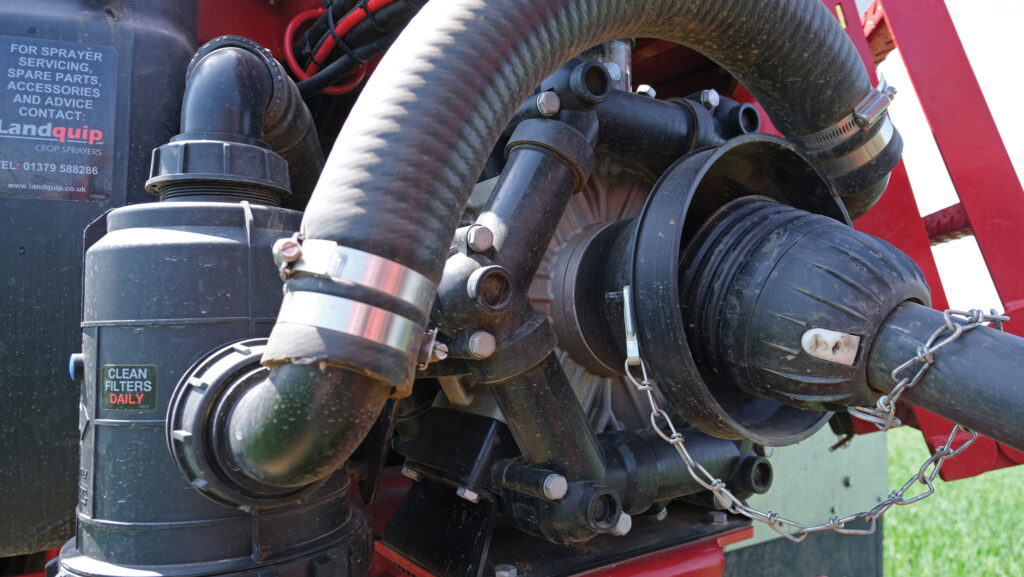
It’s also worth mentioning the pto drive to the pump, which is perilously close to the link arms when turning. I did have the option of a hydraulic one, but I decided against it as I was worried the tractors wouldn’t have enough flow.
© James Andrews
With hindsight, I think they’d have had plenty of capacity, so I’d probably change that if I was able to turn back the clock.
As for the controls, I’ve got integrated screens in both of the tractors so I can run the sprayer through isobus and not have any other terminals cluttering up the cab.
It works well on the whole, although I wish it was easier to flick between the spraying and boom levelling screens on the move. As it stands, I have to exit one screen and open the other, which means I’m all fingers and thumbs when I’m rushing to make a quick adjustment.
Likes and gripes
Likes
- Massive output
- Good build quality
- Light and stable boom
- Smooth suspension
Gripes
- Clean water tank is slow to fill
- Vulnerable pto
- Boom levelling isn’t perfect