

Advertising watchdog backs AHDB Let’s Eat Balanced campaign
 © AHDB
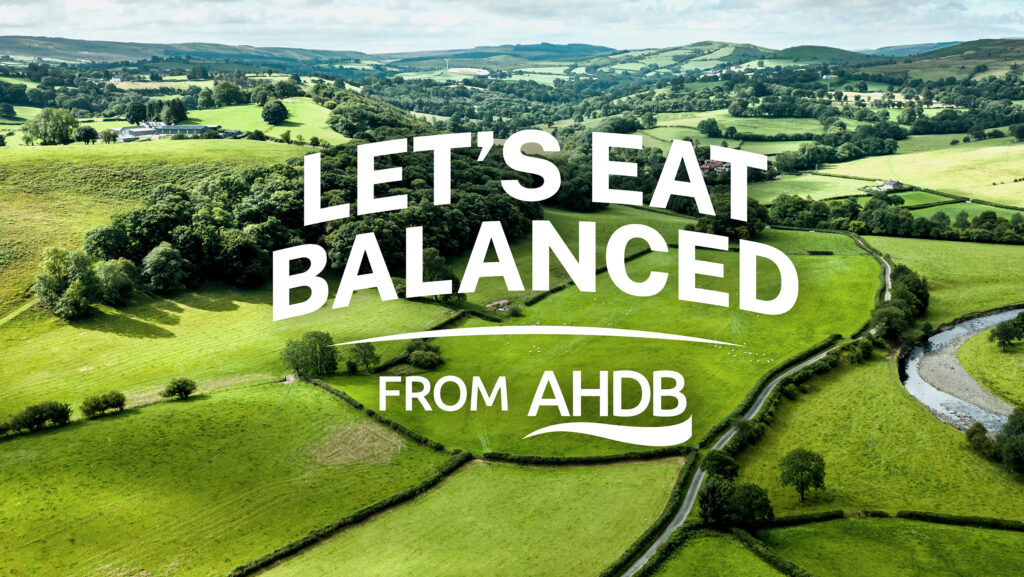
 The Advertising Standards Authority has backed the AHDB’s Let’s Eat Balanced campaign after complaints made by broadcaster and environmental campaigner Chris Packham.
The complaint focused on a series of television, print and social media adverts promoting British red meat and dairy products seen between September 2024 and February 2025.
Mr Packham argued the campaign failed to reflect the full environmental impact of livestock production and gave a misleading impression of how cattle are typically farmed in the UK.
See also: Packham under fire for branding fake bacon ‘planet-friendly’
Rejected claims
In its ruling, published on Wednesday 13 May, the Advertising Standards Authority (ASA) rejected claims that the adverts misrepresented the wider environmental impact of British meat and dairy farming.
The regulator said consumers were unlikely to interpret imagery of fields and grazing livestock as making broad environmental claims.
“The ads were concerned with the provenance and nutritional properties of British livestock. Viewers were unlikely to infer an environmental benefit,” the ASA stated.
It also dismissed complaints that the adverts implied all beef and dairy cattle in the UK were permanently outdoor grazed.
“We considered consumers would understand the imagery was a generic reflection of how some cows were farmed in the UK,” the ruling said.
“The ads did not suggest all cows were kept outdoors at all times.”
The ASA also cleared social media posts linked to the campaign, concluding consumers were unlikely to interpret them as representing the overall environmental impact of British livestock farming.
Carbon footprint claims
However, the regulator did uphold complaints relating to two specific carbon footprint claims made in newspaper adverts.
These stated that British beef had “a carbon footprint that’s half the global average” and British milk had “a carbon footprint a third lower than the global average”.
The ASA said consumers were likely to interpret those claims as covering the full lifecycle of the products, including emissions linked to cooking, food waste and disposal, rather than just production and retail stages.
The AHDB had relied on a large international meta-analysis and a 2020 report using “cradle-to-retail” emissions data, which covered emissions from production through to retail sale, but excluded post-retail stages.
While the ASA acknowledged the difficulties in collecting post-retail emissions data, it ruled that the adverts did not make those boundaries sufficiently clear.
“We therefore concluded that the evidence presented was insufficient to support the full life-cycle claims in the ads,” the regulator said.
The ASA instructed the AHDB to ensure future environmental claims were “appropriately explained and supported to avoid misleading”.
Campaign will return
Responding to the ruling, AHDB said it was pleased the wider Let’s Eat Balanced campaign had been cleared and confirmed it would return this autumn.
AHDB communications director Will Jackson said: “Let’s Eat Balanced is doing what it was designed to do – providing clear, factual, evidence-led information about British food, nutrition and farming standards.”
Mr Jackson said independent consumer research commissioned by the AHDB suggested most respondents understood the claims in the newspaper adverts referred only to emissions from “farm to retail”.
“This ruling shows that the campaign’s core claims were robust and therefore upheld,” he said.
Industry response
Commenting on the result, the Association of Independent Meat Suppliers’ head of communications, Tony Goodger, said the ruling shows that “despite challenges from self-appointed ‘celebrity’ environmental commentators, strong evidence-based messages in respect to balanced diets have a firm place within the national diet and environment conversation”.