

Analysis: Can England’s updated TB strategy deliver by 2038?
 © Tim Scrivener
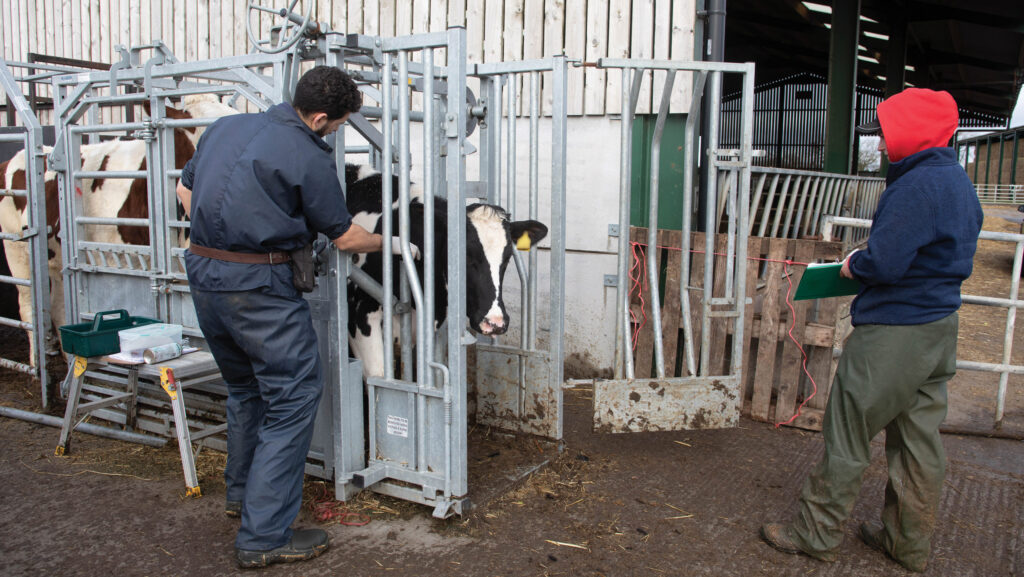
 England’s approach to bovine TB is being reshaped around a future without widespread badger culling, under a new proposed strategy aimed at achieving officially TB-free (OTF) status by 2038.
Developed by more than 100 farmers, vets and industry experts, the plan shifts focus towards vaccination, tighter testing and data-led controls.
Supporters see it as a long-overdue modernisation of TB control. But critics warn it risks removing established controls before alternatives are fully proven.
See also: Bovine TB strategy must progress quicker, Defra told
Speaking at the recent Three Counties Show in Worcestershire, Derbyshire farm vet and TB Advisory Service technical director Sarah Tomlinson described the strategy as “ambitious”, offering “a clear direction” towards eradication.
However, she stressed the strategy (opens as PDF) still requires a detailed delivery plan from Defra.
‘Step change’ needed
The UK government already spends more than £100m a year on bovine TB control, yet the strategy says a “step change” in effort and resources will still be needed to meet the 2038 target.
In an exclusive interview with Farmers Weekly, Dr Ele Brown, Defra deputy director for the bovine TB programme and the UK’s deputy chief veterinary officer, said ministers and officials were working to turn the recommendations into government policy.
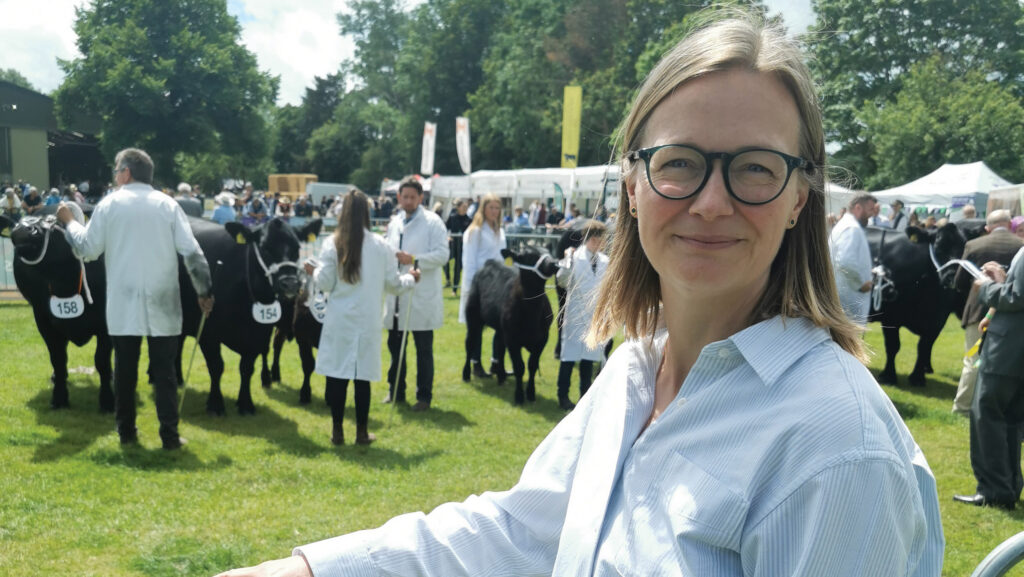
Dr Ele Brown © MAG/Philip Case
“There will be a government-owned delivery plan setting out how we are going to deliver this,” she said.
She added that ministers wanted to move quickly, with the plan updated regularly “because we will be learning by doing”.
Progress made
The proposed strategy comes at a time of steady progress in tackling bovine TB.
According to official government data, herd prevalence in England dropped to 3.3% at the end of March 2026 – the lowest value since October 2007. However, disease remains concentrated in high-risk areas, and recurrence continues to be a major challenge.
In 2024, nearly 56% of herds experiencing a new TB breakdown had recorded a previous incident within the past three years, underlining the difficulty of eliminating hidden infection.
“We have a lot of data now,” said Dr Brown. “Whole genome sequencing indicates the majority of TB transmission is cattle to cattle.”
To achieve OTF status, a region or country must demonstrate bovine TB is absent from at least 99.8% of herds and 99.9% of cattle for a minimum of three consecutive years.
A shift away from culling
While wildlife remains part of the disease picture, the proposed strategy shifts the primary focus onto cattle, particularly hidden infection, cattle movements and earlier detection.
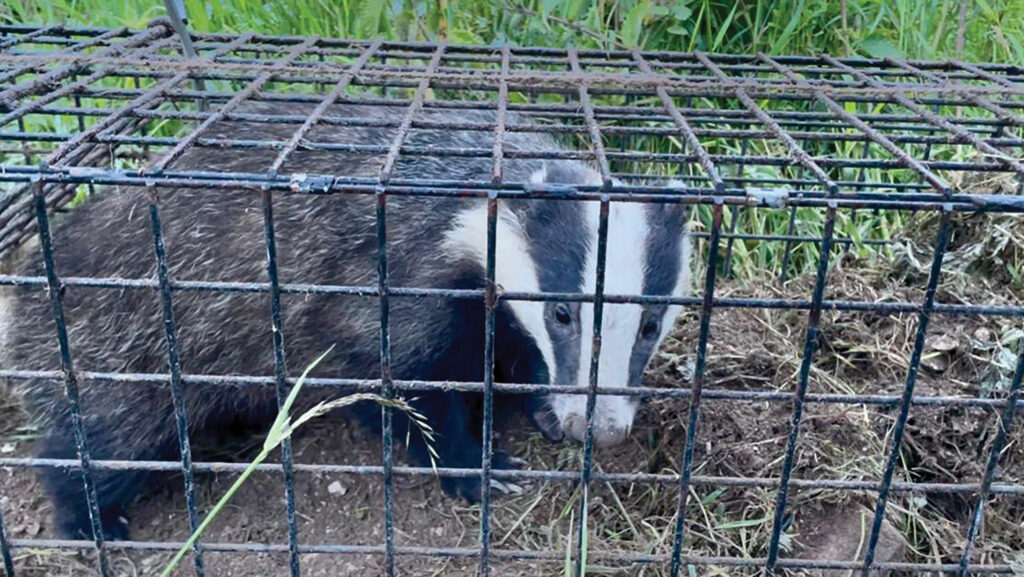
Instead, it favours targeted badger vaccination and greater surveillance where wildlife risk remains significant.
However, many farmers and the NFU remain sceptical. For them, recent declines in TB have coincided with badger culling, making its removal a concern.
© Sam Rea Vesba
Speaking at the Three Counties Show, Ed Simmons, a Somerset farmer and farm vet who is TB lead at the British Cattle Veterinary Association, highlighted the complexity of disease transmission.
“There’s no doubt the evidence says that badgers are involved,” he said. “But it was a light bulb moment when we went down with TB at home, brought the cows in and shut them in the shed, and it got a lot worse.”
Vaccination push
A central pillar of the strategy is the planned introduction of a cattle TB vaccine by 2030, supported by a “Diva test” capable of distinguishing vaccinated from infected animals.
Defra says field trials and regulatory work keep the 2030 rollout on track, although international approval for trade in vaccinated cattle remains a major hurdle.
Even then, vaccination is not presented as a standalone solution.
“I don’t like the notion of silver bullets,” said Dr Brown. “TB is too complicated a disease.”
Dr Brown says vaccination is intended to complement, rather than replace testing, movement controls, biosecurity and removal of infected stock. It also remains unclear whether farmers, government or both will ultimately bear the cost.
Managing the transition
One of the biggest challenges lies in the period before new tools become available.
With badger culling ending and cattle vaccination still several years away, farmers face a transition in which existing controls are being phased out before new measures are fully established.
Defra rejects suggestions of a policy vacuum, pointing instead to tighter cattle movement controls, more frequent testing, enhanced surveillance and greater use of disease data.
A key part of the plan is the new Livestock Information System (LIS), expected from about 2027, which will provide farmers with clearer herd-level risk information to support buying and movement decisions.
Until then, farmers can use the ibTB interactive map and TB Hub for guidance.
Aled Edwards, head of England field delivery at the Animal and Plant Health Agency (Apha), said: “We’re on that journey to improve our digital systems so farmers have access to information 24/7.”
Chris Addison, a Cumbrian farmer based in the Low Risk Area, urged farmers to focus on the measures within their control.
“We haven’t got culling anymore, so we’ve got to move on from that,” he said. “I really believe the game-changer will be cattle vaccination and the LIS.”
A more local approach
The strategy also shifts decision-making closer to farm level, with greater reliance on private vets supported by better disease data.
“This requires a major culture change,” said Mr Edwards.
The key question is what happens if disease levels stall or rebound.
The strategy replaces a proven but controversial toolset with a more complex, data-led approach still being built.
Whether this becomes a controlled transition or a policy gamble will hinge on how quickly it works in practice – and whether it can stop TB regaining ground.
Badger Vaccination Field Force project update
Farmer-led badger vaccination in England is gaining momentum, with the Badger Vaccination Field Force (BVFF) project now in delivery.
The BVFF project, a four-year Farmcare Solutions contract, has strong farmer backing.
In May, engagement meetings were held across the three priority areas for 2026: Worcestershire, Shropshire and Oxfordshire. About 160sq km of land has been signed up.
More than 60 local delivery partners have come forward to train as cage trapping and vaccination operatives, with vaccination already under way in Oxfordshire.
Area co-ordinators, based in local veterinary practices, will oversee vaccination activity.
Kate Bowen, veterinary lead for the project, said: “It has been great to see so much interest from farmers and landowners.
“It is really encouraging to see land being signed up for vaccination, and people putting their names forward as delivery partners.”
The focus now is on completing training and expanding vaccination activity through the summer. Farmers outside the initial priority areas are encouraged to register through the BVFF website, helping identify future vaccination areas.
The project builds on the Vaccinating East Sussex Badgers project, where badger vaccination has continued alongside falling cattle TB levels.
More than 220 badgers have been vaccinated in 2026, as the project enters its sixth year.
‘Don’t repeat Ireland’s TB failure’, warns NFU chief
NFU Livestock Board chairman David Barton warned England must not repeat what he described as the Republic of Ireland’s “abject failure of policy” on bovine TB, insisting the disease refresh must retain every available control measure.
Speaking at the latest NFU Council meeting in Stoneleigh, Warwickshire, Mr Barton said: “We must not let that happen here.”
Citing figures from the Irish Farmers’ Association, he said the Republic had reduced the number of TB-infected cattle culled a year from 44,000 to 13,000 following a wildlife intervention, but that the figure had since “peaked to 40,000 again”.
“I will do whatever I can to make sure that doesn’t happen here, because that is abject failure of policy,” he said.
Mr Barton, a fifth-generation beef farmer based in Gloucestershire, where he runs a suckler herd of about 200 cattle, defended the NFU’s previous TB policy, rejecting suggestions that other measures alone had delivered progress.
“I will not accept someone telling me that it [badger culling] may or may not have worked, because you had gamma testing and biosecurity,” he said. “Once we started dealing with the difficult issue, I have now been TB-free for six years.”
He insisted: “We need to keep all the tools.”