

Bluetongue: Is the UK’s strategy keeping pace?
The rapid spread of bluetongue this summer has reignited the debate over whether government and industry have done enough to prepare for a disease that many now believe is becoming an established seasonal threat.
Industry representatives broadly agree that the UK’s strategy so far has followed established disease-control principles, using surveillance, movement restrictions to slow spread in 2025, and rapid vaccine authorisation.
See also: Sheep farmers urged to vaccinate as bluetongue spreads
However, once the virus became widespread, movement controls alone could no longer contain a disease spread by windborne midges, shifting attention towards vaccination uptake and the capacity of the UK’s animal disease surveillance and testing system.
The AHDB’s head of animal health and welfare Mandy Nevel believes this summer’s surge is the result of several factors, including overwintering infection, hot weather and the practical limits of disease control. She said warmer temperatures have created ideal conditions for the virus to spread.
“I think with the hot temperatures, that has been very conducive to the virus replicating and multiplying in the midges. We’ve had a real concentration of infection,” she said.
While widespread vaccination would have improved protection, Ms Nevel said vaccinating every susceptible animal every year was unrealistic, “particularly in low-risk areas”.
Bluetongue cases
Official figures to 3 August show bluetongue (BTV-3) has been confirmed on 95 premises across the UK so far in the 2026-27 vector season, with 92 in England and three in Wales.
This number has doubled within one week, and is continuing to escalate. No cases have been reported in Scotland or Northern Ireland.
Bluetongue first reappeared in England in 2023. During the 2025-26 season, 353 cases were confirmed across the UK, including 324 in England, 24 in Wales and five in Northern Ireland.
Of those, 340 were BTV-3 only, alongside five BTV-8 cases, seven mixed BTV-3/BTV-8 infections and one undetermined bluetongue serotype.
Pressure on resources
Despite acknowledging Defra and the Animal and Plant Health Agency (Apha) acted quickly to introduce surveillance, movement controls and vaccine approvals during the previous transmission season, industry leaders believe mounting pressure on testing and laboratory capacity is exposing weaknesses as cases accelerate.
Those concerns echo a National Audit Office report published in June 2025, which warned Defra and Apha would struggle to cope with a more severe animal disease outbreak and identified significant gaps in contingency planning.
National Sheep Association (NSA) chief executive Phil Stocker said surveillance had successfully identified infected premises, but testing only three animals on affected holdings meant the true scale of disease was being missed.
“We’re getting the numbers of affected premises, but we haven’t really got a clue of the number of individual animals because they’re just not being tested or reported,” he said. “So, the severity of the disease is not being picked up adequately.”
© Jim Wileman
Mr Stocker said Apha staff were balancing bluetongue demands alongside avian influenza and other disease threats and had “to put their resources where they have the biggest impact”.
He added: “The current Apha and Defra team need more capacity to do what the nation and industry need.”
National Beef Association chief executive Neil Shand said the increase in suspected cases had also exposed pressure further down the testing chain.
Many samples sent to Pirbright, he said, are being shipped using second-class postage.
“That can take anything between three and seven days, and then they have to be laboratory tested.
“We are told that a high percentage of samples arrive without the correct identification, and that takes longer to confirm a positive case back to the registered holding,” he said.
Mr Shand added that with the upsurge in cases at the peak of the summer holidays, “it would be great to get extra resource onto this, but it will be very hard to get at short notice”.
NFU chief livestock adviser John Royle also praised Defra’s surveillance programme, describing discussions between government and industry as “genuine collaboration”.
However, he added that as report cases come in batches of three bloods, “it means the administration to process loads of small batches just takes them a little bit more time” at Pirbright.
Going forward, he added farmers need to have all the tools available to them, including “continued support for testing, diagnostics, surveillance” as well as vaccines.
Vaccination remains key
With movement controls offering limited protection against local midge transmission and having been removed at industry request last year, responsibility for disease prevention shifted towards individual farm businesses.
While industry leaders say Defra and Apha need greater diagnostic and laboratory capacity to respond to large outbreaks, they remain united that vaccination is the single most effective tool for protecting livestock.
Mr Shand said the industry’s message had been consistent. “There’s a vaccine available. Use it. That’s been very clear, very evident, and ourselves and other organisations have campaigned very hard to try and increase the uptake.”
Mr Royle said the industry had had an opportunity to vaccinate while control zones remained in place last year.
“With the disease now endemic, you can’t control a microscopic midge that is blown on the air.
“All we could do is use the tools available to us within the regulation to stop translocation of disease in animals and encourage the industry to vaccinate.”
He added: “The message to industry is protect your business by vaccinating.”
Addressing concerns over vaccine availability amid the surge in cases and vaccine take-up, Apha said vaccine manufacturers are exploring options to bring in additional supplies to the UK and urged farmers to discuss vaccination with their vet.
Autumn sales
Mr Stocker also urged farmers to vaccinate breeding stock well before autumn sales and to be open about vaccination status when buying and selling livestock.
While NSA vets will inspect stock for clinical signs at sales, he encouraged farmers to vaccinate animals at least 28 days before marketing them.
“A hard border” or renewed movement restrictions would not solve the problem now the disease is widespread, he added.
The Farmers’ Union of Wales echoed the advice. Policy officer Elin Jenkins said farmers should allow sufficient time for immunity to develop before the autumn sales and breeding season, while continuing to source livestock responsibly, maintain strong biosecurity and remain vigilant for clinical signs.
Defra said it and Apha continued to monitor disease spread through surveillance, testing and meteorological monitoring, but future case numbers remained difficult to predict because weather, vaccination levels, natural immunity and disease pressure on the continent all influenced transmission.
An Apha spokesman said recent hot and humid weather had favoured midge populations, contributing to increasing cases, particularly in sheep, and again urged livestock keepers to discuss vaccination with their vet.
Bluetongue fears grow ahead of tupping
Tim Nicholas © Jim Wileman
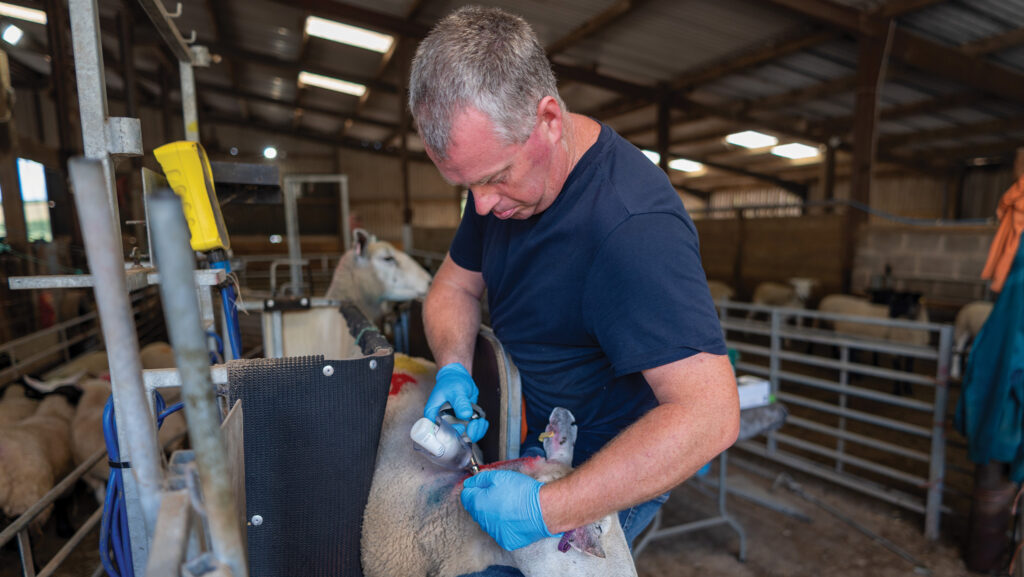
A north Devon sheep farmer fears bluetongue could affect next spring’s lamb crop after the disease spread through his flock this summer.
Tim Nicholas, who farms about 300 sheep near Barnstaple, first noticed a problem while weaning lambs at the end of July. With drought leaving little grazing, several ewes struggled to keep up as the flock was gathered.
By the end of the day, six ewes had been separated after appearing lethargic.
“They were really thin and hollow and just looking miserable, heads down.”
His vet suspected bluetongue and submitted blood samples from three sheep for testing. Results are still awaited, but given the level of infection in the county, he is expecting the worst.
Since then, 15 affected ewes have been housed and treated with steroids and antibiotics to help manage symptoms.
Further cases have developed, including sheep with blindness in one eye and stiffness in their back legs. Although most lambs have remained healthy, one died and had swollen ears.
Tim said he decided against vaccinating before the outbreak because of the cost and what he believed was a low risk of infection.
“We just thought, hopefully we’re a fairly closed flock and we won’t get it. It just came out of nowhere.”
Vaccination plan
The remaining flock, including lambs, is now being vaccinated, apart from sheep that have already been infected.
“It feels a bit like damage limitation, but by finding so many early on, it was a real worry about how bad it was going to get.”
He said protecting lamb performance during the drought was another factor behind the decision.
“If a lot of the lambs did get it and they just went hollow and thin, it’s such a long time to get them to recover and get them fat again.”
Fertility concerns
Bluetongue has also affected four of the farm’s six rams, prompting fertility concerns ahead of tupping.
“The plan will be to fertility test as soon as we can before they go in. We may have to buy some extra rams.”
Despite the outbreak, Tim said veterinary services should not be blamed.
“I wouldn’t blame the vets or lack of information. It just seems to have come as such a shock and so quickly.”
His biggest concern now is the flock’s fertility, scanning results and the potential impact on next year’s lambing season.
Hazel and David Pearce, North Devon
© Hazel Pearce
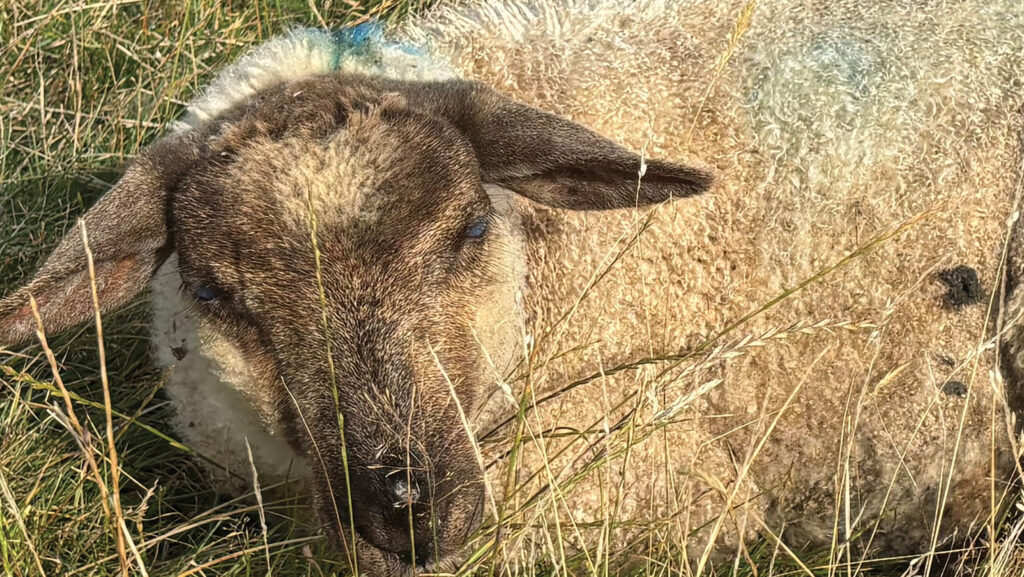
North Devon sheep farmer Hazel Pearce had vaccinated her flock against bluetongue last year and was closely monitoring the disease as cases moved towards her farm this summer.
When neighbouring farms began reporting infections, she ordered vaccine for this year’s flock and vaccinated her sheep. Less than a week later, two of her rams developed clinical signs.
“You just hoped it wouldn’t be in this area,” she said.
Since then, Hazel and her husband David have checked every animal together each morning, watching for signs including lethargy, nasal discharge and mouth lesions.
“You are upset that it’s come to you. It’s the fear of the unknown, because you don’t know how it’s going to develop on your farm,” she said.
“It is stressful – you’re worried what you’re going to find because we’re still in the early days.”
Although the affected rams are recovering after early treatment, Hazel doubts they will be fit for the forthcoming tupping season and expects to buy vaccinated replacements.
“I think, with hindsight, you would definitely vaccinate the rams earlier.”