

Farmer attacks fly-tip law after massive waste dump
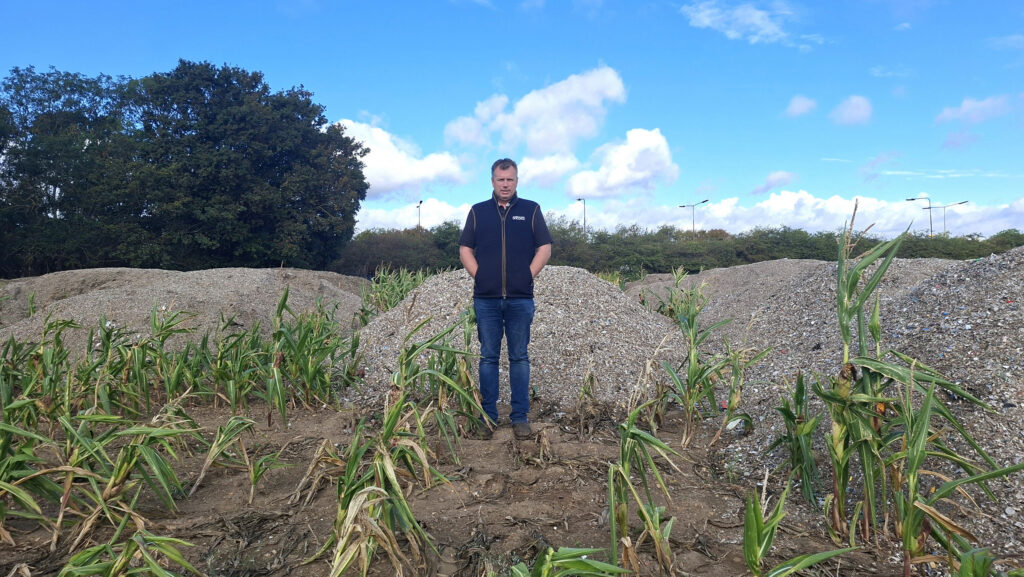 Essex farmer Alex Sell among the fly-tipped waste on his farm © NFU
 An Essex farming family has condemned a system that makes private landowners responsible for clearing fly-tipped waste after criminals dumped about 2,000t of rubbish on their land.
Alex Sell, a fifth-generation livestock and arable farmer, said the family had been left feeling like victims of a crime were being punished after discovering the waste on a 6.5ha rented field off Arterial Road, North Stifford, near Grays.
See also: Fly‑tipping law change to protect farmers blocked
The rubbish, which appears to have been processed at a waste treatment centre before being dumped, is estimated to cost about £350,000 to remove.
The scale of the problem extends far beyond the Essex farm, with new NFU survey findings showing how widespread fly-tipping has become for farmers across the country.
Mr Sell said his insurance is expected to cover the clean-up, but the family will still face significant financial consequences through higher premiums and other losses.
‘A huge punch in the gut’
“Seeing all that rubbish felt like a huge punch in the gut – it’s devastating,” he said.
“I think it’s a completely unfair situation. Organised criminal gangs are wreaking havoc on the countryside, causing great damage to the environment, and getting away with it, while the victims are left with huge clear-up costs.”
Under current law in England, the responsibility for arranging and paying for the removal of fly-tipped waste on private land falls on the landowner.
Councils are generally responsible for waste dumped on public land, while the Environment Agency does not normally clear fly-tips from private property.
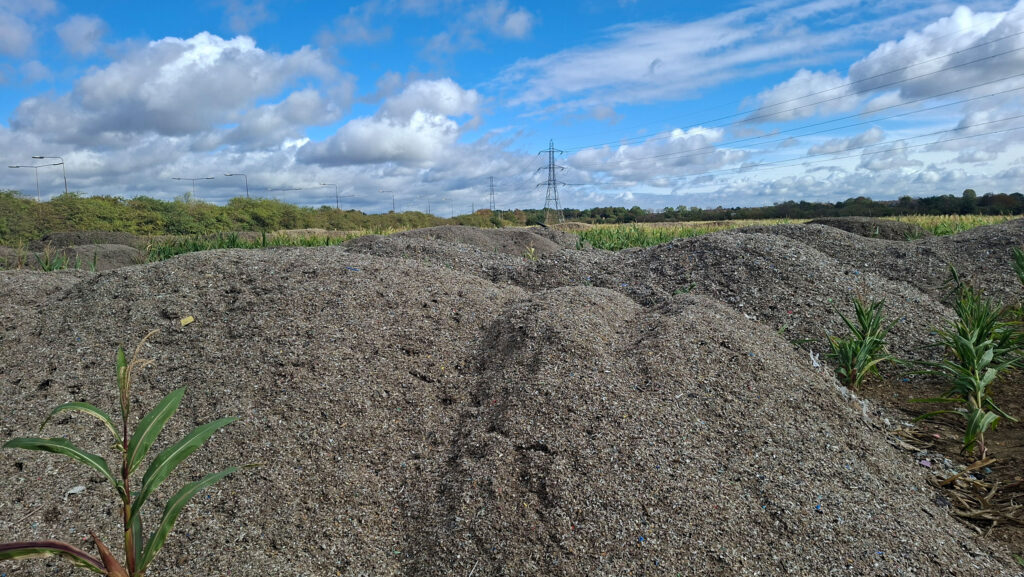
The fly-tipped waste on Alex Sell’s farm © NFU
If offenders are identified and convicted, a court can order them to repay clean-up costs. But until then, the landowner remains responsible for dealing with the waste.
The government has said it generally does not compensate victims of non-violent crime, although it recognises the financial burden caused by fly-tipping.
The National Audit Office has reported that increases in landfill tax have inadvertently incentivised criminal gangs by increasing the amount of money that can be made from waste crime.
The criminals who targeted the Sell family’s field cut the gate’s padlock and replaced it with another. The fly-tip is believed to have occurred between 20 August and 3 September, but has only come to light now.
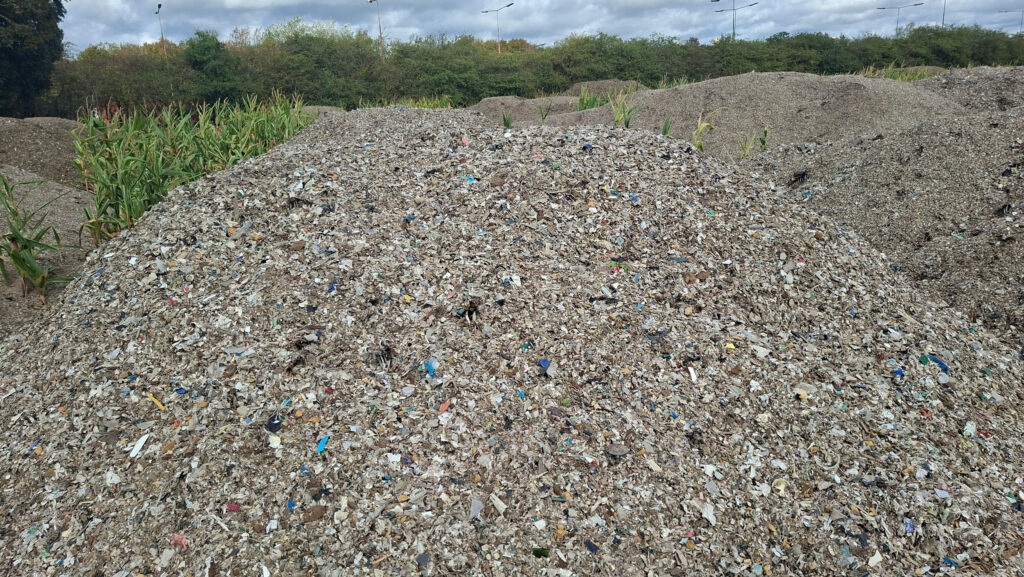
The fly-tipped waste had already been shredded © NFU
Mr Sell said about 200t of maize silage grown to feed the family’s livestock may have been ruined.
“People think of fly-tipping as a fridge dumped in a layby, but fly-tipping is happening at a huge scale now,” he said.
“When I called the police, they referred me to the Environment Agency, who then referred me back to the police.”
NFU vice-president Robyn Munt said: “Fly-tipping must be the only crime where the victims become criminals if they do not put right the crime that has been done to them and pay the huge fees to clear up the mess.”
NFU demands
The NFU is calling for stronger penalties, better co-operation between authorities and a single reporting system for victims so that they must only report a fly-tipping incident once.
“The situation cannot go on,” Ms Munt said.
Mr Sell, whose family has been farming in Essex since 1894, runs a mixed beef, sheep and arable farm near Basildon, 12 miles away from the field in North Stifford, with his wife Gemma, brother Ben and uncle Jonathan.
Fly-tipping: a growing burden for farmers
The experience of the Sell family is far from unique, with new NFU survey findings highlighting the scale and impact of fly-tipping on farms across the country.
Almost half (49%) of farmers surveyed said fly-tipping had worsened in their local area over the past five years. More than half (51%) had experienced a small-scale fly-tip on their land, while 29% had dealt with a large-scale incident.
For some farmers, repeated dumping has become an accepted part of everyday life, with one describing it as “just part of life now”.
Others have faced threatening behaviour, with 12% of farmers affected by fly-tipping reporting that perpetrators had been confrontational, violent or intimidating.
One farmer said private security staff brought in to tackle the problem had been “shot at with air rifles”.
The survey of 515 NFU farmer-members was carried out between 9 July and 21 August 2026.