

Westward spread of hare coursing alarms CLA
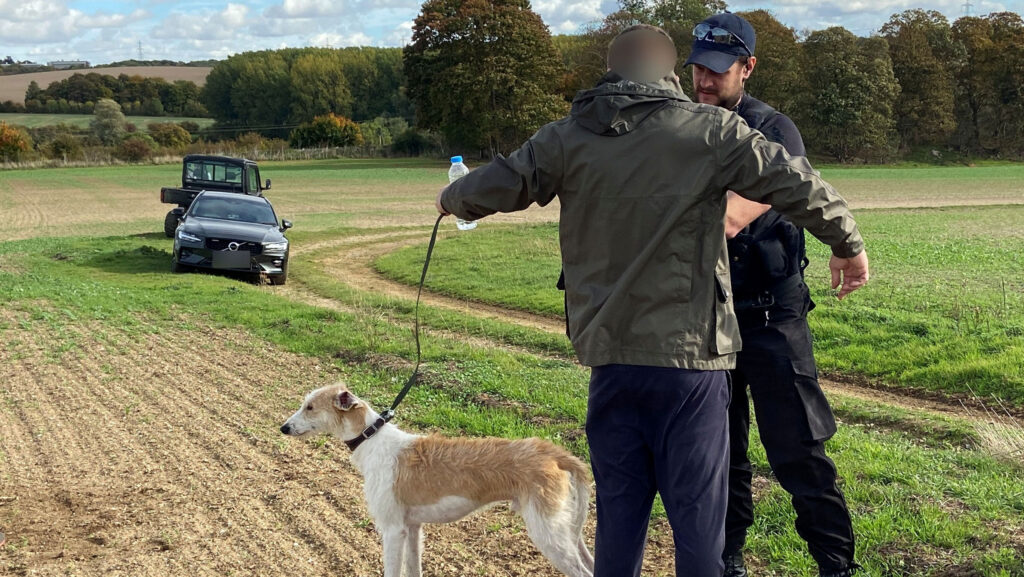 A hare coursing suspect is searched by police during an incident in Essex © Essex Police
 Hare coursing is spreading west across England and into Wales, the Country Land and Business Association (CLA) has warned, as farmers brace for a rise in offences once harvested fields are left exposed.
The illegal bloodsport, in which dogs chase and kill hares across farmland, has been banned in England and Wales since the Hunting Act 2004.
Claire Wright, the CLA’s national access adviser, said reports from Wales were increasing, with some members describing the situation as “really wild”.
See also: Hare coursing sentencing rules to consider harm to farmers
“Lincolnshire used to be a real hotspot, but police cracked down through Operation Galileo,” she said.
“Since then, we’ve seen more cases in the Midlands, Gloucestershire and the South West. Now it’s moving further west.”
Although hare coursing traditionally peaks after harvest, when cut fields make hares easier to spot, Ms Wright said incidents were increasingly occurring year-round as changes in farming reduced crop cover.
The Vale of Glamorgan has become a particular hotspot, with farmers reporting a rise in organised hare coursing, trespass, illegally killed hares, abandoned vehicles and intimidation.
Welsh Conservative shadow farming minister Andrew RT Davies has called for greater police resources to tackle illegal hare coursing in the Vale of Glamorgan.
He warned that trespassing, damage to land and crops, and intimidation of farmers were causing serious problems, and renewed calls for a dedicated rural crime team in South Wales.
“South Wales Police is the only force in Wales that does not have a dedicated rural crime team – and this needs to change,” he said.
The NFU suggested that hare coursing was spreading into new areas, including South Wales, as tougher policing in traditional hotspots appeared to be displacing offenders.
NFU vice-president Robyn Munt said hare coursing was leaving farming families “feeling vulnerable, isolated and scared to go about their daily work”, calling for continued action from government, police and courts to protect rural communities.
Increased risk
This year’s early harvest could expose fields sooner, raising fears of increased activity.
While prolonged dry ground may deter coursers concerned about injuring valuable dogs, Ms Wright warned that rainfall could quickly reverse the situation.
“If we get rain and fields turn into a mudbath over the next fortnight, we could see a sudden spike in cases,” she said.
“Vehicles could then cause significant damage by churning up fields.”
Ms Wright said changes to the law were already having an impact, with more prosecutions under the offence of going equipped for poaching and courts banning convicted offenders from owning or keeping dogs.
However, she warned farmers not to put themselves at risk.
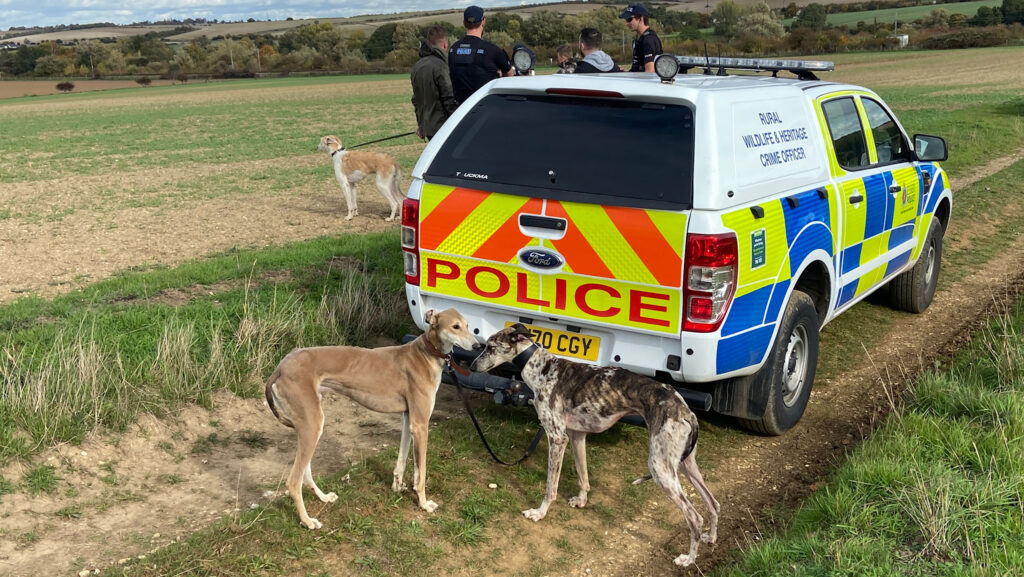
Police now have powers to seize dogs involved in hare coursing © Essex Police
“Do not put yourself in a situation where you will get hurt and you end up becoming a casualty for your farm business,” she said.
“These people are organised criminals. They don’t mess around.”
Farmers should record vehicle registration numbers and descriptions where it is safe to do so, while reporting every incident to police to help identify patterns and hotspots.
The CLA is also urging farmers to use what3words to provide precise locations when contacting police, particularly during live incidents, helping officers reach remote fields more quickly.
Landowners should also consider physical prevention measures, including bespoke poacher blocks that allow farm machinery through while restricting vehicles, as well as concrete blocks or trees placed at gateways.
The NFU has updated guidance for members on what to do in terms of preventing and reporting hare coursing (see panel below).
Police preparations
Police forces are also stepping up preparations ahead of the season.
Essex Police has urged rural communities to report suspicious activity and said it is using specialist resources including drones, thermal imaging, 4×4 vehicles and the NPAS helicopter to tackle coursing.
Superintendent Darren Deex said the force was determined to make Essex “a hostile environment for hare coursers”.
Thames Valley Police said targeted patrols had helped reduce reported incidents from 280 in 2021 to 36 in 2025.
A Lincolnshire Police spokesman said: “To anyone considering coming to Lincolnshire or its neighbouring counties to engage in hare coursing, my message is simple: don’t bother. Our teams will work tirelessly to track you down, locate you and arrest you. Put simply, it is not worth it.”
Ms Wright warned, however, that several long-term Criminal Behaviour Orders imposed on known hare coursers are due to expire this year, raising concerns that incidents could increase in some areas.
She urged farmers to continue reporting offences, saying intelligence remained vital in helping police identify hotspots and disrupt organised offenders.
The CLA has produced shareable graphics to help rural communities identify and report illegal poaching and associated rural crime.
Hare coursing: What to do if it happens on your land
The NFU has updated its hare coursing guidance, urging farmers and landowners to prioritise safety, report every incident and gather evidence only where it is safe to do so.
Call 999 if hare coursing is taking place; use 101 for non-urgent reports
Do not confront offenders – your safety should come first
Record key details where possible, including vehicle registrations, descriptions and accurate locations (using grid references or what3words)
Report every incident to help police build intelligence and target resources
Consider restricting access to vulnerable areas with appropriate gates, barriers or other security measures
Join local Farm or Countryside Watch schemes and consider cameras in known hotspot areas.