

Dry spell puts farmers under mounting pressure
 © MAG/Philip Clarke
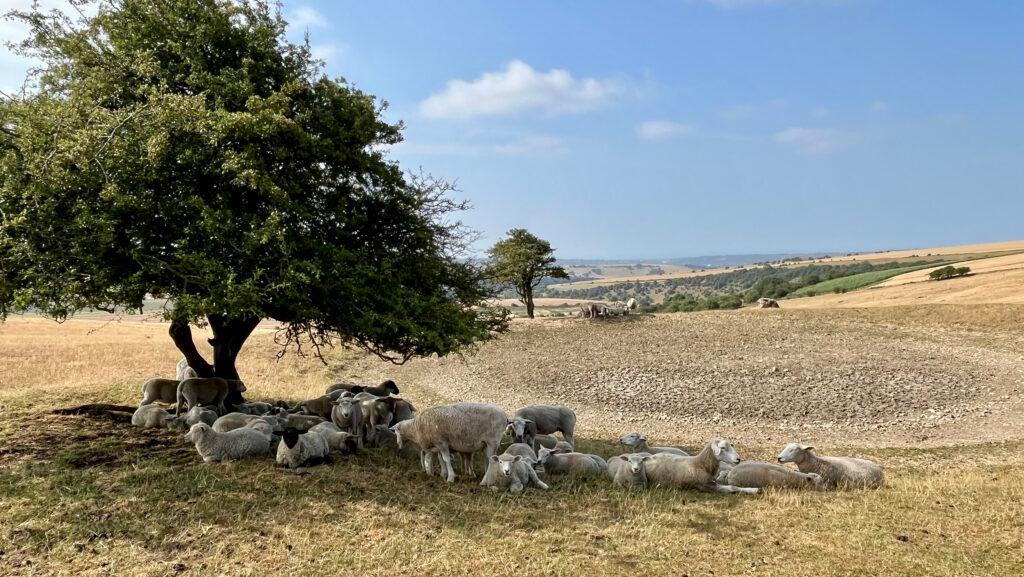
 Temperatures may have eased from recent highs, but water shortages and wildfires continue to threaten farm businesses and the nation’s food supply.
The National Drought Group (NDG) met earlier this week and, although no areas are officially in drought, eight regions across England are classed as being in “prolonged dry weather” – the stage before drought.
Whatever the definition, the impact is clear. England has received just 3% of its long-term average July rainfall, according to the Met Office, with the South and East recording no rain at all so far – the longest dry spell since the mid-1990s.
See also: Farmers Weekly Podcast Ep 312: Heatwave harvest grain-washing alert
The exceptionally wet winter initially provided a buffer, but July’s third heatwave has left ponds and rivers drying up.
Helen Wakeham, chairman of the NDG and the Environment Agency’s director of water, said: “Dry weather depletes our water and we are seeing the effects on our farmers, our wildlife, and the amount available for public and business use. Every drop we can save is a drop more for nature and agriculture.”
The Environment Agency is releasing water from strategic reservoirs at the top of the River Severn and from groundwater in Shropshire to maintain river flows.
Meanwhile, some farmers in East Anglia have been forced to stop abstracting water from local rivers, affecting crop production.
Harvest challenges
NFU deputy president Paul Tompkins told the NDG that farmers and growers were working around the clock to harvest crops, keep fruit and vegetables watered, and care for their livestock.
“Parts of the country, particularly in the East and South, have seen exceptionally low rainfall this spring and summer,” he said.
“For many arable farmers, this could be another difficult and expensive harvest after extreme weather impacts in both 2024 and 2025 which saw both drought and flood.”
He renewed calls for a more responsive abstraction licensing system and easier planning rules for reservoirs and on-farm water storage.
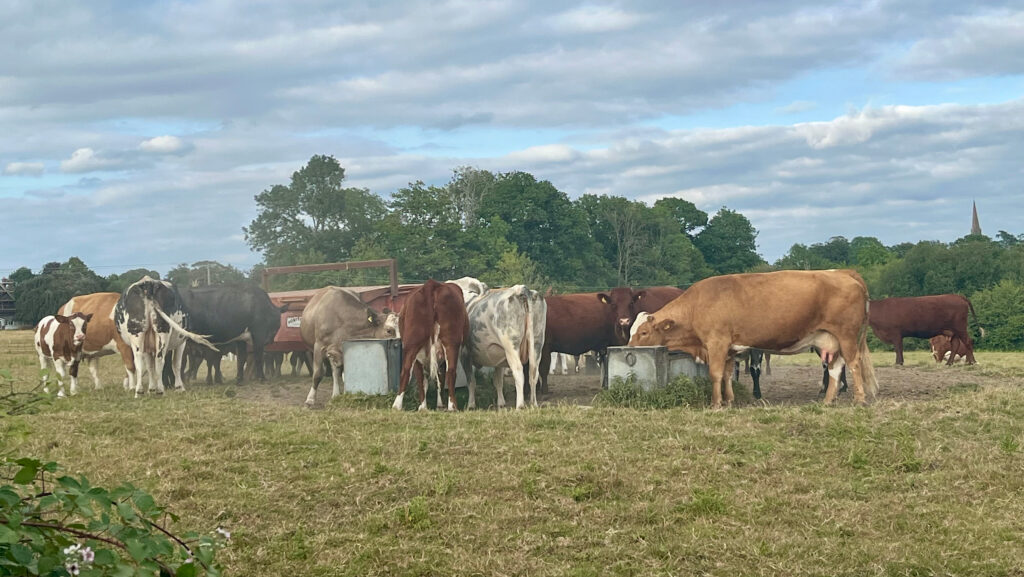
Livestock farmers are also feeling the pressure. Farmers’ Union of Wales president Ian Rickman said: “Second-cut silage crops are failing to grow in some areas and farmers are already feeding winter forage stocks, which raises concerns about winter feed availability.”
© MAG/Philip Clarke
Chris Wheatly, of Rumenco, warned that feeding this year’s silage early could create problems.
“While feeding silage in summer is not uncommon, the extreme heat this year will make clamps not treated with an additive prone to overheating,” he said.
For sheep farmers, the high temperatures can also have lasting consequences for fertility, says Nia Williams, technical manager with nutrition company Nettex.
“In rams, sperm production takes around two months, while in ewes, follicle development takes around six months. This means the effects of heat stress may not become apparent until the autumn breeding season.”
Wildfire crisis
Alongside the challenges to farming, the tinder dry conditions have seen a spate of wildfires, including two major outbreaks in Derbyshire, as well as in the Cairngorms in Scotland and the Rhinogydd mountains of North Wales.
Scottish Land and Estates director Ross Ewing said the lack of dedicated aerial firefighting capacity was “deeply concerning”.
In Wales, farmer Jess Williams, whose Gerddi Bluog farm has been threatened by the Rhinogydd wildfire, said they felt “forgotten” as flames endangered grazing land, livestock and protected habitats while they waited for helicopter support.
Ms Williams added that watching ancient woodland disappear had been “particularly painful”.
Areas officially in ‘prolonged dry weather’
East Anglia, West Midlands, Devon, Cornwall and Isles of Scilly, Lincolnshire and Northamptonshire, Hertfordshire and London, Wessex, Thames, Solent and the South Downs.
Only 13% of rivers are classed at “normal” levels for this time of year with the Rivers Avon (Hampshire), Cam, Derwent (Yorkshire), Swale, Tone, Wye and Yare exceptionally low.
Six reservoirs are classed as “notably low” – including Wimbleball, Grafham and Hanningfield and The Lower Thames group. Blagdon is “exceptionally low”.
Will Lang, chief meteorologist at the Met Office, said the outlook for the next few weeks was for more predominantly dry weather, especially across southern England.