

Borders farm invests in large-scale agroforestry push
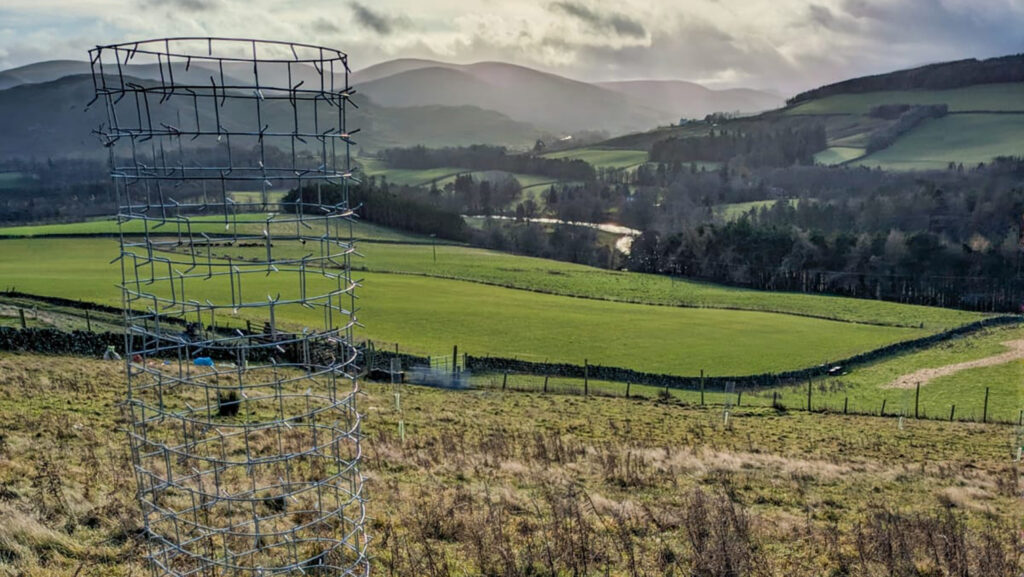 Site of agroforestry planting at Neidpath Farms on the Scottish Borders © Artisan PR
 A farm in the Scottish Borders is demonstrating the potential of agroforestry through a large-scale tree planting project designed to support both agriculture and the environment.
The initiative, led by the Tweed Forum charitable trust at Neidpath Farms near Peebles, has seen more than 1,700 native trees planted across farmland as part of the wider Destination Tweed river restoration initiative.
See also: What farmers can do to protect newly planted trees
Agroforestry is the practice of growing trees and crops or livestock on the same land.
By integrating trees into farmland, farmers can improve soil health, provide shelter for animals and increase biodiversity while continuing agricultural production.
The approach is increasingly seen as a key part of sustainable farming and climate resilience.
At Neidpath Farms, the project combines livestock grazing with a variety of tree species.
Fruit trees including apple, pear, cherry and plum have been planted to produce organic fruit for local markets, while more than 1,000 willow trees will provide nutritious forage for cattle and sheep.
Native species such as alder, oak, downy birch, rowan and Scots pine will also create habitats for wildlife and offer shade and protection for livestock, including lambs in nearby fields.
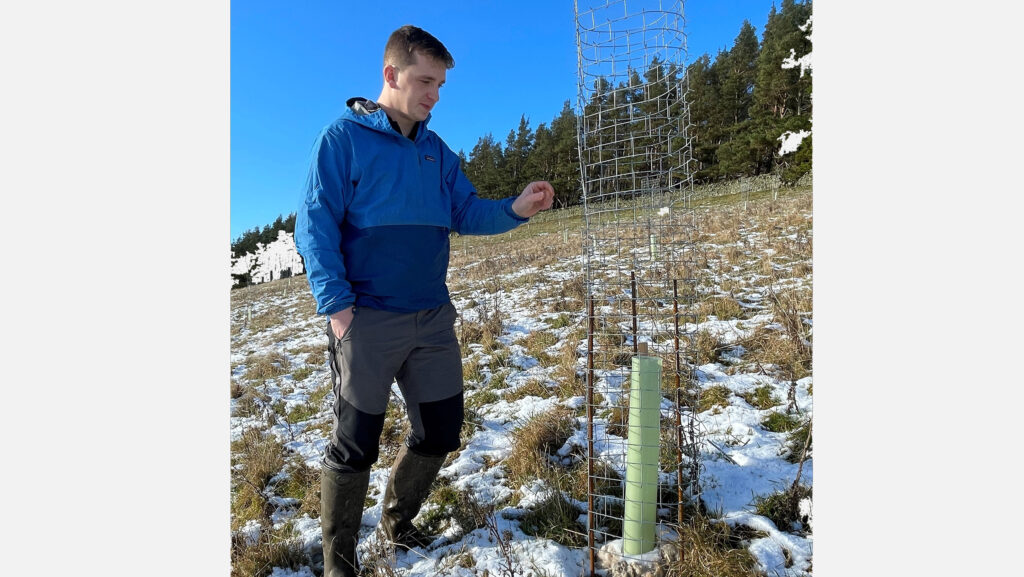
Hamish Robertson inspecting cactus guards for planted trees © Artisan PR
Woodland Trust support
The planting has been supported by the Woodland Trust and forms part of a wider programme that aims to establish 300,000 trees across the upper catchment of the River Tweed.
Hamish Robertson, project manager at Tweed Forum, said the work highlights the long-term benefits of combining farming with nature.
“This agroforestry work shows how farming, nature and tourism can work hand-in-hand to increase farm resilience, improve wildlife habitat, and contribute to the beauty of the landscape,” he added.
Explore more / Transition
During the series we follow our group of 16 Transition Farmers through the challenges and opportunities as they seek to improve their farm businesses.
Transition is an independent editorial initiative supported by our UK-wide network of partners, who have made it possible to bring you this series.
Visit the Transition content hub to find out more.
