

‘Meaningful’ support needed to bolster bird numbers
 © AdobeStock
 Farm and conservation organisations are seeking more consistent and meaningful government support to help create the habitats needed to bolster the nation’s birdlife.
In its latest report on wild bird populations, Defra notes that, since 1970, the breeding bird indicator for 132 native species has declined by 19% in the UK.
See also: How cluster farmers are delivering for food and nature
“Most of this decline occurred between the late 1970s and early 1990s, driven largely by decreases in woodland and farmland bird populations,” notes the report.
“But since the mid-2010s, the indicators have shown a renewed downward trend – particularly evident among seabirds and farmland birds.”
While the long-term decline in farmland birds has been well documented, at 63% since 1970 according to the report, there has been a 12% drop in the past five years alone.
“The trend has been driven largely by long-term declines among farmland ‘specialist’ species, including turtle dove and tree sparrow,” says the report.
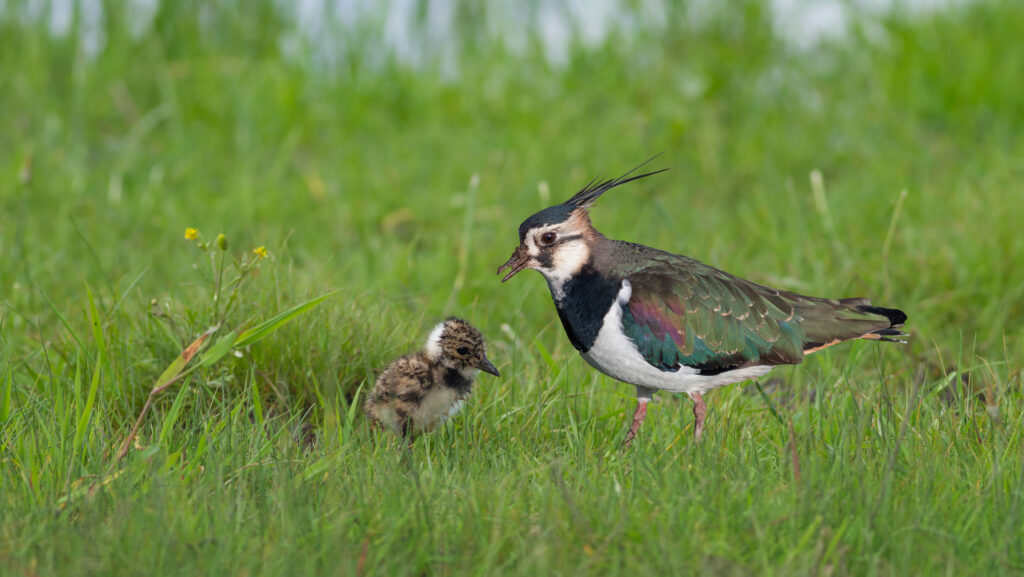
However, it notes “severe declines” among some “generalist” species, such as yellow wagtail and greenfinches, in recent decades, while “specialist” species such as lapwing and yellowhammer have continued to “strongly decline” in the past five years.
Established causes
With regards the long-term declines, the report points to changing farming patterns in the 1960s, such as increased pesticide use and the removal of hedges, which then triggered sharp declines in farmland bird numbers during the 1980s and 1990s.
“Some farming practices continue to have negative impacts on bird populations, but most farmers can and do take positive steps to conserve birds on their land,” it adds.
Farming solutions
Both farming and conservation groups have recognised the challenge ahead, but suggest the solution lies in the hands of government as well as farmers.
Joe Stanley, head of sustainable farming at the Game and Wildlife Conservation Trust, explains that nature-friendly farming methods have delivered a 145% recovery in farmland bird numbers at the Allerton Project in Leicestershire.
He describes how a “three-legged stool” of high-quality habitat, supplementary winter feeding and predator control, has made this possible – alongside commercial farming on the 320ha farm.
This has been paid for by various EU and post-Brexit Defra schemes, which would achieve so much more with sufficient scale and commitment.
“The problem is that at no point has the budget allocated to such methods been sufficient to the scale of the challenge,” he said.
“The recent farce which saw the SFI application window open for a mere 352 minutes before the budget was exhausted merely highlights the lack of cash allocated by Treasury versus the ambition signalled by successive governments.”
Crucial role
Martin Lines, chief executive of the Nature Friendly Farming Network agrees that Environmental Land Management schemes have a crucial role to play in increasing biodiversity on farmland.
“The Sustainable Farming Incentive (SFI) would be more effective if, rather than the current pick-and-mix approach, options were bundled together to produce specific environmental outcomes, such as the recovery of farmland bird populations,” he said.
“Schemes must also reward farmers for maintaining existing habitats, not just restoring and enhancing them, and we need an application process that ensures money is directed to farmers who will do most for nature, rather than whoever can fill out forms fastest during very limited funding windows.”
Mr Lines said there was a real risk that repeated disruption and uncertainty surrounding SFI would drive farmers away from environmental schemes altogether.
“Without reliable financial support, farmers may be forced to prioritise short-term production needs over environmental measures, potentially undoing years of progress and further damaging farmland biodiversity.”
NFU vice-president Robyn Munt added: “It’s clear that schemes like the Sustainable Farming Incentive make a huge difference on the ground.
“This is why it is vital that the government provides much-needed clarity on SFI27 and get the scheme opened early next year, so farmers can continue to deliver on environmental outcomes with confidence.”