

Farmers offered role in Wales wildfire response plans
 © MAG/Anne Dunn
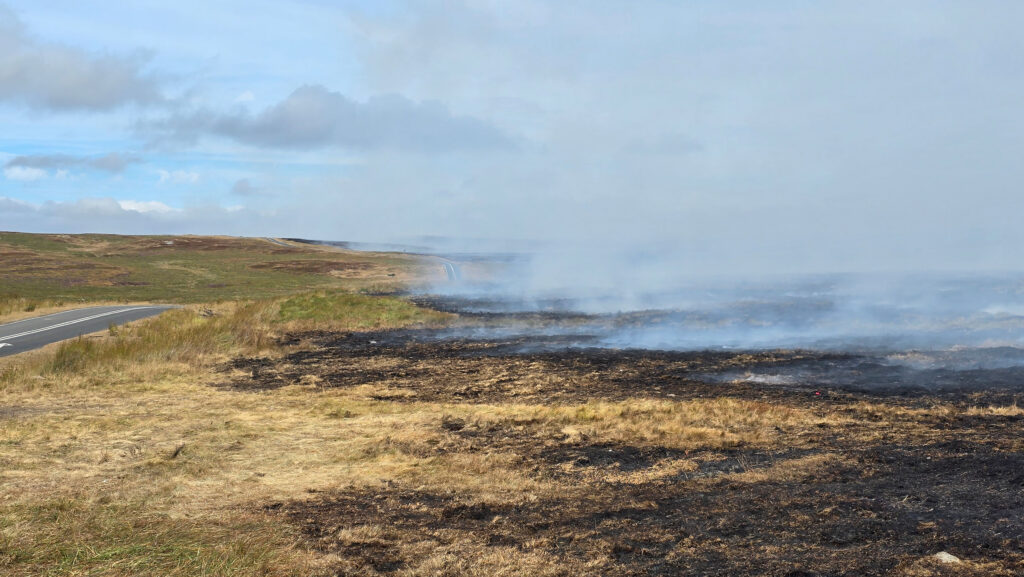
Farmers and landowners could be formally enlisted to help tackle wildfires in Wales under new measures announced following this summer’s devastating outbreaks.
First minister Rhun ap Iorwerth outlined the proposals following a Wales climate change and resilience summit in Merthyr Tydfil on Thursday (22 October), attended by more than 40 representatives from the public and private sectors.
See also: UK unprepared for worsening wildfires, MPs warn
Among the priorities is a pan-Wales register allowing farmers and landowners to volunteer vehicles, equipment and local knowledge to support firefighting operations.
The Welsh government will also commission a rapid review of the role of land management in wildfire prevention, alongside a separate review of the Heather and Grass Burning Code.
Other measures include strengthening the All-Wales Wildfire Board, improving risk monitoring, bringing in international firefighting expertise, and exploring options to address the UK’s shortage of aerial firefighting resources.
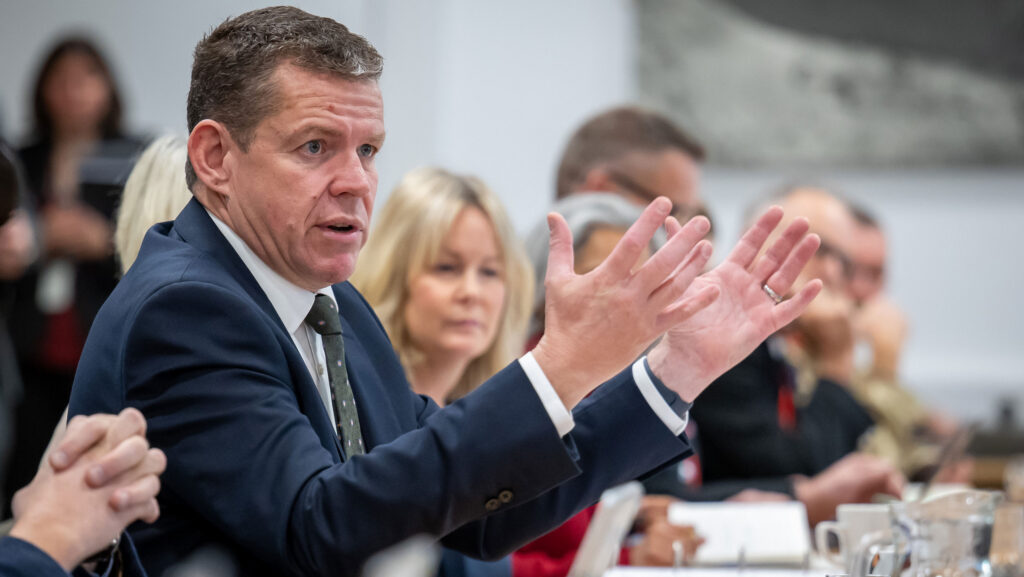
First minister Rhun ap Iorwerth speaking at the summit © Welsh Government
Mr ap Iorwerth said there was an “absolute determination” to ensure Wales was prepared for what was likely to be another difficult spring and summer in 2027.
Grazing concerns
Farmers’ Union of Wales president Ian Rickman stressed the importance of active land management in reducing wildfire risks.
“With their detailed knowledge of their local area, farmers and land managers are ideally placed to contribute to the prevention of wildfires, and dealing with them when they occur,” he said.
However, he called for better information on wildfire locations, causes and severity, pointing to Welsh government figures suggesting nearly three-quarters of incidents were started deliberately.
Mr Rickman also warned that reduced upland grazing following the introduction of agri-environment schemes and new habitat rules had increased the amount of combustible vegetation.
“The role of active agricultural management should therefore be considered as a fast-acting and flexible solution alongside other wildfire mitigation measures that offer longer-term benefits.”
NFU Cymru also called for farmers, foresters and commoners to play a central role in wildfire management, recognising the benefits of active land management and the costs of recovery.
President Abi Reader urged stronger collaboration and a strengthened Wales Wildfire Board.
Upland management
The National Sheep Association (NSA) raised similar concerns about declining livestock numbers in upland areas.
NSA policy manager Michael Priestley said some farmers feared agri-environment policies were encouraging the withdrawal of grazing, allowing woody vegetation to accumulate.
He argued that carefully managed grazing could help maintain diverse habitats while supporting biodiversity, carbon storage and water quality.
“There is no single definition of what a ‘good’ upland habitat looks like, but we believe a mosaic of diverse habitats can deliver for nature while allowing sheep farming to remain part of the landscape,” he said.
Natural Resources Wales executive director Dominic Driver said the effects of this summer’s fires extended beyond visible landscape damage, with habitats destroyed, carbon stores depleted and soils damaged.
He stressed that building wildfire resilience would require closer co-operation between government, emergency services, land managers and local communities.
“As a major land manager and conservation body in Wales, we recognise the important contribution we have to make, and we will be prioritising this important work to help make Wales a more climate-resilient nation,” said Mr Driver.