

How cluster farmers are delivering for food and nature
 © MAG/Philip Clarke
 It almost goes without saying that “farmer clusters” are a good thing. Groups of farmers working together across swathes of countryside with the common aim of improving habitats and supporting nature. What’s not to like?
There are now over 220 such clusters across Great Britain, and two of the earliest ones – Allenford in Hampshire/Wiltshire, and Martin Down in Hampshire/Dorset – have just completed 10 years of data collection.
Both were set up with clear objectives – to bolster a range of species through habitat creation and, crucially, by establishing “links” reconnecting existing wildlife-rich features such as chalk downland and native woods.
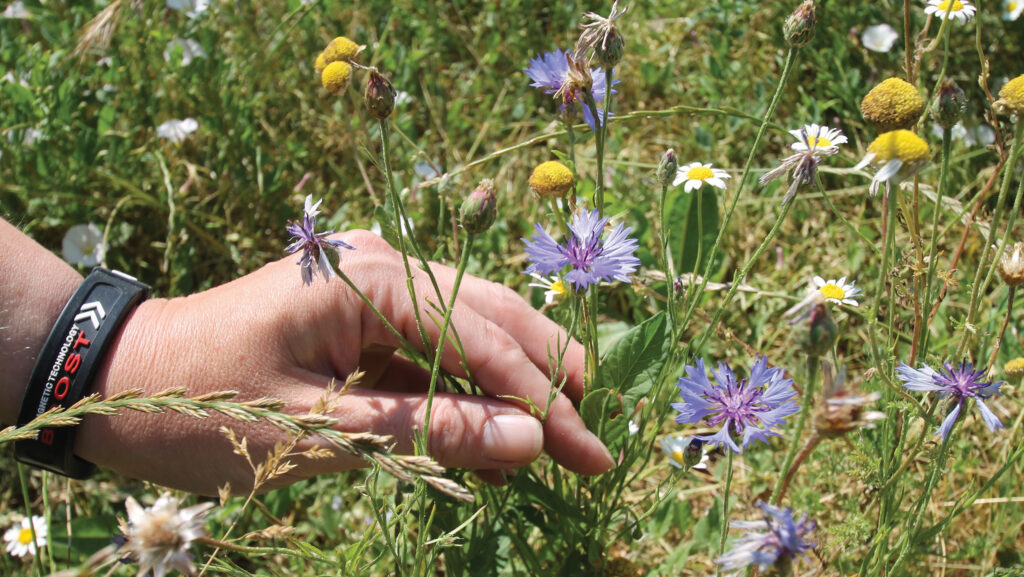
Priority species include turtle doves, lapwing, barn owls, grey partridge and corn bunting, as well as harvest mice, adders, and a number of farmland bird, butterfly, bumblebee and arable flora species.
Improving soil organic matter and chalk stream water quality are other key objectives.
© MAG/Philip Clarke
Co-ordination
Delivering on all this has been taken a co-ordinated approach, ensuring that everyone is working together to best effect.
“We map all the farms in the cluster individually, look at all the agri-environment agreements that are in place, and identify where farmers can take action to better connect their habitats,” says Game and Wildlife Conservation Trust (GWCT) environment adviser and cluster facilitator Megan Lock.
“The aim is to make corridors between all the different features – and with the adjoining National Nature Reserve – so species can move and thrive across the whole landscape.”
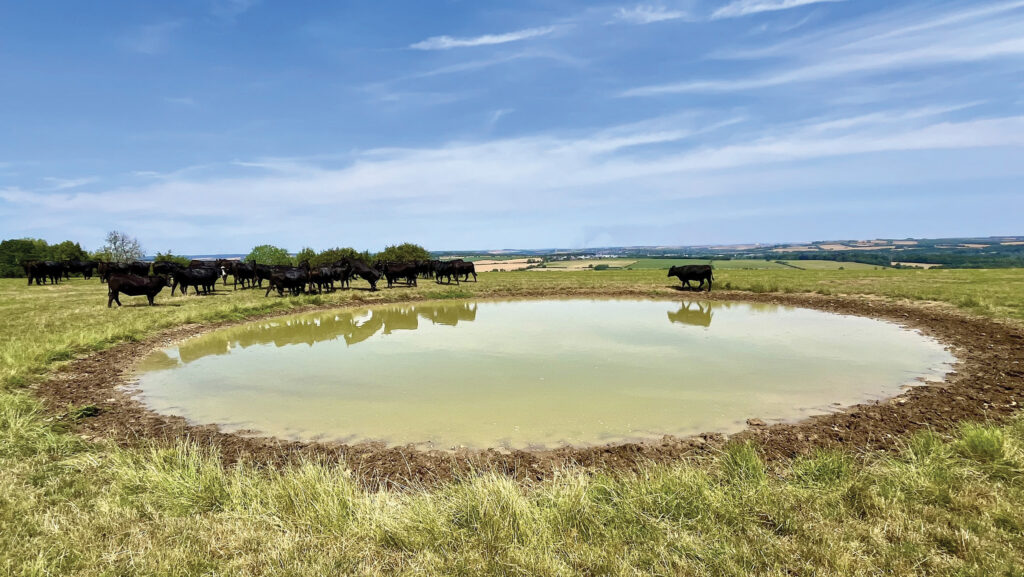
This may involve hedge planting, woodland creation, connecting up field margins, or digging strategic ponds and scrapes.
About the clusters
Allenford Farmer Cluster
- Established 2013
- 12 farms
- 7,500ha
- Targeting multi-species recovery through enhanced habitat creation
Martin Down Farmer Cluster
- Established 2016
- 15 farms
- 5,500ha
- Targeting multi-species recovery through enhanced habitat creation
These two clusters link into the Chalke Valley Farmer Cluster, with 16 farmers and 5,600ha. The three combined form what is known as the “Martin Down Supercluster”, which itself encircles the Martin Down National Nature Reserve.
Launched by the Game and Wildlife Conservation Trust in 2013, there are now more than 220 farmer clusters in Great Britain, covering more than 450,000ha.
That compares with 224 National Nature Reserves covering 116,000ha in England.
Results
As for the impact, the headline results speak for themselves.
In the Allenford farmer cluster, the number of breeding pairs of grey partridge reached 26 in the spring of 2025, compared with just seven in 2016.
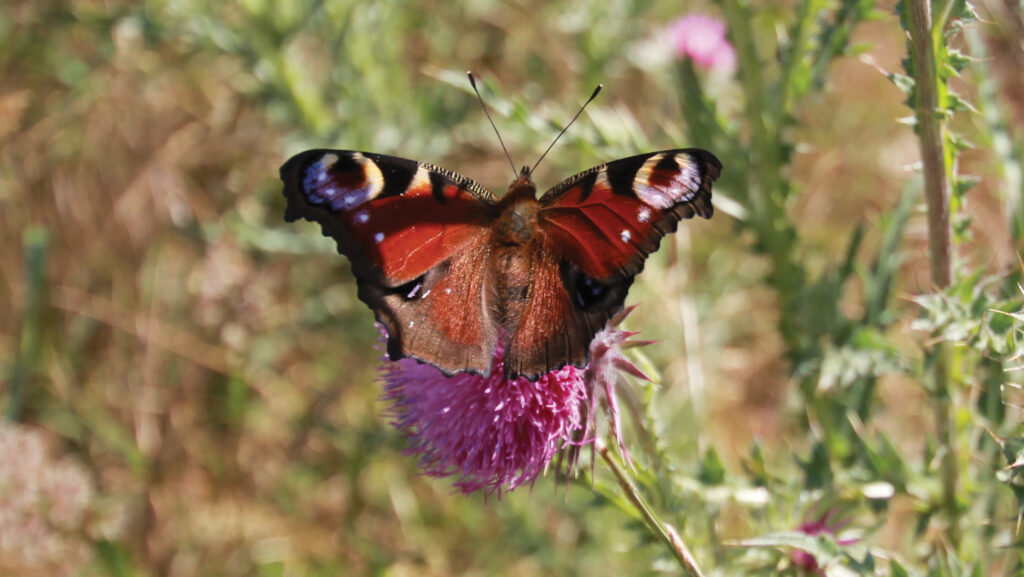
Butterfly diversity has increased by 48%, while abundance has doubled, and there has been a 25% increase in bumblebee species over the decade, with three nationally scarce species recorded.
The cluster is also of “national importance” for rare arable plants.
At Martin Down, red-listed corn buntings, which have declined nationally by 83% since 1967, have risen by an impressive 346%, grey partridges have gone up by 147%, and butterfly abundance has increased by 183%, with the number of species rising by 28%.
© MAG/Philip Clarke
Other species which have benefited include rare arable plants, turtle doves, barn owls, swifts, harvest mice, kestrels, brown hares and all farmland birds.
There are of course ups and downs – Mother Nature is an unpredictable mistress.
Butterfly numbers, for example, took a significant hit in 2024 with the cool, wet summer. But they bounced back last year, driven by a prolific number of white and yellow species.
“Data is everything,” says Martin Down chairman Cathy Shepherd.
“The more we have and the longer it is, the better we can defend what we are trying to achieve – a better farmed environment and greater long-term sustainability.”
Investment
As well as helping to restore nature, the cluster leaders are convinced the emphasis on nature-friendly farming is an investment for the future, without posing a threat to food security.
“Our productivity has not really suffered,” says Allenford chairman William Dickinson.
“Taking some of the less productive corners out has resulted in squarer cropped areas, which improves efficiency, and increasing the number of pollinators is good for yields.
“We have also abandoned insecticides in favour of integrated pest management, which saves on agro-chemical costs.
“Longer term, we have to work more closely with nature, as failure to do so really will undermine our financial sustainability.”
How are Farmer Clusters funded?
Over half the clusters in the country are supported by the Countryside Stewardship Facilitation Fund, which typically pays the facilitator’s wages, plus up to £10,000 a year for activities such as field trips, training sessions, and soil and water sampling.
The Allenford and Martin Down clusters, however, are independent. While facilitator Megan Lock is employed by the GWCT, additional costs are funded by a donor and the farmers themselves, who pay £2/ha into a central pot.
“We decided to go down this route, because we wanted to be more in control of our own destiny,” says Mrs Lock. “In particular, we wanted to be in control of our data.”
There are other funding opportunities available, and a key part of Ms Lock’s job is tapping into these other resources. “I find pots of money from all sorts of places!” she says.
One particular success has been securing about £80,000 from Defra’s Farming in Protected Landscapes programme, securing the grant via Cranborne Chase National Landscape.
This is paying for more than 5km of new connective hedgerows across the two clusters, four new turtle dove scrapes, dew pond restoration work, and a number of kestrel nesting boxes, information boards and trail cameras.
“We are also exploring the idea of bringing in more commercial partners and have recently teamed up with the NFU Mutual’s Salisbury and Wareham branch to help support us,” says Allenford cluster chairman Will Dickinson.
In terms of on-farm work, most cluster members are signed up to various Countryside Stewardship and Sustainable Farming Incentive options, drawing on national funding.
Some, however, choose not to be in stewardship and pay for the work from their own pockets, giving them greater control over how they manage their farms.
Future funding
While Allenford and Martin Down are independently-funded, the GWCT – which is the driving force behind the Farmer Cluster movement – is very concerned about the future for landscape scale delivery.
The current CS Facilitation Fund is due to expire in 2027 and, while the recently announced £30 Farmer Collaboration Fund from Defra is set to take over, it is far from clear whether this will cover existing clusters or be reserved for new initiatives.
“We suspect that, to qualify, we would either have to change our objectives or expand our membership – neither of which are ideal as our strength is having consistent data, year in, year out,” says Mrs Lock.
Another fear is that the new system will involve “delivery partners”, rather than funding going direct to cluster managers, who may have different priorities.
“Farmer clusters will continue to be the mechanism to deliver biodiversity and emissions targets in the UK, but this will not be possible without facilitators, who should be adequately funded,” says GWCT chief executive Nick von Westenholtz.
“In many parts of the country, farmers cannot afford to put extra money in and don’t benefit from charitable support.
“Continued public funding for the facilitation of both new and established groups is essential and represents real value for money.”
What does the facilitator do?
There is little doubt that, as well as buy-in from farmer members, the success of any cluster depends on the skill, energy and commitment of the individual facilitator,
It is a multi-faceted role, combining administration, team leadership and extensive monitoring.
“The first part of the year is typically spent reviewing the previous year’s data and deciding what the group’s priorities should be for the year to come,” GWCT facilitator Megan Lock says.
“I will also arrange and oversee various training events for members, such as beetle bank construction, deer management or moth identification.
“These may involve arranging for experts to come and talk to us as a group – for example we had Natural England visit to talk about getting into the Sustainable Farming Incentive – or we may go out to other farms and clusters to learn from them.”
The spring and summer months are then spent mainly monitoring wildlife, much of which Mrs Lock does herself.
This involves a lot of painstaking work, walking many hundreds of miles, monitoring a patchwork of 100m x 100m squares across the clusters, counting the whole range of priority species.
She also arranges for teams of volunteers to perform structured counts of single species birds (such as corn bunting) and butterflies, and encourages farmer members to submit their own findings too.
All the data is collated and analysed over the autumn and winter months, comparing each year’s numbers with baseline figures, to identify trends and impacts.
Explore more / Transition
During the series we follow our group of 16 Transition Farmers through the challenges and opportunities as they seek to improve their farm businesses.
Transition is an independent editorial initiative supported by our UK-wide network of partners, who have made it possible to bring you this series.
Visit the Transition content hub to find out more.
