

Landscape Recovery: In conversation with Tony Juniper
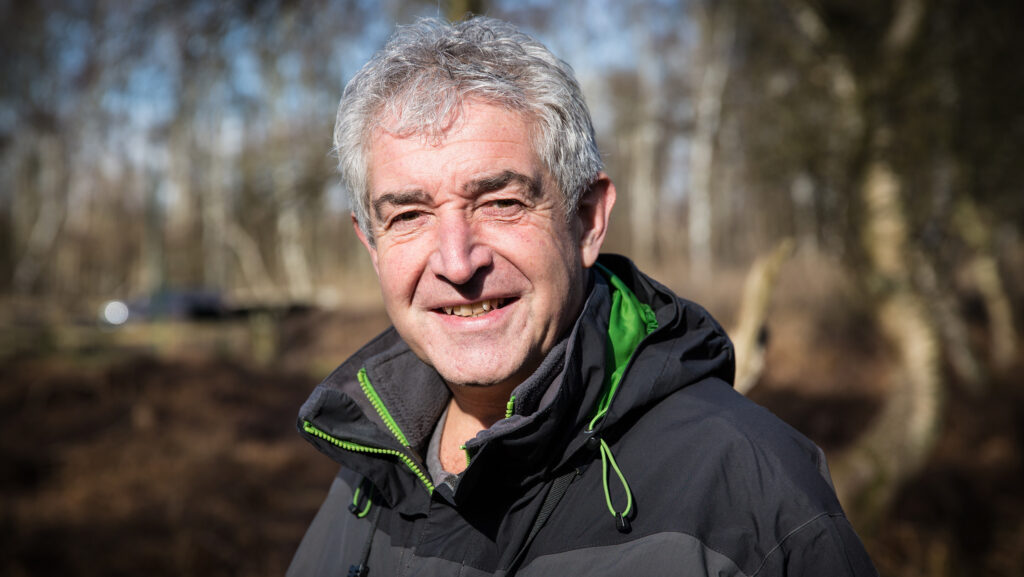 Tony Juniper © Natural England
 Landscape Recovery – the third leg of Defra’s Environmental Land Management strategy – has been heralded as having a “critical” role to play in supporting environmentally sustainable food production in England.
The large-scale, long-term projects are designed to restore nature, improve biodiversity and deliver environmental benefits across whole landscape – and last month the government announced a £500m package to support the first tranche now emerging from the pilot stage.
Farmers Weekly news editor Philip Clarke met with Natural England chairman Tony Juniper and its head of Landscape Recovery Chris Davis at the Oxford Real Farming Conference to consider recent developments.
See also: NFU pushes for food production to match green ambition
Where are we with Landscape Recovery?
TJ: We’ve been working for some years on this and are now getting into the period of implementing the first pilots.
This is one of the main ways we have as a county to meet the challenges in relation to climate resilience, nature decline, water quality, food production and rural livelihoods.
We’ve had agri-environment schemes for five decades, but this is taking it to a whole new place.
One concern is that Landscape Recovery favours larger farmers and non-farming organisations, such as the RSPB and the National Trust. Fair comment?
TJ: That not the case if you look at it on the ground. Quite a few of these pilots are clusters of smaller farmers, and many are also tenant farmers, so it’s not just big landowners, though inevitably, if you’ve got more capacity and capability you are often more able to participate.
With regards to the RSPB and National Trust, we’ve reached the point where we can see that land needs to deliver multiple benefits beyond food production.
Yes, food production is critical for national security, but so is water security, as is the health of nature and climate change resilience, and public health and wellbeing.
It is therefore right that this isn’t only a scheme for farmers. Yes, farmers are the bulk of participants at the moment, but there are others who can also deliver public goods.
CD: We have also seen that Landscape Recovery has encouraged the RSPB and National Trust to look beyond just their own land holdings and work with adjacent landowners and farmers.
Many have benefited from the opportunity as they have been able to come together as a much wider project.
They might be the driver and leader of the project, but the beneficiaries will be the tenants and the adjacent farmers, where the majority of the funding will go to.
We often hear that tenants can be disadvantaged by Environmental Land Management (ELM) schemes as landowners look to take more land back in hand. Is this a concern?
CD: We have heard this, but have not actually seen any cases where this has happened in Landscape Recovery.
What we actually see is that it is providing greater surety for tenancies. I know of a case where a National Trust tenant has been offered a 20-year tenancy because Landscape Recovery has enabled the two parties to plan for a longer term future.
Defra says that it has allocated £500m to Landscape Recovery for the next 20 years – which equates to just £25m a year, out of an annual farm support budget of £2.5bn. Is this adequate?
TJ: Back in the time of George Eustice, in 2020-21, the idea was that there would be an even split between the three “tiers” of ELM – the Sustainable Farming Incentive, Countryside Stewardship Higher Tier and Landscape Recovery.
That idea never stuck. But we do now know that that £500m is actually for the first projects that will come through the first round of the pilot schemes, for their duration. That’s very different to it being all there is for the whole 20 years.
Whatever the Defra funding, there is also a need to attract private investment to make this all work. How can that be best achieved?
CD: The Landscape Recovery scheme provides the framework for the government to invest and to attract private sector investment.
The majority of projects so far have been drawing on the public investment needed for the change that’s needed to generate the biodiversity credits, nutrient credits, and carbon credits which can then be sold on.
We are using public money to lever in private investment, and so reduce the amount of taxpayer funding to meet future revenue payments.
That is now starting to happen – the first couple of projects both have ecosystem services that they are selling.
There are no specific targets, but there is a massive opportunity, and a big demand for biodiversity net gain credits and carbon credits – but the supply is not there yet.
Many would say there is an imbalance here, and food production is being overlooked. Fair comment?
TJ: We need to avoid slipping in to this rather lazy narrative whereby food production and environmental goals are seen as alternatives.
They are two sides of the same coin. In the end, food security relies on a healthy environment.
A rapidly changing climate, water scarcity, soil damage, decline of pollinating insects, natural pest control decline – all have implications for our food production.
We should also recognise that in a lot of the new ELM schemes, animal husbandry is essential.
We need grazing animals to deliver ecologically, and some of those animals we will eat. So the distinction between nature recovery and food production is not so binary.
CD: In the Landscape Recovery projects I’m involved in, we’re changing the use of land, but we’re not removing food production from it.
We might be shifting from sheep to cattle, and changing the timing, but we still need a farmer to manage those cattle as part of a functioning ecosystem.
Are sheep in the uplands being demonised in this debate?
TJ: We don’t want too many sheep, we don’t want none at all. We need to deal with it in a way that is economically rational, which contributes to food security, and which looks after essential environmental assets.
There is also a difference between profitability and productivity. Many upland farmers are focused on how many sheep they can generate from their hectares.
Sometimes it’s more rational to have fewer animals of different breeds that require less bought-in feed and lower levels of veterinary care. This can deliver more profit with less pressure on the hillside.
Should we have mandatory targets for food self-sufficiency as the government has for environmental delivery and carbon reduction?
TJ: !’m not hostile to that, but it is important to look at the whole food system, rather than just food production.
For example, one-third of our farmland is actually producing food for wastebins and compost heaps.
There is a lot of complexity to setting targets, though the more food we can produce for ourselves the better, especially in today’s uncertain world.
Do you and Natural England favour a “land sharing” approach (incorporating nature recovery within fields) or “land sparing” (intensive farming on the best land, habitat creation on the worst land)?
TJ: Depending on the geography, we can have both. In some places we can have more of one, and in other areas more of the other.
But it must also be answered within the wider food system. So if we’re having highly intensive food production, but are wasting a lot of it, you’re undermining the benefit.
Also, in a world where we have a bigger obesity challenge than a hunger challenge, simply producing more is not the answer.
Is Natural England opposed to controlled burning on open moorland?
TJ: With climate change and the risk of wildfires, we need to consider how we can hold more water in upland areas.
But every place is different and there may be other land uses to consider, such as sporting interests and agricultural interests, while thinking about what a resilient landscape will look like in 30-40 years.
As an adviser to government, we provided evidence on carbon and biodiversity linked to rotational burning on blanket bog, and restrictions have subsequently been implemented and extended.