

Calls grow for UK dairy strategy as farm pressures mount
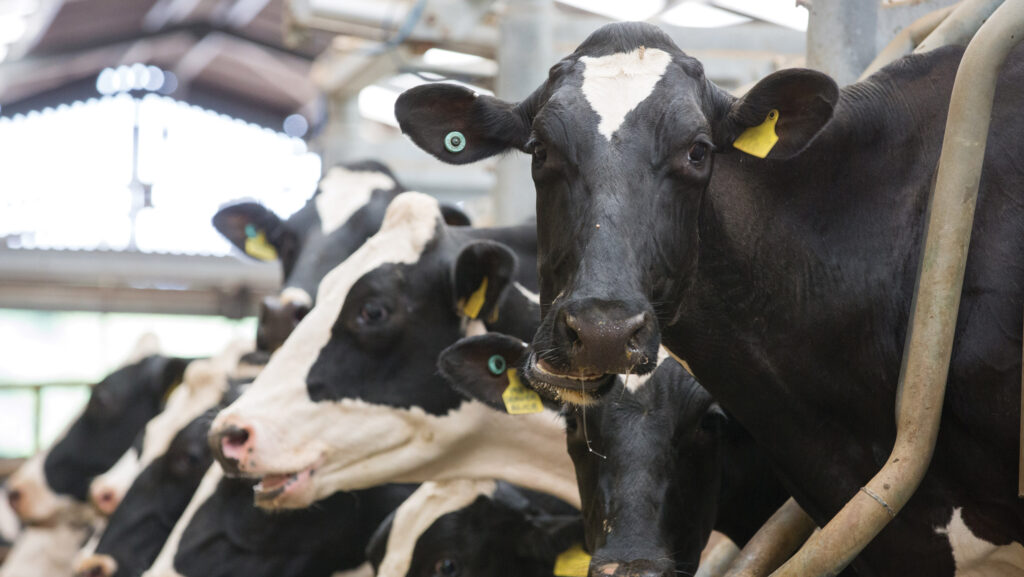 © Tim Scrivener
 The UK dairy industry needs a clear long-term strategy to improve resilience and reverse the decline in farm numbers, according to farming leaders speaking at the Royal Welsh Show.
Farmers’ Union of Wales deputy president Dai Miles said dairy farmers were battling low milk prices, rising costs and increasingly unpredictable weather, while a lack of processing capacity was adding further pressure during the spring milk flush.
See also: Milk prices improve, but outlook remains uncertain
He said some milk had again been diverted to anaerobic digestion plants or disposed of because processors could not cope with peak supplies.
“That’s criminal. It’s food,” he told Farmers Weekly.
Processing infrastructure
Mr Miles said the UK’s processing infrastructure had failed to keep pace with production, leaving the industry vulnerable when plants experience disruptions.
With some farmers reportedly receiving milk prices in the low 20p/litre range, he said continued financial pressure was forcing difficult decisions.
“I know a couple of farms that have had to sell up,” he added warning that consolidation was likely to continue despite public concerns over the growth of larger housed dairy units.
Rather than calling for more financial support, Mr Miles urged governments and the industry to develop a clear vision for the sector.
“What does the industry want? Are we just going to supply the home market, or are we going to be exporters? We need a strategic approach,” added Mr Miles.
Pressure remains
NFU deputy president Paul Tompkins said there were signs the prolonged downturn in milk prices was beginning to ease, although many producers remained under severe financial pressure.
“The outlook is looking more positive, and we feel like we have bumped off the bottom of the trough of milk prices and are facing into a near future of some more positive returns.
“Right now, farms are producing milk for less than the cost of production, and that’s not sustainable for the long term.”
Mr Tompkins also called on government to recognise food production as critical national infrastructure.
“If I had one ask, it would be that food is recognised as critical national infrastructure.”
Both men highlighted the impact of prolonged dry weather, with reduced grass growth forcing some livestock farmers to feed winter forage early.
Mr Tompkins said more frequent droughts meant the industry would need to adapt to increasingly extreme weather while maintaining domestic food production.