

Confidence returns, but delivery is key, say Welsh farm leaders
 © MAG/Anne Dunn
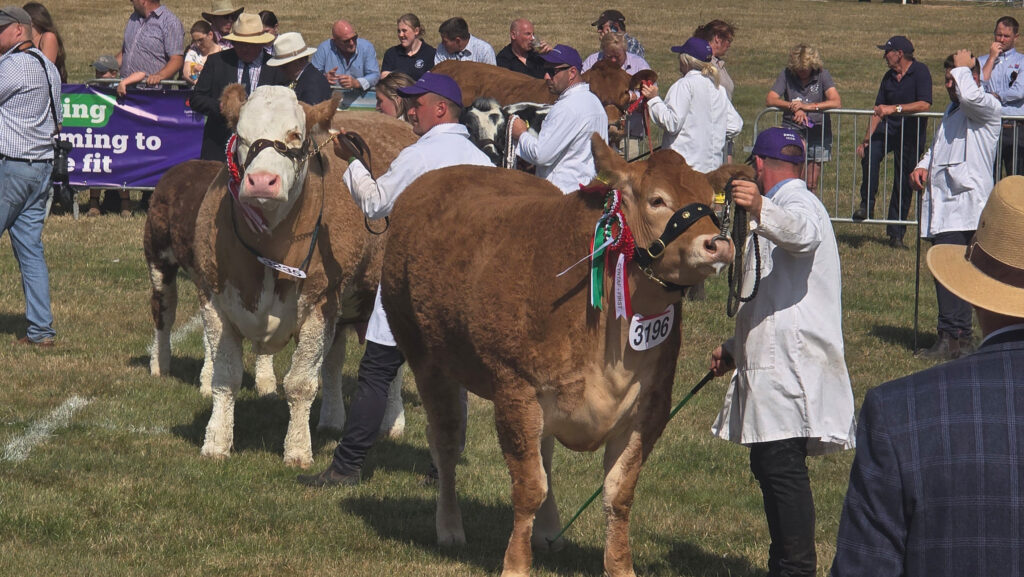
 A more positive mood emerged across the Royal Welsh Show this week (20-24 July), with long-term funding commitments helping restore farmer confidence after years of uncertainty.
Speaking to Farmers Weekly at his first Royal Welsh Show as first minister, Rhun ap Iorwerth said the Welsh government’s multi-year commitment to the Sustainable Farming Scheme (SFS) represented a deliberate move towards longer-term policymaking.
See also: Hawkstone Farmers Choir wows Royal Welsh Show
The Welsh government has pledged more than £1bn for agriculture over the current Senedd term, equivalent to £340m/year until March 2030.
The package includes £238m a year for the SFS “universal” layer, which rewards farmers for meeting baseline environmental and animal welfare standards, alongside £102m for the “optional” and “collaborative” layers.
Longer-term certainty
Mr ap Iorwerth said the response from the industry suggested farmers recognised the importance of longer-term certainty.
“We need to give it that breathing space, knowing it has some security moving forward with a multi-year funding cycle now, so that farmers are able to make investments for the longer term.”
He acknowledged there are competing demands on public finances, but argued governments also need to make better use of available resources.
“There will always be cases made, quite rightly, for more resource here, more resource there. I think there is an acceptance that there are limits to what we can do, but that we can work in cleverer ways.”
The settlement replaces annual funding decisions made by the previous Labour administration with a three-year commitment, delivering on a Plaid Cymru pledge to provide greater certainty for the SFS.
Industry welcome
The Tenant Farmers Association Cymru welcomed the early confirmation of funding and the decision to direct most of the budget towards the “universal” layer, saying it would encourage widespread participation, particularly among tenant farmers who may find it harder to access the other elements of the scheme.
National Sheep Association Cymru corporate sales manager Helen Roberts agreed that guaranteed funding would provide much-needed stability.
“For once we will have the money set for the next three years rather than wondering what the budget will be going forward. So, hopefully, it does look like we should have a positive future.”
However, other farming unions warned that inflation will reduce the settlement’s value in real terms.
Westminster ties
The first minister also said rebuilding relations with Westminster would be important following the appointment of Andy Burnham as prime minister on Monday (20 July).
Rather than simply seeking additional funding, though, Mr ap Iorwerth said Wales needed greater financial flexibility through borrowing and reserve powers similar to those available in Scotland.
“It’s not just wanting more money; it’s about giving us the freedom to make the right decisions in order to invest in Wales’s future.”
TB challenge
Bovine TB remains one of the most significant issues facing Welsh livestock farms, with the first minister acknowledging Wales is not currently on track to achieve official TB-free status by 2041.
“We’ve got to get to a trajectory again where it is,” he said.
Although he stopped short of backing a badger cull, he indicated wildlife management would remain part of future policy discussions.
“What people can absolutely expect from this government is an understanding of the depth of the economic problems and anxiety rural Wales and agriculture face because of bovine TB.”
He said decisions would continue to be guided by scientific evidence across all aspects of disease control.
Cutting bureaucracy
Reducing bureaucracy was another major theme at this year’s show.
NFU Cymru used a recreated farmhouse kitchen table covered with guidance documents, record books and policy papers to illustrate what it says is the growing administrative burden facing farmers.
The union estimates paperwork linked to the SFS, livestock records, pesticide use, animal health, water regulations and waste exemptions now exceeds 4,000 pages.
The display coincides with an independent review of agricultural regulation led by Brecon farmer John Davies (see “‘Paper shredder’ targets Welsh farming red tape”).
‘Paper shredder’ targets Welsh farming red tape
Former NFU Cymru president John Davies says his independent review of farming bureaucracy is already identifying “quick wins” as he tours Wales gathering evidence from farmers.
Commissioned by Welsh rural affairs minister Llyr Gruffydd to lead the nine-month review, Mr Davies said the exercise was not about weakening standards, but cutting duplication and making regulation more practical.
“Wherever there are duplication and bureaucracy, we are going to be after it with a shredder,” he told an NFU Cymru session at the Royal Welsh Show.
Mr Davies said he had received “very good, honest feedback” from farmers and wanted recommendations implemented as the review progressed.
He pointed to the Welsh government’s decision to recognise farm assurance inspections under the Sustainable Farming Scheme (SFS) as an early quick win.
This will align the Animal Health Improvement Cycle with farm assurance schemes from 2027, allowing participating farmers to satisfy assurance and SFS requirements with a single veterinary visit.
NFU Cymru president Abi Reader welcomed the review, which she said the union had long called for.
“This isn’t about a bonfire of regulation,” she said. “It’s about making sure we’ve got regulation that isn’t duplicating and isn’t impossible to meet.”
She added: “This is about working smarter, not harder. We’ve got to reduce the burden of paperwork. This is about delivery, not process.”
NFU Cymru president Abi Reader said the farmhouse kitchen table had become both the administrative and family hub of many farming businesses.
“The burden of regulation weighs heavily on that kitchen table.”
Cabinet secretary for rural resilience and sustainability Llyr Gruffydd said Mr Davies had already “rolled up his sleeves”, with reducing bureaucracy for family farms a key priority.
He also confirmed ministers were looking to replace what he described as “rigid rules around farming by calendar” with a more science-led, risk-based approach to agricultural pollution regulations and simplifying the workbook.
Focus on delivery
Mr ap Iorwerth said his government wanted Welsh agriculture and rural communities to thrive, pointing to decisions already taken since entering office.
“We want agriculture in Wales to be its best. We want rural Wales to be its very best.
“It’s great to be here, being able to show the impact of decisions that we have taken already in the short time since coming into government.”
The funding announcement has been widely welcomed across the industry, but for many farmers the true test will be whether those commitments are matched by delivery over the lifetime of this Senedd.
How farmers feel about the current Plaid Cymru government
Caryl Hughes is a fifth-generation beef and sheep farmer from Dyffryn Ceiriog, near Llangollen, North Wales, farming in partnership with her parents.
While welcoming the Welsh government’s commitment to maintain farm funding, she believes ministers have yet to deliver enough to give farmers confidence. She said progress on the Sustainable Farming Scheme (SFS) remained “very sketchy” and wanted to see promises translated into action.
Tom Rees farms beef and sheep west of Cardiff in Glamorgan. While encouraged by the government’s commitment to make steady progress, he said promises now needed to be backed by action.
“It’s all well and good saying they’ve got a plan, but if we get to the end of this Senedd term and nothing has been done, that’s not progress at all.Hopefully, if they keep chipping away with small wins all the time, it will be positive going forward.”
Will Prichard, a dairy and beef farmer from north Pembrokeshire, said everything is still quite new.
“I guess we’re feeling each other out a little bit in terms of what’s going on. Certainly, they were quite vocal when they were in opposition, and quite supportive of agriculture, and that seems to have translated into the policy we’re hearing so far.
“But I guess only time will tell, and the budget will tell even more about what they actually can do and what they will deliver.”
Tom Rees, an arable and sheep farmer from Pembrokeshire, expressed concerns about the new Welsh government’s slow progress and lack of clarity on the SFS.
“I don’t feel like I’m filled with confidence and joy since they’ve been there. We need to see how the optional layers are going to work, because that’s where our sector can probably help with the government, what they want to achieve and the targets that are there. So, just give us the tools to do the job.”