

Farmers seek delivery as optimism returns to Welsh farming
 Crowds at Royal Welsh Show © Royal Welsh Agricultural Society
 A more optimistic mood is emerging across Welsh agriculture following May’s Senedd election, but farmers heading to this year’s Royal Welsh Show want delivery, not more promises.
After years dominated by disputes over the Sustainable Farming Scheme (SFS), water regulations and bovine TB, both industry leaders and ministers believe the conversation is starting to shift from conflict towards implementation and longer-term certainty.
See also: Advice on when – and if – to ted grass cut for silage
NFU Cymru president Abi Reader anticipates that the atmosphere at the Llanelwedd showground will be markedly different from recent years.
“It feels like this is the first Royal Welsh Show for many years that we haven’t had to go into it thinking how many more battles we might have to have over the Sustainable Farming Scheme,” she said.
“We’ve got a new Welsh government, and so far they’re giving us positive signals.”
Regulation review
The Plaid Cymru government’s decision to launch a review of the regulatory burden facing farmers has been widely welcomed, with industry leaders arguing the focus should be on smarter regulation rather than wholesale deregulation.
“We’re not calling for a bonfire of red tape,” said Ms Reader.
“We’re calling for an appropriate response to make sure there’s regulation that’s actually doing what it says it does, not just making people’s lives difficult.”
Rural resilience and sustainability minister Llyr Gruffydd told Farmers Weekly reducing bureaucracy would help ensure public money delivers maximum value, especially as the agricultural budget is not expected to increase anytime soon.
“How do you make sure that the money you do get works as hard as possible? That brings me back to cutting out bureaucracy and red tape,” he said.
Water quality
The minister also reaffirmed his commitment to moving away from the current approach to water quality regulations, an issue that has frustrated many livestock farmers due to slurry spreading restrictions.
“I’ve said clearly that we need to move away from farming by the calendar,” he said, while cautioning that changes are unlikely to take effect immediately.
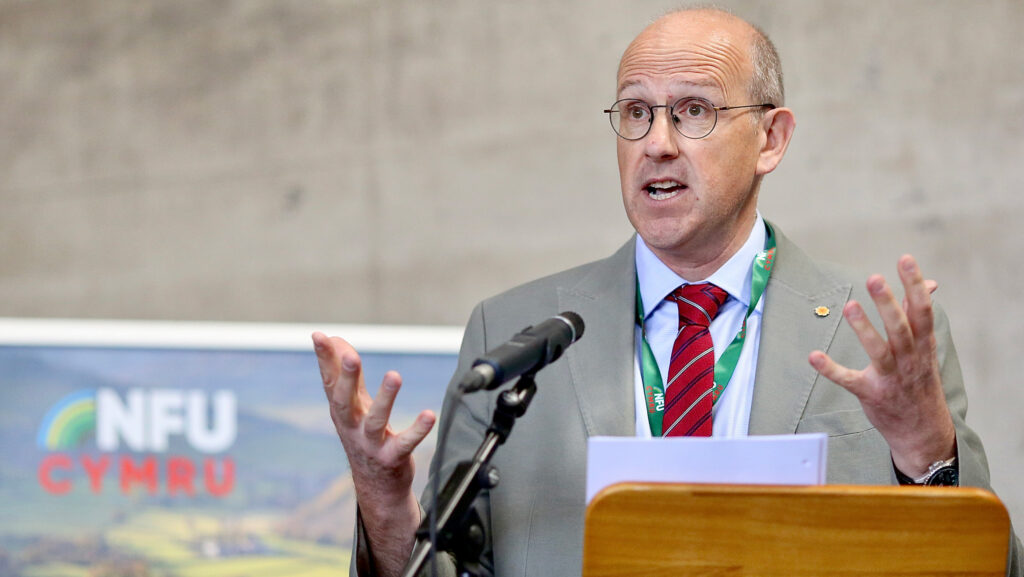
Rural resilience and sustainability minister Llyr Gruffydd © NFU Cymru
Officials, Mr Gruffydd said, are examining alternative approaches alongside recommendations from the independent Bolton review of water regulations.
“My style is to do it properly and do it once,” he said.
“There is a risk that we rush headlong into government, make knee-jerk changes, and then find that we have to revisit them again 12 months down the line.”
TB concerns
Bovine TB is also expected to dominate discussions at Llanelwedd. Recent findings from the Wales TB Programme Board suggest Wales is not on course to achieve its ambition of becoming TB-free by 2041.
The Welsh government’s own figures indicate that, with the current trajectory of a 0.35% average annual decrease, it would not hit its target until 2050 – highlighting the need for a step change in the urgency and resources dedicated to eradication.
“We are awaiting a report from the Technical Advisory Group, and that’s looking at TB and wildlife,” Mr Gruffydd said, adding that he also wants to refresh Wales’s wider TB eradication strategy.
Ms Reader believes meaningful progress will require action on both cattle and wildlife fronts.
“You could spend thousands, tens of thousands, to get that TB out of your herd, but if there’s still a seed of wildlife in the area, you could go straight back to square one,” she said.
The Game and Wildlife Conservation Trust (GWCT) also wants wildlife management to form part of the wider conversation.
“When we’re talking about managing nature and managing species, there are also issues around curlew and ground-nesting birds.
“So, this is even bigger from our perspective than just TB,” said Sue Evans, policy director at the GWCT Cymru.
The organisation wants a baseline study to better understand the wider environmental impacts before further decisions on disease control are taken.
Mr Gruffydd welcomed progress on cattle vaccine development, but warned producers should not expect an immediate solution.
Funding certainty
Alongside policy reform, funding remains high on the industry’s agenda.
The Welsh government has committed to pursuing multi-year agricultural funding settlements, with Mr Gruffydd confirming that discussions with the finance minister are continuing.
“I think the least we can do as a government is offer longer-term security,” he said.
But NFU Cymru argues that maintaining existing funding alone will not be enough, with inflation steadily reducing the value of support payments.
Even so, many farmers see the prospect of multi-year settlements as a marked improvement on the uncertainty experienced elsewhere in the UK.
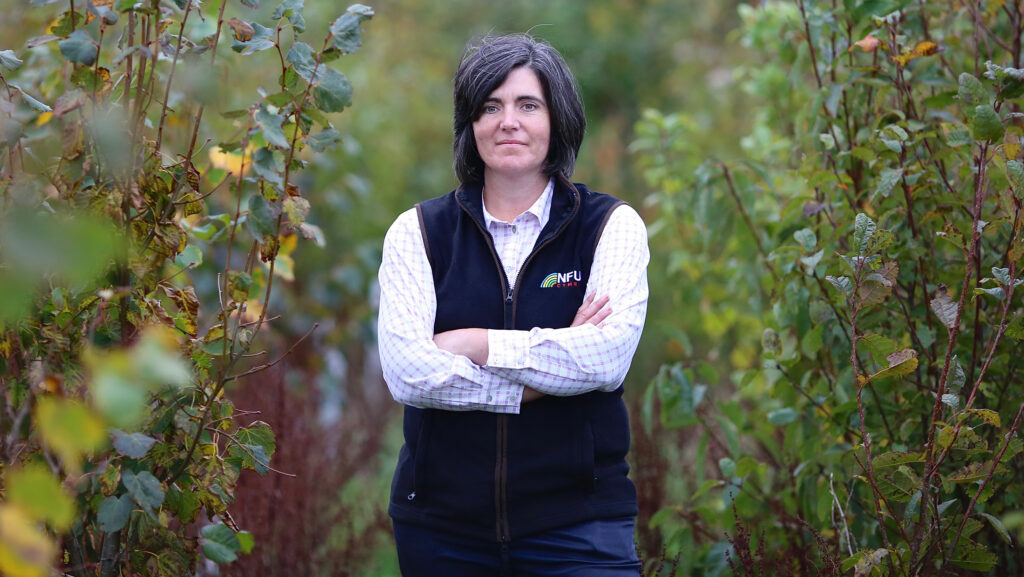
NFU Cymru president Abi Reader © NFU Cymru
Looking ahead
The contrast with last summer is striking, however.
A year ago, the show followed months of protests over the SFS and deteriorating relations between government and the industry.
This year, the tone is noticeably more constructive, but expectations are equally high.
For ministers, the Royal Welsh Show offers a chance to rebuild trust with farmers.
Mr Gruffydd said he plans to spend as much time as possible speaking directly with visitors.
“I really want people to come up to me and tell me what they think, whether it’s good or bad.”
For Ms Reader, goodwill alone will not be enough.
“All eyes are on the Welsh government now and on the cabinet minister to deliver on what he has promised,” she said.
So, as farmers gather at Llanelwedd later this month, the mood may be more hopeful than it has been for several years.
But optimism will count for little unless it is matched by tangible progress on the SFS, regulation, water quality, TB and long-term funding.
Sustainable Farming Scheme under scrutiny
Despite the improved mood, the Sustainable Farming Scheme (SFS) remains the defining issue for Welsh agriculture, as the government tries to move the industry away from area payments towards a system that pays farmers for environmental delivery.
About half of eligible farms entered the first application window in May – a figure viewed by both government and industry as a reasonable starting point, but one that raises questions about who has been left behind.
NFU Cymru president Abi Reader believes the figures point to barriers to entry rather than a lack of willingness.
“We know that 50% of farms went into the scheme, but 50% didn’t.
æThat suggests to me that there is an equity issue, and there are a number of barriers that are preventing those farmers from going in, including that it doesn’t economically suit them.”
Sue Evans, policy director at the GWCT Cymru, says attention must now turn to improving the Universal layer of SFS actions, particularly those that farmers currently find difficult to deliver.
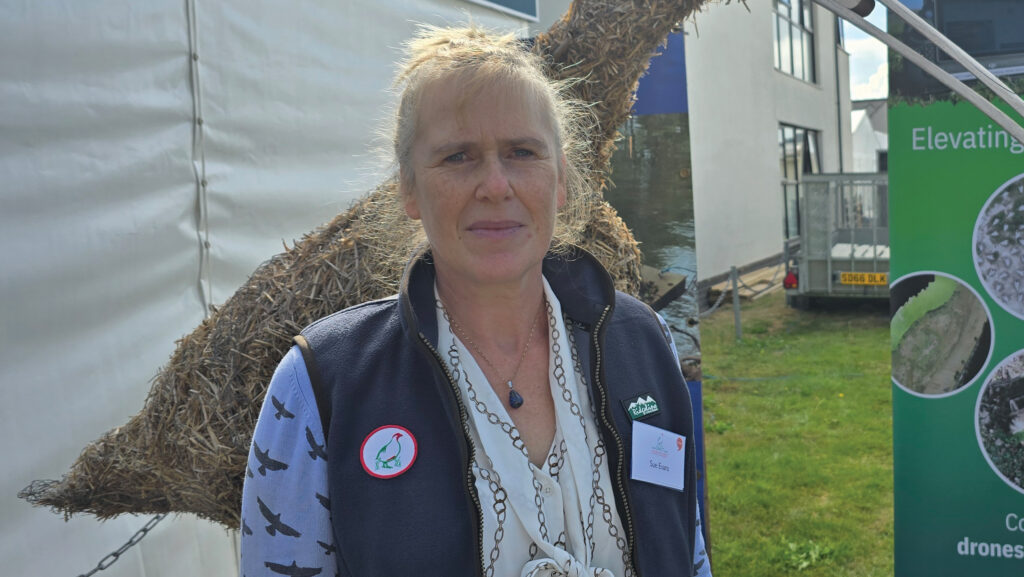
Sue Evans © MAG/Anne Dunn
“The SFS at the moment is restrictive and very prescriptive about exactly how farmers are to do each element,” she said.
“Each farm is unique, and we’ve got to produce something which is flexible enough to deliver the outcomes and the public benefit, but not tell the farmer exactly how he has to do everything.”
Refining
Rural resilience and sustainability minister Llyr Gruffydd acknowledges that the scheme may need refining before future application windows are opened.
“We do need to identify the barriers. We do need to hear back from those who chose not to come over and why that was the case,” he said.
Mr Gruffydd said farming unions had been asked to provide detailed feedback, and stressed ministers are prepared to amend the scheme.
“We will make changes where we believe they’re necessary and where we believe there’s a consensus around that, so that we can attract even more into the scheme next time.”
While the minister declined to set a target for future participation, Ms Reader believes anything less than an 80% uptake would be tantamount to failure.
Plaid Cymru agriculture manifesto: Progress so far
Since forming government in May 2026, Plaid Cymru has begun delivering several agriculture manifesto pledges, with the strongest progress on policy reviews and rural governance.
An independent red tape review has been launched, while reviews of water regulations and bovine TB policy are under way.
Ministers have also announced plans for a statutory rural proofing duty, a new Rural Development Strategy and a Climate and Nature Plan, while continuing rollout of the Sustainable Farming Scheme.
However, key commitments including a Welsh Food Strategy, greater public procurement of Welsh produce, long-term farm funding certainty and wider supply chain reforms have yet to be delivered.