

Farming Roadmap promises brighter future for England’s farmers
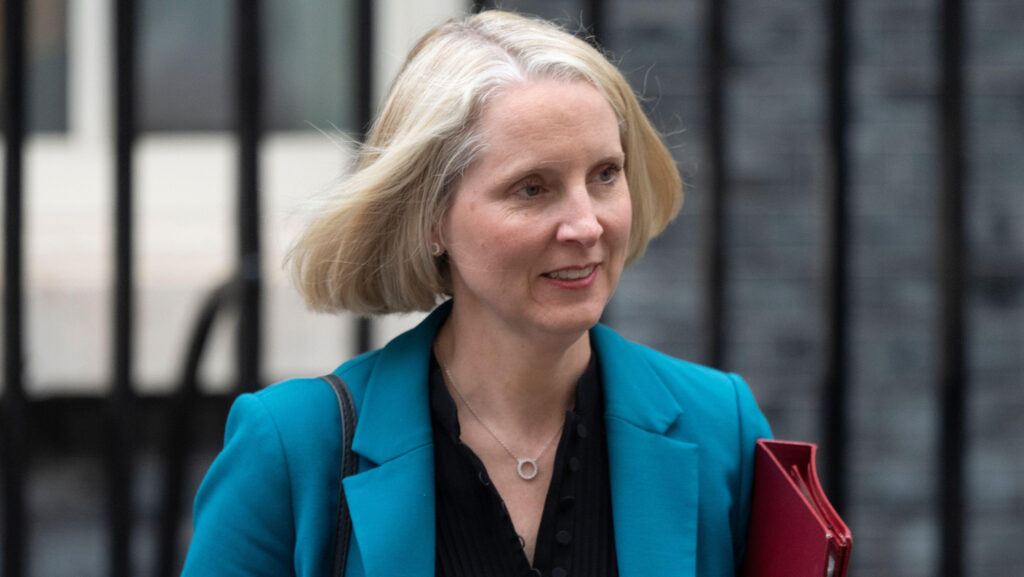 Emma Reynolds © Malcolm Park/Alamy Stock Photo
 The days of “chop and change” farming policy are at an end, Defra has promised, as it rolls out its long-awaited Farming Roadmap and the official response to the Minette Batters Farm Profitability Review.
Announced by Defra secretary Emma Reynolds on Wednesday (24 June), the roadmap is intended to end years of uncertainty and “marks the most significant moment for English agriculture since the Second World War”.
Ms Reynolds said: “Farmers feed our nation and manage the land that shapes our countryside, yet their contribution has never been valued in the way it deserves.
See also: New pan-industry partnership aims to raise farm profitability
“Our roadmap marks a shift away from only looking to the next harvest and towards a plan that gives farmers the long-term clarity they need to innovate, invest and grow with confidence.”
Developed in partnership with the industry, the Farming Roadmap sets out the government’s “vision” for food and farming to 2050.
This includes a commitment to food production, though it declines to set specific food security targets.
There will, however, be continued emphasis on “nature-based solutions” such as soil health and water management to help farmers tackle climate change.
Better targeting
But while Defra promises greater stability, it adds that its environmental policies will continue to evolve.
For example, as the Sustainable Farming Incentive becomes “standard practice” on farms, funding may be redirected to other policy areas, while regulations may tighten in areas such as pollution control and climate change mitigation.
“Long-term payments for public goods such as habitat creation will continue,” it adds.
Among the specifics, Defra has also announced an extra £53m for the Farming Innovation Programme with a focus on robotics, soil health and water management.
And it has confirmed the Seasonal Worker Scheme will continue to at least 2030, though visa numbers will not be revealed until the autumn.
Profitability Review
With regards to the Farming Profitability Review, Defra identifies a number of actions it is taking in response to the report’s 57 recommendations.
These include a new £30m Farmer Collaboration Fund to encourage co-operatives, redefining agriculture’s contribution to gross value added so its role is properly recognised in government, and transferring the Groceries Code Adjudicator role to Defra.
It also points to the recently launched pan-industry Farming and Food Partnership Board, which is already working on sector growth plans for horticulture and poultry.
Reaction
NFU president Tom Bradshaw said he welcomed the positive ambitions set out in the Farming Roadmap, but called for “real urgency” in delivering it.
“The government is right to say that the national security context has changed,” he said.
“Combined with climate and economic shocks, the fragilities of our food system now feel very exposed, and we need to move rapidly into delivery mode to turn this around.”
In particular, he cited the lack of long-term government funding and the emphasis on private investment.
“There has to be a greater partnership between Defra, the Treasury, the Ministry for Housing, Communities and Local Government, and farmers if we’re to realise this vision for farming.”
In particular, Mr Bradshaw called on government to give food production the same legislative weight as climate and environmental targets.
Good start
Baroness Minette Batters said the government had made a “good start” in terms of her review, but she was a “slightly mystified” that the Farming and Food Partnership board seemed to be focusing on things like planning, productivity and tax incentives.
Her recommendation had been to use it to better understand and grow the retail and food service markets for UK produce, and then push for exports.
“None of that seems to be happening at all,” she told Farmers Weekly.
“The partnership board seems to be focusing on technical things, and not doing what it was set up to do – balancing the fragility of supply and demand.”
Further reaction to the Farming Roadmap
“High costs, low returns and increasingly volatile weather continue to put huge pressure on farm businesses. Without profitable farm businesses, the government’s ambitions for food production and nature recovery simply will not be achieved.” Gavin Lane, Country Land and Business Association president
“While the publication of the roadmap marks an important milestone for Defra, the TFA believes it must now signal the end of endless consultations and reviews, and the start of delivering productive, profitable and practical solutions for farming. Tenant farmers are central to achieving these ambitions.” Robert Martin, Tenant Farmers Association chairman
“It’s encouraging that the roadmap recognises that nature recovery underpins food security, as well as the need for ambitious environmental targets and for diverse nature-friendly farming systems to deliver the transition. We now need Higher Tier and Landscape Recovery funding to scale up much sooner.” Katie-jo Luxton, RSPB’s director of conservation
“The government’s new Farming Roadmap rightly recognises that soils are the best defence for farmers who will increasingly face extreme weather over the coming decades. It can only be effective if it drives us away from business as usual for our farming system.” Brendan Costelloe, Soil Association policy director