

Food tariff cuts could cost Scottish farmers, warns NFUS
 © Adobe Stock
 NFU Scotland (NFUS) has warned that plans to suspend tariffs on imported food could weaken domestic production and long‑term food security, as the UK government considers new measures to ease living costs.
The warning comes after the Department for Business and Trade closed a formal call for input on 24 June on a proposed second package of temporary tariff suspensions covering 125 products, including bakery goods, chocolate, fats and oils.
The measures, championed by chancellor Rachel Reeves, are intended to shield households from inflation linked to global supply chain disruption following conflict in the Middle East.
See also: Rising imports prompt NFU Scotland labelling call
While acknowledging the need to support consumers, the NFUS said policies focused on lowering import costs risk displacing Scottish produce and eroding confidence in domestic farming.
Although many of the products under review are not produced in the UK, the union said cheaper imports could still ripple through supply chains, affecting sectors including soft fruit, cereals, potatoes and oilseeds.
It warned that lifting tariffs on fruit could further disadvantage Scotland’s soft fruit growers facing higher labour costs, while suspensions on olive oil and processed potato products could undermine rapeseed oil and domestic potato markets.
NFUS president Andrew Connon said: “We recognise the need to support consumers through ongoing cost‑of‑living pressures, but food policy cannot be driven solely by the pursuit of cheaper imports.
“Our concern is not simply about these individual tariff suspensions. It is about the wider direction of travel.
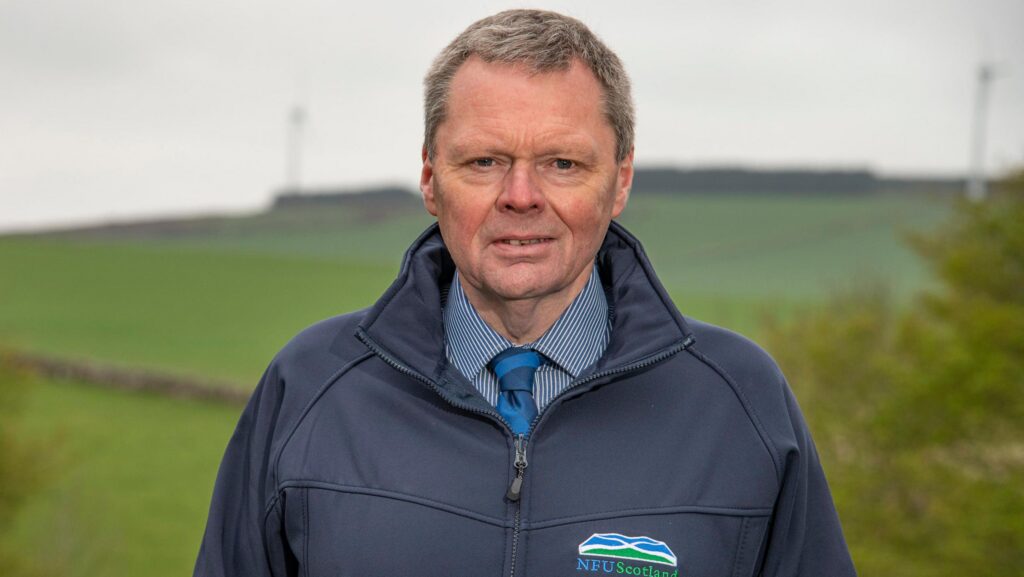
NFUS president Andrew Connon © NFUS
“Policies that encourage greater reliance on imports risk undermining confidence and reducing investment in domestic production.”
The union said the proposals come at a time of heightened global uncertainty, with climate disruption, geopolitical tensions and volatile input costs already placing pressure on farm businesses.
It warned that reducing the perceived value of food could ultimately shrink domestic production capacity.
Food security ‘starts at home’
“Food security starts with a strong domestic farming sector,” Mr Connon added.
“The lowest‑cost option today may not be the most resilient option tomorrow.
“Government must ensure that decisions taken in the name of affordability do not weaken our ability to produce food here at home in the future.”
The call comes as the Scottish government prepares plans to cap prices on staple foods such as bread, milk and cereals, with the NFUS warning such measures must not come at the expense of primary producers.
The union is urging ministers to recognise food production as a strategic priority, ensure fair standards for imports, and avoid measures that place Scottish producers at a competitive disadvantage.