

Inflexible farm policies risk hindering climate adaptation
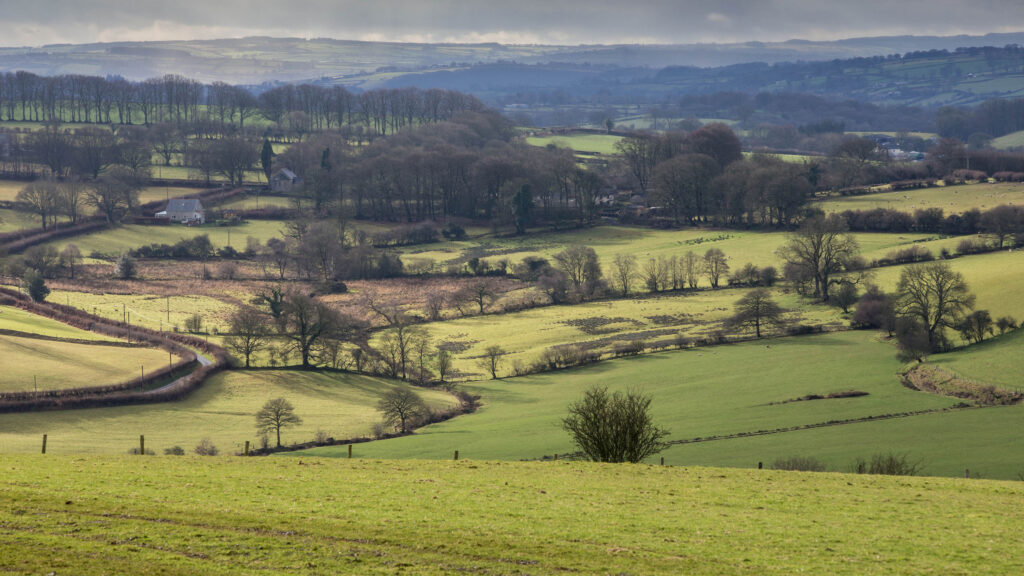 © Tim Scrivener
Welsh farmers’ efforts to adapt to climate change risk being undermined by agricultural policies that fail to recognise the diversity of farming systems, new research warns.
The Welsh government-commissioned Climate Adaptation in Agriculture Study, published on 20 October, calls for more flexible grants, regulations and advisory services that reflect individual farm conditions rather than uniform requirements.
See also: Opinion: Let’s be the heroes not victims of climate change
Undertaken by Mentera, the research involved 63 farmers and eight industry representatives, who described increasingly unpredictable weather disrupting grazing, fieldwork and forage production, while driving up costs.
One farmer said: “In the last five years – you could go from exceptionally wet, and the ironic thing is once it stops raining, it’ll be a drought… we have to be ready for it really.”
Policy barriers
Farmers reported changing grazing systems, investing in livestock housing, planting hedgerows for shelter and considering additional water storage to protect against drought.
Such investments were driven by the need to maintain productive, profitable businesses, as well as respond to climate pressures.
However, adaptation can be costly, with one participant describing spending £36,000 on a manure-storage building that remained empty for much of the year.
Despite farmers’ willingness to adapt, the research identified concerns that existing support schemes were not always suited to their needs.
Participants questioned whether the Sustainable Farming Scheme (SFS) would provide long-term financial security and adequately balance environmental objectives with food production.
The Growing for the Environment scheme’s prescribed seed mixtures were also criticised, with farmers arguing that appropriate multispecies leys depend on soil type, location and farming system.
One industry representative warned: “Future changes must marry up the right crop or livestock system to the right farm topography. Must avoid trying to farm by spreadsheet!”
Another said: “There’s no one-size-fits-all, but the danger is everything gets put into one basket and we’re trying to make one-size-fits-all without having enough knowledge.”
The report highlights the need for support that allows farmers to choose suitable measures, alongside simpler grant applications and regulations that accommodate changing weather windows.
Its findings could inform the SFS Optional and Collaborative Layers, helping farmers improve climate resilience without compromising food production.
Industry response
Fraser McAuley, senior policy adviser at CLA Cymru, said the findings reflected members’ concerns about inflexible support schemes.
He welcomed progress on multi-year funding but stressed the importance of developing the SFS Collaborative Layer.
“CLA Cymru wants future agricultural support to prioritise longer-term business resilience.
“This means adequate multi-annual funding, schemes that reward practical outcomes rather than rigid prescriptions and genuine freedom and confidence for farmers to invest in the measures that work best on their land.”
The Welsh government said it will carefully consider the findings of the Climate Adaptation in Agriculture Study to inform the ongoing development of the SFS and associated grant schemes, including how they can provide greater flexibility to reflect the diverse circumstances of individual farm businesses.