

TB target ‘doesn’t feel doable’, says Welsh first minister
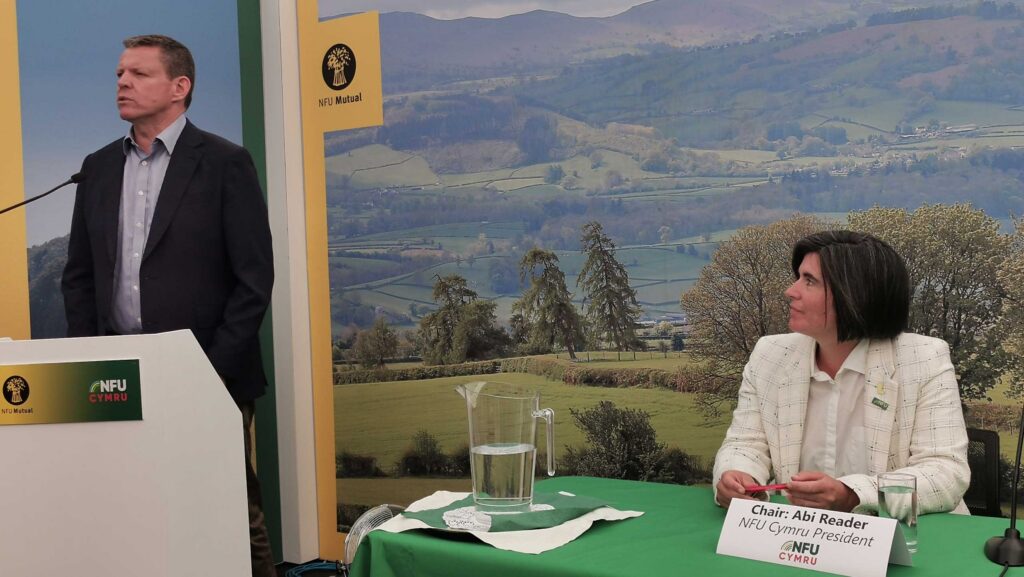 Wales' first minister Rhun ap Iorwerth speaking at NFU Cymru session with union president Abi Reader © Philip Case/MAG
 First minister Rhun ap Iorwerth has admitted Wales’ target of eradicating bovine TB by 2041 “doesn’t feel doable” at present, as he pledged an evidence-led approach to tackling the disease.
Speaking during an NFU Cymru session at the Royal Welsh Show, the Plaid Cymru leader acknowledged the devastating effect bovine TB continues to have on farming families and said future policy must recognise the role of both wildlife and cattle in spreading the disease.
“I know how desperate many people are,” he said.
See also: TB fears force agriculture show to cancel cattle classes
“When we think of how arguments have been made most strongly for the need to take action, it’s looking through the eyes of families who have lived through the real anguish of seeing animals and their herds culled.”
Mr ap Iorwerth said the experiences of affected farmers would be central to developing the next phase of Wales’ TB strategy, adding that government decisions must be based on evidence rather than ideology.
“We have to recognise that wildlife has a part to play in the spread of TB,” he said.
“But also we’re honest that it’s not just wildlife that spreads TB. That we’re putting together a balanced programme, that we base it on evidence, is so key.”
The Welsh government is awaiting recommendations from its TB Technical Advisory Group to help shape future policy.
The government will take a science- and evidence-based approach that takes account of the three pillars of cattle, people and wildlife, he said.
Farmer’s plea
During the session, Pembrokeshire dairy farmer and NFU Cymru Bovine TB Focus Group chairman Roger Lewis urged ministers to move quickly, warning farmers could not afford to wait years for changes to the current strategy.
Mr ap Iorwerth accepted the scale of the challenge facing the industry.
“At the moment, 2041 feels as if it’s not doable,” he said. “We’ve got to get to a place where it feels doable again.”
He said the aim was to develop a strategy that protects agriculture, wildlife and rural communities while giving farmers renewed confidence that progress towards eradication could be achieved.