

Throup sets out vision to strengthen NFU membership value
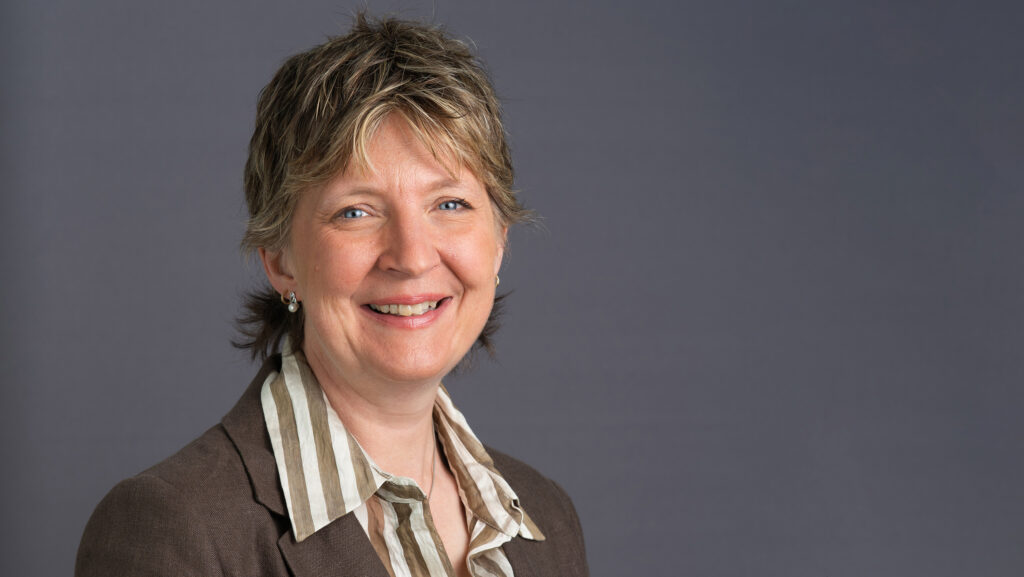 Sophie Throup © NFU
 Three months into her new role as NFU director-general, Sophie Throup has already identified the central question facing Britain’s biggest farming organisation – why should farmers pay to belong to it?
Core NFU membership has fallen from more than 50,000 to around 43,000 in three years, as farmers face tighter margins, repeated weather shocks, agricultural policy uncertainty and growing competition from rival farming organisations.
Ms Throup, who succeeded Terry Jones in May, accepts that the shape of British agriculture has changed.
See also: NFU calls for support to protect farms from extreme weather
But she believes the answer is not simply to defend the NFU’s size.
Instead, she wants to make the organisation’s value so obvious that farmers ask themselves: “Why would I not be a member?”
“It has to be really clear what it is that we’re selling, what our value is, how it’s delivering,” she tells Farmers Weekly.
That means demonstrating both the practical benefits of membership and the political influence that comes from being the country’s largest farming organisation.
NFU lobbying ‘wins’
To demonstrate that value, Ms Throup points to recent NFU lobbying successes, including cuts to red diesel duty by roughly a third, a five-year extension to the Seasonal Worker Scheme for poultry and horticulture, and work to increase the farm inheritance tax (IHT) threshold.
She also highlights the NFU’s CallFirst service, which handled 42,000 calls last year, providing members with advice on issues including employment law and technical regulations.
But, she argues, the NFU’s greatest asset remains its collective voice.
“We are the biggest organisation to start with. And with that size equals that share of voice, equals that seat at the table with government,” she says.
Whether farmers accept that argument may depend on how they view the NFU’s relationship with government.
Critics have accused the union of being “too close” to ministers, particularly after it ended its Stop the Family Farm Tax campaign following concessions on the IHT threshold.
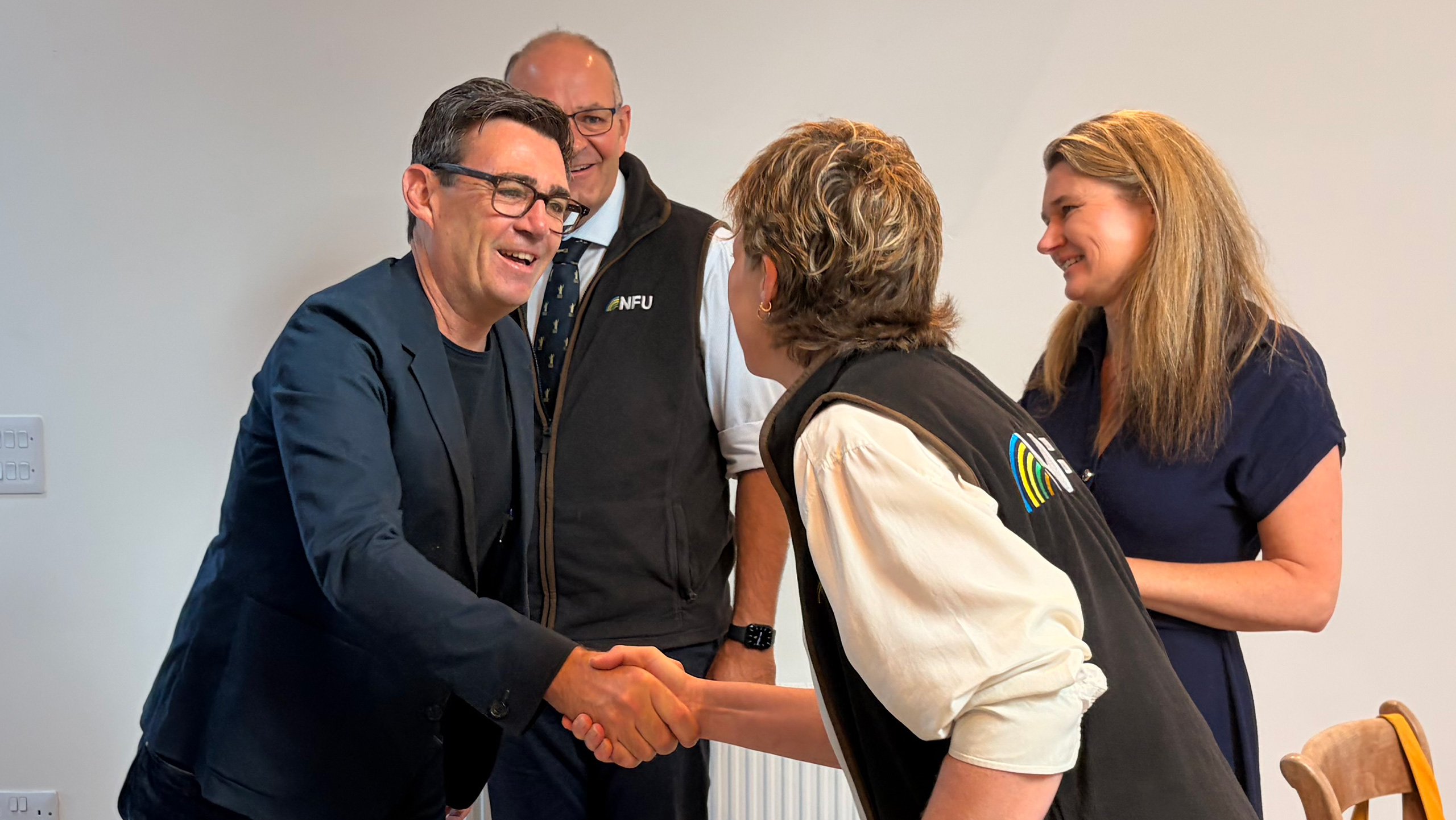
NFU director general Sophie Throup meeting with prime minister Andy Burnham
Ms Throup stresses that the NFU would continue pressing for changes to the farm IHT policy, which remains a source of deep anger across the farming industry.
But she remains steadfast in defending the union’s “stay in the room” approach with government.
“I think it’s really important to be able to have influence,” she says. “You’ve got to be at the table.”
But having a seat at the table does not mean signing up to every government policy. “We certainly don’t say yes every time,” she says. “Our tone of voice needs to be appropriately challenging.”
She cites the government’s recent £65m drought package for English farmers as evidence that engagement can deliver results, while stressing much more support is needed.
Bridging the retail divide
Ms Throup’s background gives her a different perspective on another long-running NFU challenge – ensuring farmers receive a fair share of value generated throughout the food supply chain.
Before joining the union, she spent nine years in retail and food processing, including as head of agriculture at Morrisons, followed by senior sustainability work at Myton Food Group.
She also spent about 10 years in veterinary practice and lives on a mixed family farm in Yorkshire with her husband, a dairy farmer, and their three children.
She believes this experience means she can challenge poor practice without treating every part of the supply chain as an adversary.
“Our members are at the top of the pyramid,” she says. “My job as director general is to make sure the team and ways of working and everything else is doing all we can on behalf of members.”
That includes “calling out what’s good” while being prepared to “shout out what needs to have attention drawn to”.
Asked whether farmers are receiving a fair deal, Ms Throup says: “It’s not just about the core price of the products. It’s also about lots of other things as well.”
Citing the loss of direct support payments, and differences in support and differing standards between countries, she argues farmers need “a fair playing field”.
“Have we got that fairness and that transparency to give our own farmers a real fair bite of the cherry?”
Ms Throup also wants to broaden the argument for British farming.
Farmers, she says, are not simply food producers, but contribute to environmental management, energy security and the resilience of rural communities.
Recent wildfires provided a vivid example, with farmers ploughing land to create firebreaks. Farmers routinely clear fallen trees, respond to snow and help during emergencies.
“It isn’t just a job, it’s like a way of life,” she says.
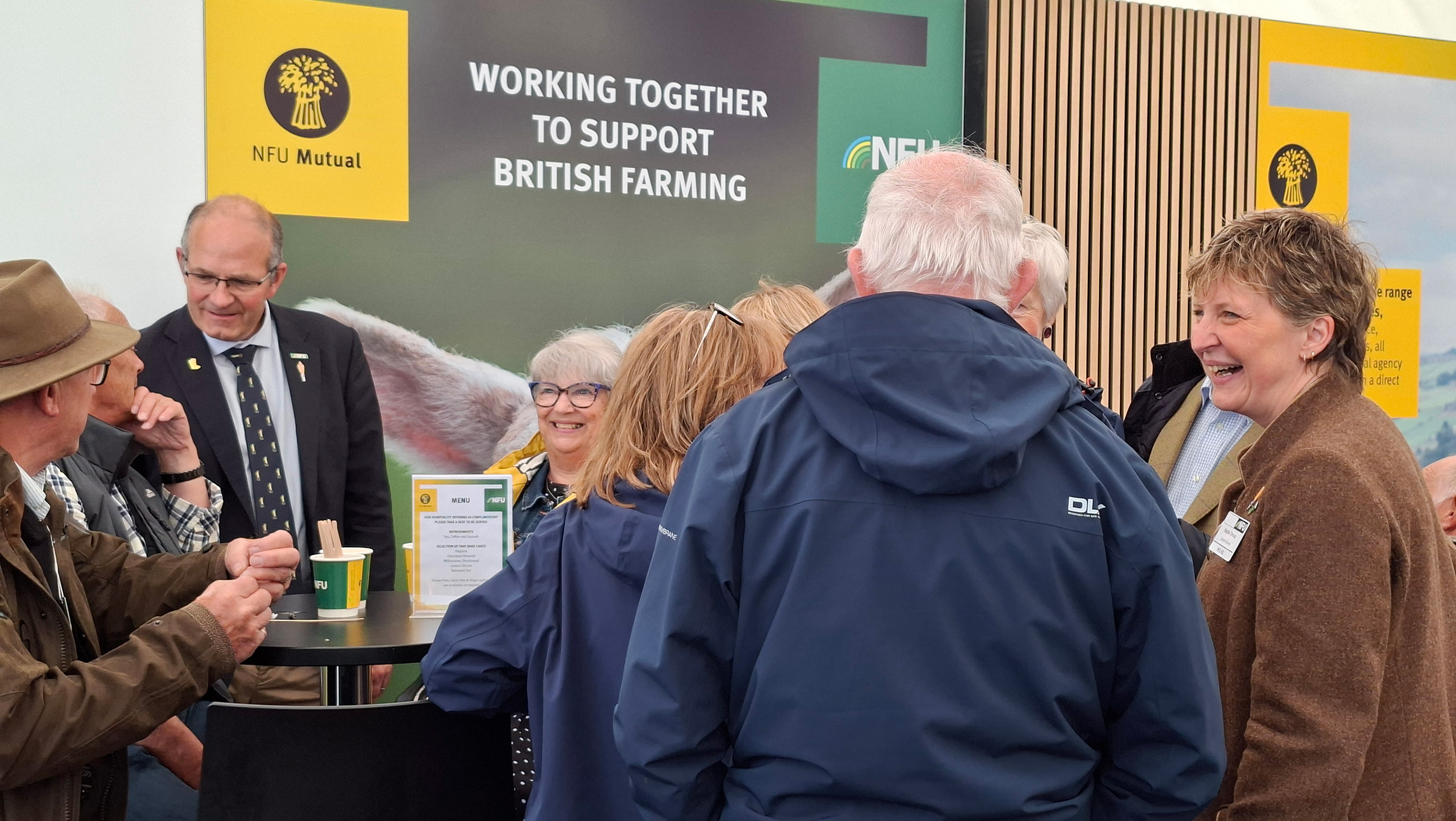
Sophie Throup with NFU president Tom Bradshaw at the Royal Cornwall Show © NFU
Fixing the engine room
Internally, Ms Throup is trying to make the NFU more responsive and less bureaucratic.
A new director of IT and data strategy is being recruited, while AI and other technology are being explored to reduce duplication and administration.
She has also introduced fortnightly team calls involving around 150 staff, bringing in members and group secretaries to explain their work and experiences.
Listening groups are being used to engage younger farmers, including a recent roundtable with farmers aged under 30.
Ms Throup acknowledges the NFU has not always been good enough at demonstrating its relevance and value to smaller and younger businesses.
The union already offers free student and young farmer membership, alongside associate and core subscriptions, but needs to communicate those options and their benefits more effectively.
“Let’s hear it, let’s get it out and let’s work it up,” she says of ideas from members and staff.
© NFU
Wider collaboration
The same principle applies to the wider farming movement. Rather than seeing other organisations purely as competitors, Ms Throup wants to find areas of common ground.
“Where can we have more commonality than we have difference?
“And then by pulling ourselves together, we’re going to have an even stronger voice.”
Ultimately, that is the challenge Ms Throup has set herself for the next three years.
“Success looks like me being able to unlock that value within our organisation and drive opportunities for farmers,” she says.
With membership under pressure and farmers facing mounting economic and environmental challenges, the NFU’s new director general believes the organisation’s future depends on one thing above all else – proving that collective influence delivers results no farmer could achieve alone.
“It’s about understanding what value is, about that strength in unity,” she says.
And if farmers can clearly see that value, she believes membership will follow.
Got a view on this story? Email your responses to philip.case@markallengroup.com