

Wales food strategy must turn ambition into action
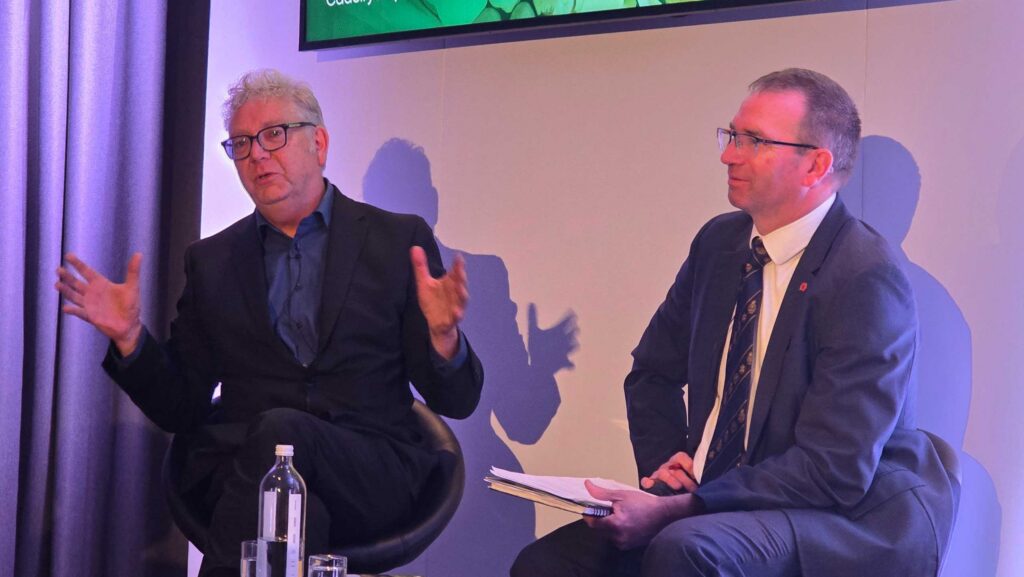 Simon Wright (left) with NFU Cymru deputy director and head of policy Dylan Morgan © MAG/Anne Dunn
Strengthening Welsh food supply chains, creating markets for farmers and retaining more of the value of food production will be central to a new National Food Strategy.
Simon Wright, chairman of the expert working group tasked by the Welsh government with developing the strategy, said the ambition was to bring food production and consumption closer together while tackling long-standing barriers facing producers.
See also: Welsh food strategy to target greater self-sufficiency
Speaking at NFU Cymru’s annual conference on Thursday, 5 November, he outlined four priorities – health, the environment, the economy and food security – with opportunities to deliver benefits across all four.
Mr Wright said there was a “need to reclaim sovereignty over the value of the primary produce that we produce in Wales”.
Initial investigations are focusing on small abattoirs, expanding edible horticulture and improving school food, alongside regulatory and commercial barriers restricting access to local markets.
He warned that the decline of small abattoirs was limiting farmers’ opportunities to add value, while excessive bureaucracy was making local food businesses increasingly difficult to operate.
Mr Wright also questioned why Welsh lamb was largely absent from school menus, arguing that introducing children to locally produced meat could help secure future demand.
“Just imagine the benefits in terms of the consumers in the future, the prospects for our young people turning into adults who will eat lamb from Wales for the rest of their lives and serve it to their children,” he said.
Solving practical problems
Asked by Farmers Weekly how the group would ensure its recommendations were implemented, Mr Wright said the emphasis was on solving problems rather than producing another report.
“We don’t want to produce a document that’s going to get stuck in a drawer and never see the light of day.”
Recommendations could be put to ministers before the strategy’s publication next year, he said.
“We can’t wait another 18 months to start acting strategically.”
On funding, he argued that existing government expenditure needed greater scrutiny before additional resources were sought.
“It’s not all about bringing in new money. It’s about how we use the money we’ve already got.”
Opportunities for farmers
NFU Cymru president Abi Reader, who sits on the working group, welcomed its proactive approach, but stressed that farmers must see tangible benefits.
“What outcomes are we going to get from this that will really turn the dial for Welsh farming?” she asked.
She identified public procurement as an early opportunity, with the group examining how schools, hospitals and care homes source food.
Ms Reader said shorter supply chains and direct purchasing from Welsh producers could potentially reduce costs while creating new markets.
“I assumed these big, long supply chains were the cheapest. From what I’m hearing, they’re not.”